Authored by George Citroner via The Epoch Times (emphasis ours),
Most of us have experienced this: You stayed up a bit too late the night before, and although your body turned up to work, your mind was elsewhere.

Blanking out during the day is common for the sleep-deprived, and now researchers have found out why it happens.
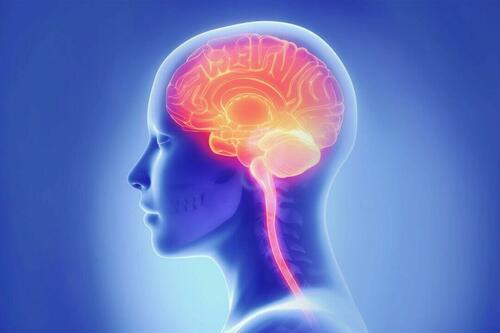
When people experience attention lapses after poor sleep, a wave of cerebrospinal fluid flows out of the brain.
During sleep, cerebrospinal fluid—part of the brain’s cleaning system—flushes away waste products, but sleep deprivation forces this process to activate during waking hours.
“If you don’t sleep, the [cerebrospinal fluid] CSF waves start to intrude into wakefulness where normally you wouldn’t see them,” senior study author Laura Lewis, an associate professor at MIT, said in a press statement. “They come with an attentional tradeoff, where attention fails during the moments that you have this wave of fluid flow.”
The Body Signals Before the Brain Crashes
The study, published in October 2025 in Nature Neuroscience, included 26 volunteers.
The volunteers were tested twice—once after a night of sleep deprivation and once when well rested.
During the tests, participants wore EEG caps that measured their brain activity while inside an MRI scanner, which measured the flow of cerebrospinal fluid. They were then asked to complete attention tasks.
In the first test, they listened to a brief tone and pressed a button as quickly as possible when they heard it. In the second test, participants looked at a screen showing a cross at all times. When the cross changed into a square, they pressed a button as quickly as possible.
Both tests measured how fast the person responded to different signals—one auditory and one visual.
Unsurprisingly, participants performed worse when they were sleep-deprived, with slower response times and missed stimuli.
When sleep-deprived people blanked out, researchers observed cerebrospinal fluid flowing out of the brain, followed by its return as attention recovered. Pupil constriction occurred about 12 seconds before cerebrospinal fluid flowed out, with dilation happening after the attention lapse.
“What’s interesting is it seems like this isn’t just a phenomenon in the brain, it’s also a body-wide event. It suggests that there’s a tight coordination of these systems,” Lewis noted.
The researchers suggest a single circuit may govern both attention and bodily functions such as fluid flow, heart rate, and arousal. One likely candidate is the noradrenergic system, which helps regulate thinking and body functions through the neurotransmitter norepinephrine and naturally rises and falls during sleep.
Why the Brain’s Cleaning System Matters
During deep, non-REM sleep, cerebrospinal fluid flows through the brain in rhythmic waves, clearing out waste products like beta-amyloid and tau proteins—the same ones that accumulate in Alzheimer’s disease.
“When you’re sleep-deprived, this cleaning system doesn’t work as well,” Leah Kaylor, author of “If Sleep Were A Drug” and a clinical psychologist not involved in the study, told The Epoch Times. “In simple terms, when you cut corners on sleep, you cut corners on brain maintenance.”
The consequences can extend beyond momentary attention lapses. Chronic disruption of the glymphatic system has been called “the final common pathway” to dementia, Dr. Hamid Djalilian, a professor of otolaryngology, neurosurgery, and biomedical engineering at the University of California, who was not involved with the study, told The Epoch Times.
“When there is inadequate clearance of waste proteins in the brain, they start to form the very plaques and tangles that are the hallmarks of dementia,” he added.
However, dentist and sleep expert Dr. Stephen Carstensen noted that occasional sleep deprivation shouldn’t result in permanent damage. “[The] human brain is capable of a great deal of response without serious permanent change, this allows us to function even while sleepy,” Carstensen told The Epoch Times. However, if sleep deprivation becomes chronic, this poor response could become “the new ‘normal,’” for that person’s brain.
Consistency Is Key to Good Sleep
You don’t need perfect sleep every night, but consistency is key, Kaylor said. She recommends aiming for seven to nine hours of sleep most nights, and keeping a regular bedtime and wake time—even on weekends.
She advises limiting screen time, caffeine, and alcohol before bed, since they can interfere with deep sleep.
“Create a cool, dark, quiet sleep space—and keep work, phones, and TVs out of the bedroom,” Kaylor said.
However, if sleep problems last more than a few weeks, or you feel exhausted despite enough hours in bed, she recommends seeing a sleep specialist. “Treating insomnia, sleep apnea, or circadian rhythm issues can make a major difference in long-term health,” Kaylor emphasized.
She added that sleep is not wasted time—it’s when the brain cleans itself, resets its chemistry, and helps the body repair and recover. “Protecting sleep is one of the most powerful things you can do to preserve mental sharpness, emotional stability, and long-term brain health.”
* * *
Please consider supporting ZeroHedge with the purchase of IQ Sleep Formula, which actually works!
Loading recommendations...