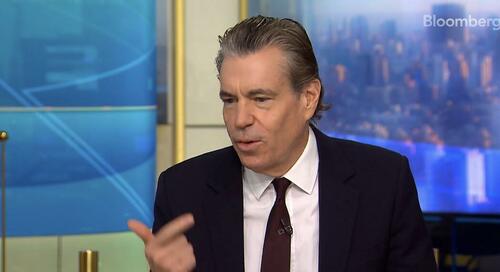
"There is NO policy response that will stop this ascent in crude in the near term," warns Goldman's former head of commodity research, Jeff Currie.

In an interview on Bloomberg TV (watch here), Currie warned that the broader crisis goes beyond just oil:
This isn't solely an oil issue; the Strait disruption affects multiple commodities and global trade.
The system "simply cannot accommodate" such a shock, leading to extreme hoarding, upward price pressure, and potential inflation spillovers.
Oil
Crude's ascent is unstoppable in the near term: No effective policy response (e.g., from governments, SPR releases, or other interventions) can halt or meaningfully reverse the upward trajectory of oil prices while the Strait of Hormuz remains disrupted/blocked.
He emphasizes that policy options are "unlikely to break crude’s ascent" under current conditions.
Severe supply chain risks and disruptions: Risks to global energy supply chains are at unprecedented highs. A prolonged closure of the Strait (which carries 18.5 million b/d of oil, plus gas, fertilizers, and metals) would represent massive lost flows—e.g., 31 days could equate to over 575 million barrels stopped, far exceeding the entire US Strategic Petroleum Reserve (411-415M barrels historically, with no major releases confirmed recently).
Market optimism vs. reality: Financial markets appear "wildly optimistic" if betting against prolonged disruption (e.g., Polymarket odds cited in related Carlyle analysis put high probability on continued closure). Physical constraints and underinvestment in supply are "biting," with no real glut despite past narratives.
Hard Assets
Currie has repeatedly emphasized the "revenge of the old economy" theme.
This frames hard assets—particularly energy (oil, natural gas), metals (copper, base/precious metals), agriculture, and other real/physical commodities—as entering or reasserting a commodity supercycle driven by:
Chronic underinvestment in traditional supply chains (e.g., oil and metals have been "substantially underinvested" for years, with no major non-OPEC supply surge ahead after 2026).
Structural demand shifts (e.g., AI/data center energy needs boosting power demand, electrification increasing metals use like copper/silver, geopolitical fragmentation leading to higher "security premiums" on commodities).
Capital rotation from tech/financial assets (e.g., massive MAG7 market caps) into real assets (smaller mining/energy sectors), which could trigger explosive price moves due to limited free float and supply constraints.
Hoarding and strategic stockpiling by nations like China/India amid risks, amplifying upside in physical commodities.
Geopolitical/security factors overriding efficiency (e.g., "just-in-case" stockpiling vs. just-in-time, leading to higher cyclicality and premiums on energy/metals).
HALO
Jeff Currie's thinking on the HALO portfolio centers on Heavy Asset Low Obsolescence (HALO) assets - tangible, physical, "old economy" companies and sectors with durable infrastructure that resist rapid technological disruption or obsolescence.
Jeff argues that amid geopolitical shocks like disruptions in the Strait of Hormuz, every major inflection point over the past 50 years has triggered a capital rotation from asset-light sectors (e.g., tech, now ~53% of the S&P) to asset-heavy sectors.
Energy's weight has shrunk to just ~3% (from 25% in the 1970s, when it provided a natural inflation hedge), leaving portfolios exposed as markets wrongly priced energy as declining and tech as perpetual.
HALO assets, including commodities, energy, metals, mining, infrastructure (e.g., pipelines, railroads, utilities), and other real-asset plays, position investors to weather anticipated and unanticipated inflation, supply chain risks, hoarding, and the "revenge of the old economy" supercycle—driving potential explosive upside from underinvestment and capital shifts.
This isn't a rigid ticker list but a strategic overweight toward resilient hard assets for hedging and growth in the current volatile environment.