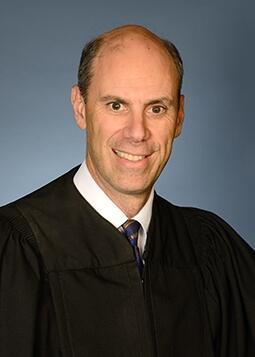
Last week, Chief Judge James Boasberg delivered a blow to the criminal investigation into Fed Chair Jerome Powell by tossing out grand jury subpoenas. Boasberg declared the investigation overtly political and coercive, without any criminal predicate. The decision is a rare rejection of a duly issued grand jury subpoena at this stage of an investigation. In my view, he was premature and could face a difficult appeal in In re Grand Jury Subpoenas, Bd. of Governors of the Federal Reserve System v. U.S.

I have previously expressed skepticism about the investigation into Powell and share concerns about the alleged use of the criminal justice system to pressure the Federal Reserve Board. However, the question is when a court can make such a judgment at this stage of the investigation. Prosecutors are generally entitled to make their case and these subpoenas sought potential evidence of waste or corruption.
Boasberg has long been one of the most vocal critics of President Donald Trump on the bench, including a series of orders to stop the deportation of immigrants to El Salvador and, recently, an order for their return. He was also the subject of an ethics complaint by the Administration over statements made at a judicial conference that portrayed President Trump as a threat to the rule of law. (For the record, I opposed the effort to impeach Judge Boasberg).
In the latest controversy, Boasberg rejected the premise of the criminal investigation of Powell:
“The case thus asks: Did prosecutors issue those subpoenas for a proper purpose? The Court finds that they did not. There is abundant evidence that the subpoenas’ dominant (if not sole) purpose is to harass and pressure Powell either to yield to the President or to resign and make way for a Fed Chair who will.”
Judge Boasberg quotes Trump’s personal attacks on Powell after he continued to refuse to lower interest rates. These include signature all-caps attacks from the President:
“Jerome ‘Too Late’ Powell has done it again!!! He is TOO LATE, and actually, TOO ANGRY, TOO STUPID, & TOO POLITICAL, to have the job of Fed Chair. He is costing our Country TRILLIONS OF DOLLARS …. Put another way, ‘Too Late’ is a TOTAL LOSER, and our Country is paying the price!”
Boasberg noted over 100 such postings, including “‘Too Late’ Jerome Powell is costing our Country Hundreds of Billions of Dollars. He is truly one of the dumbest, and most destructive, people in Government …. TOO LATE’s an American Disgrace!”
He also noted a menacing statement by the President that, if the Fed does not cut rates, “I may have to force something.”
This is not the first time that the President’s social media postings have been used as evidence against Administration policies in federal cases.
Many of us have criticized the President over personal attacks on judges or other officials.
However, courts generally do not impute an unlawful motive to criminal investigations or prosecutions if there is an otherwise valid purpose or allegation.
Judge Boasberg dismisses any such possibility of a valid purpose, writing:
“The case thus asks: Did prosecutors issue those subpoenas for a proper purpose? The Court finds that they did not. There is abundant evidence that the subpoenas’ dominant (if not sole) purpose is to harass and pressure Powell either to yield to the President or to resign and make way for a Fed Chair who will.
On the other side of the scale, the Government has offered no evidence whatsoever that Powell committed any crime other than displeasing the President. The Court must thus conclude that the asserted justifications for these subpoenas are mere pretexts. It will therefore grant the Board’s Motion to Quash. It will also grant the Board’s Motion to Partially Unseal the Motion to Quash, related briefing, and this Opinion….”
Once again, I do not fault the court for skepticism, but I do have serious concerns over his timing and his own possible bias in issuing such a ruling.
The Administration has an active but still early criminal investigation into the massive spending on renovations to the Federal Reserve building. To that end, the Justice Department served two subpoenas on the Federal Reserve Board of Governors, seeking records about the renovations of the Board’s buildings as well as Powell’s prior congressional testimony on those renovations. The Board filed a Motion to Quash, contending that the subpoenas are a raw play to force Powell to resign or to bend to the will of the President.
After reading the Boasberg opinion, my concerns only increased. At every juncture, Judge Boasberg ends his analysis with conclusory statements about his perception of the real motivation behind the case. That is a dangerous propensity for an Article III judge who must separate the politics from the merits in such challenges. In this case, Boasberg simply concluded that politics was the merits.
The court notes, correctly, that there are prior cases where grand jury subpoenas have been found improper if they are simply “fishing expeditions” or targeting “targets of investigation out of malice or an intent to harass.” They can also be quashed if prosecutors are seeking to meddle with an official’s duties. Such cases are very rare and the cited cases do not seem dispositive or even particularly helpful in the instant case.
The problem is that the main precedent relied on by the court suggests that this opinion is not just premature but itself an example of bias.
The court relies on Trump v. Vance to support the authority to quash an indictment. However, that case involved state prosecutors using grand-jury subpoenas financial records of President Trump and his businesses. Without actually ruling on whether the subpoenas were proper, the Court warned that state DAs cannot use grand-jury subpoenas to “interfer[e] with a President’s official duties.”
That case presented a threshold problem of state officials using the grand jury to target a president with obvious concerns over the Supremacy Clause. Judge Boasberg rightly noted that the clear import is that “a government official cannot do indirectly what she is barred from doing directly ….”
However, this is not something that the Justice Department is “barred from doing directly.” It has stated that the over-budget renovations raise concerns over fraud and wrongdoing. That is squarely within the jurisdiction of the Executive Branch.
Judge Boasberg cited cases such as NRA of Am. v. Vullo, 602 U.S. 175, 190 (2024) as an example of the bar on doing indirectly what you are barred from doing directly. However, like Vance, that case only makes this opinion stand out more. The case involved a New York state official using her powers to pressure banks and other companies not to do business with the NRA. That is manifestly different from the context in which prosecutors seek to enforce duly issued subpoenas to investigate possible fraud or waste in the criminal system.
Judge Boasberg then veers significantly from these cases with a series of conclusory remarks. He virtually mocks the suggestion that the Administration is acting in light of the massive costs and overruns, noting “buildings often go over budget.” Yet that does not mean federal officials are therefore barred from launching investigations into such matters.
The court further stresses that budget overruns “standing alone, hardly suggests that a crime occurred.” The question, again, is whether the required threshold is showing. The costs of the federal building are breathtaking and arguably unprecedented in terms of square foot expenditures. The court does not explain what showing is necessary to commence a criminal investigation. This is an early subpoena seeking basic documentary evidence.
The court notes that inspectors general have authority to investigate overruns and waste, adding that there was no such finding in this case. However, once again, the question is why that is relevant to the question before the Court. The IG may indeed be a better avenue for investigation, but there is nothing legally that forestalls an investigation by the Justice Department.
Once again, Judge Boasberg has voiced concerns shared by many on the basis of this criminal investigation. However, that is speculation in commentary. Judge Boasberg is not a talking head. He is a federal judge who must decide whether, despite such personal suspicions or inclinations, the court can bar otherwise valid grand jury subpoenas issued in an early stage of investigation.
The irony is that, while castigating the prosecutors for a lack of evidence, Judge Boasberg relies on dubious evidence to establish that political harassment is the dominant motivation. Quoting all-caps postings of the President does not offer evidence of a sole or dominant motive in an investigation. It is itself speculative and presumptive.
While Judge Boasberg notes that, “[w]ith varied improper purposes popping up on different occasions, it is clear that such purposes cannot be reduced to a fixed and exhaustive list,” he does not offer any clarity on when an investigation into fraud or waste would be demonstrably valid in its earliest stages. The court acknowledges that the Supreme Court has held there is no need for the Government to establish probable cause as the basis for issuing a grand-jury subpoena.
So that is the standard here other than Judge Boasberg’s suspicions based on public statements from the President?
The court merely states
“What the Court must determine is whether the Board is correct in its inference. In other words, what is these subpoenas’ dominant purpose? A mountain of evidence suggests that the dominant purpose is to harass Powell to pressure him to lower rates.”
That dominant purpose is far from evident. There is no evidence that Powell will yield to the pressure to lower rates, and many of us have noted that this would be a particularly ham-handed effort to get him to do so. From what we have seen, Powell has little to fear from this inquiry on a personal level. If anything, the improper purpose would seem like raw retaliation. However, there is also the pesky claim in the grand jury and captured in these subpoenas that the Administration believes that there is fraud or waste – and the possibility of false testimony. How would the court know at this stage that such claims are meritless or fraudulent? More importantly, what would stop future courts from rendering the same inferential judgment on presidents that they oppose?
Rather than answer that question, Boasberg returns to all-caps posts about how much the President despises Powell and wants him gone. The problem is that both positions could be true. The President could want Powell gone while the Justice Department could want to investigate waste and fraud.
For example, Boasberg quotes Trump as saying “we’re thinking about bringing a gross incompetence, what’s called a gross incompetence lawsuit, it’s gross incompetence, against Powell . . . I’d love to fire him. Maybe I still might.”
The problem is that Trump could believe that Powell is grossly incompetent and that he allowed massive overruns on this project. Boasberg just assumes that Trump wants Powell gone and even makes a veiled analogy to King Henry II signaling to his henchmen to kill Thomas Becket:
“In sum, the President spent years essentially asking if no one will rid him of this troublesome Fed Chair.”
(In this modern remake, apparently the murderous King is Trump, the saintly Becket is Powell, and the henchman is Pirro).
What is particularly disturbing is how the court dismisses the independent ethical duty of U.S. Attorney Jeanine Pirro to have a good-faith basis for seeking such subpoenas.
Judge Boasberg writes:
“True, most of the evidence above speaks to the motives of the President, not the U.S. Attorney’s Office. Yet judges ‘are not required to exhibit a naiveté from which ordinary citizens are free.’ Dep’t of Com. v. New York, 588 U.S. 752, 785 (2019) (quotation marks omitted). The U.S. Attorney was appointed by the President and can be fired by him. Her peer one district over was recently pushed out for refusing to prosecute the President’s opponents.”
This, for me, was the final abandonment of objectivity where assumptions become reality. By dismissing Pirro’s independent motivation, Boasberg leaves the weight of his own evidence as a string of social media posts. He ignores a major push by the administration to seek out government waste and fraud, which began with the DOGE efforts and was recently followed by the appointment of a “tsar” to root out fraud in federal programs. There is no serious debate that this Administration has made combating fraud and waste a priority and has taken unprecedented steps to investigate and prosecute such wrongdoing. Yet the court suggests that Pirro is merely clinging to her job by blindly carrying out the President’s demands.
None of this means that the court would lack the authority or a possible basis to dismiss this action at a later stage. My primary concern is the timing and the court’s presumptive analysis at this early stage. I fail to see a discernible standard in this case that would inform future courts or officials … other than presidents should not post in all caps or troll officials. While Judge Boasberg chastises the Justice Department for yielding too readily to its impulses, this opinion seems strikingly impulsive in critical aspects.
The Justice Department is appealing this opinion. We may see greater clarity on the underlying standard as the case works toward the Supreme Court.
Here is the opinion: Boasberg Opinion