Authored by David Manney via PJMedia.com,
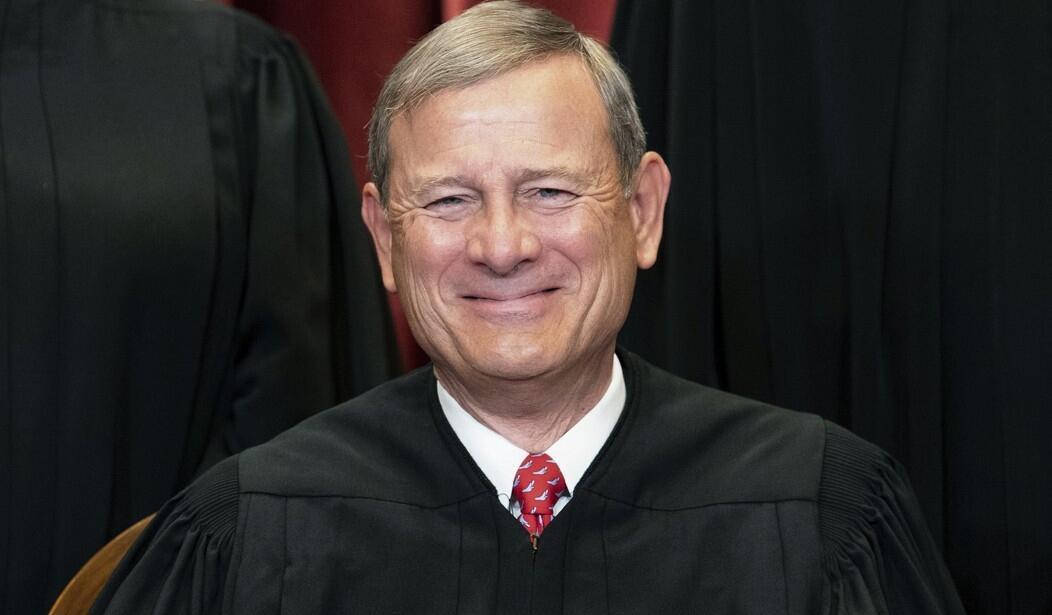
Chief Justice John Roberts, the person in charge of the Supreme Court of the United States, recently stepped forward with a familiar appeal, urging Americans to dial back personal attacks on judges and to show respect for the judiciary. The message landed with a tone of concern, almost paternal, as if the country had suddenly lost its bearings and needed a reminder about decorum.

Roberts framed the issue as one of civic responsibility, arguing that the rule of law depends on public confidence in the courts, which sounds right on its face.
Courts don't have armies; they rely on legitimacy, and when that legitimacy weakens, the system strains.
But we didn't just fall off the bus deciding to turn on the judiciary.
That frustration has been building for years, and it didn't come from nowhere.
For nearly a decade, a steady stream of rulings from lower federal courts has blocked, delayed, or reshaped executive actions tied to President Donald Trump.
Judges like James Boasberg, chief judge of the U.S. District Court, and Tanya Chutkan, U.S. district judge, both for the District of Columbia, have played central roles in high-profile cases involving Trump-era policies. Their decisions have drawn sharp reactions, not because people suddenly dislike judges, but because the rulings often carry clear political consequences.
Roberts has spent much of his tenure trying to protect the idea that judges operate above politics, saying more than once that there are no “Obama judges” or “Trump judges,” only independent jurists applying the law.
That's a noble-sounding principle, but Americans aren't blind; when rulings repeatedly align with the predictable political outcomes, people begin to question the claim.
The perception of neutrality weakens, not because the public suddenly turned cynical, but because patterns became too hard to ignore.
The frustration cuts both ways; progressive activists have attacked conservative justices like Samuel Alito and Clarence Thomas over ethics and past rulings. The left has taken its gloves off, and Roberts knows it.
Still, Roberts' warning feels incomplete; asking Americans to lower their voices without addressing why the temperature rose in the first place misses the heart of the issue. The judiciary didn't drift into political relevance accidentally.
Federal courts now play a central role in shaping policy outcomes, often stepping in before laws or executive actions even take full effect. That wasn't an overnight shift, and it didn't happen without participation from the judges themselves.
The modern legal environment invites litigation as a political tool; advocacy groups file lawsuits within hours of major policy announcements. Judges issue nationwide injunctions that extend far beyond their districts. Legal strategy has become a parallel track to elections, and Americans see it unfolding in real time. When courts act in ways that influence national policy so directly, people respond, and that response won't always be polite.
Standing at the center of that tension is our chief justice, who carries more than a ceremonial role. He sets the tone, influences internal dynamics, and typically serves as the deciding vote in closely split cases.
Roberts' effort to preserve the Court's image as an apolitical institution reflects a real concern, but it also reflects a gap between message and lived experience. Americans don't judge the courts by speeches; they judge them by outcomes.
Respect can't be commanded; it has to be earned and reinforced through consistent behavior. When decisions appear uneven or strategically timed, trust weakens, and when those rulings follow clear ideological lines, skepticism grows. That doesn't mean every judge acts with political intent, but perception matters, and perception forms over time.
Roberts isn't wrong to want civility; no functioning system benefits from constant personal attacks, but asking for restraint without confronting the conditions that created public frustration won't settle anything. The judiciary has stepped deeper into the political arena over the past decade, and Americans have responded in kind, a dynamic that won't reverse with a speech.
A courtroom doesn't exist in a vacuum.
Every ruling echoes beyond its walls, shaping how Americans view fairness, authority, and accountability. When those echoes begin to sound uneven, people react.
Roberts wants calm, but calm follows clarity, and if the judiciary wants less criticism, it has to show, over time, that decisions come from law alone, not from outcomes people can predict before the gavel ever falls.