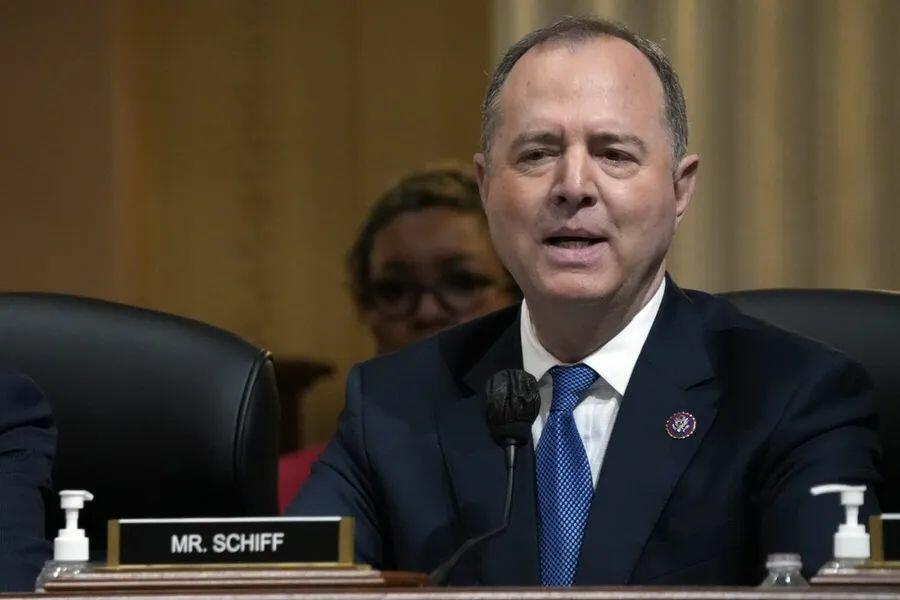
Lawmakers have never met a market they didn't want to control. And when they can't do that, they try to crush them - sometimes after taking six-figure donations from competing lobbies. To wit; Sens. Adam Schiff (D-CA), and John Curtis (R-UT), on Monday introduced legislation that would prohibit federally regulated prediction-market platforms from offering wagers on sports events, targeting what they call a regulatory backdoor that has let online betting proliferate beyond state control. Reading between the lines, prediction market betting is clearly a threat to the old guard.

The bill, titled the Prediction Markets Are Gambling Act, would bar entities overseen by the Commodity Futures Trading Commission - including leading platforms Kalshi and Polymarket’s U.S. operations - from listing or trading contracts tied to the outcomes of any sporting event or athletic competition. It would also extend the prohibition to “casino-style games” such as slot machines, video poker, blackjack and bingo. The measure marks the first bipartisan Senate legislation aimed squarely at prediction markets’ expansion into sports wagering.
The push comes as the broader U.S. sports-betting industry - legalized nationwide after a landmark 2018 Supreme Court ruling - generated a record handle of roughly $167 billion and gross gaming revenue of about $17 billion in 2025. More than 90% of those bets are placed online or via mobile apps operated by companies such as DraftKings Inc. and Flutter Entertainment Plc.’s FanDuel. Yet prediction markets, which structure wagers as yes-or-no event contracts under CFTC oversight rather than state gambling licenses, have carved out a parallel lane. These platforms, which gained prominence during the 2024 presidential election, now derive a significant share of volume from professional and college sports, offering bets even in states that prohibit traditional sportsbooks.
OF NOTE: The gambling industry contributed $111,876 to Sen. Schiff during the 2023-2024 election cycle, with California tribal gaming entities being particularly supportive - donating six-figure sums to pro-Schiff leadership PACs and related efforts.
Meanwhile, the American Gaming Association (AGA), which represents licensed operators including DraftKings and FanDuel parent Flutter Entertainment, and the Indian Gaming Association (IGA) have publicly pressed Congress and states to crack down on prediction-market sports contracts.
A Regulatory Loophole Sparks Bipartisan Alarm
Schiff and Curtis argue that betting via prediction markets undermines state authority, deprives governments and tribal casinos of tax revenue, and exposes young people to addictive products without the consumer protections that accompany licensed sportsbooks. “The CFTC is greenlighting these markets and even promoting their growth,” Schiff said. “It’s time for Congress to step in and eliminate this backdoor, which violates state consumer protections, intrudes upon tribal sovereignty and offers no public revenue.”
Curtis, whose home state of Utah remains one of the few without legal sports betting, highlighted concerns about youth access. “Too many young people in Utah are getting exposed to addictive sports betting and casino-style gaming contracts that belong under state control, not under federal regulators,” he said.
The legislation aligns with a companion House effort, the Event Contract Enforcement Act, introduced earlier this month by Reps. Blake Moore, a Utah Republican, and Salud Carbajal, a California Democrat. That bill would require the CFTC to prohibit event contracts related to sports and gaming, among other sensitive categories such as terrorism and elections, while giving states an opt-out for sports-related contracts. “Prediction markets also sponsor sports-related contracts against the wishes of many states, including Utah,” Moore said in a statement.
States have grown increasingly frustrated. Attorneys general from 39 states and the District of Columbia have urged federal courts to uphold their authority. Nevada secured a temporary restraining order last week blocking Kalshi from offering sports, election and entertainment contracts without state licenses. Arizona filed criminal charges against Kalshi’s parent companies. Lawsuits and countersuits have proliferated, with platforms arguing exclusive federal jurisdiction and states insisting the products amount to illegal gambling.
The Supreme Court’s 2018 decision striking down the Professional and Amateur Sports Protection Act unleashed a wave of state legalization. Thirty-eight states plus the District of Columbia now permit sports betting, generating billions in tax revenue and creating thousands of jobs. Major leagues from the NFL to the NBA have embraced partnerships, sharing data for integrity monitoring and reaping sponsorship dollars.
Prediction Markets Exploding in Popularity
Prediction markets have exploded from niche election curiosities into a multi-billion-dollar parallel sports-betting channel. Kalshi posted roughly $17–24 billion in notional volume in 2025 (85–87% sports), while Polymarket reached $21.5 billion overall (sports ~39% globally, nearly 100% on its U.S. app). Combined monthly trading volume for the two platforms surged to nearly $18 billion in February 2026 and hit a record $26 billion in January 2026, with Kalshi alone handling more than $2 billion per week ahead of the Super Bowl. Valuations followed: Kalshi hit an $11 billion mark, Polymarket $8 billion, fueled by venture inflows and retail/crypto traders who treat contracts like liquid equities rather than traditional parlays.

This growth has turned the platforms into a measurable competitive pressure point. Kalshi’s sports-fee revenue is already running at an annualized pace that rivals roughly 25% of DraftKings’ projected 2026 take, while both operators now serve prohibition states that traditional books cannot touch. User bases have scaled rapidly - Kalshi monthly actives topped 5 million, Polymarket’s on-chain DAU records exceeded 150,000 in recent weeks - creating a younger, more tech-native cohort that bypasses state licensing, taxes, and responsible-gaming mandates. Traditional operators view the trajectory as existential if unchecked: without federal intervention, analysts project the sector could capture 3–5% of national sports revenue in 2026 and far more by decade’s end.
Industry Reaction and Market Moves
Traditional sports-betting operators appeared to welcome the news. Shares of DraftKings rose more than 7% in premarket trading Monday, only to settle up 2.3% as of this writing, while Flutter Entertainment gained nearly 9.5% (now only up 5.15%). The American Gaming Association, which represents many licensed operators, has long warned that unregulated prediction markets threaten state-regulated markets and lack responsible-gaming standards.
Kalshi pushed back sharply. “Banning sports on regulated prediction markets would just push this behavior offshore, where no regulation exists,” said spokeswoman Elisabeth Diana. “It’s clear this bill is motivated by casino interests that are threatened by competition.” Polymarket did not immediately respond to requests for comment.
The prediction-market sector itself remains nascent but fast-growing, with platforms reporting billions in trading volume and attracting venture-capital interest. Proponents argue the markets promote price discovery and innovation; critics counter that sports contracts function indistinguishably from gambling.
The new bill joins a slate of bipartisan measures addressing sports betting. The SAFE Bet Act, backed by Sen. Richard Blumenthal of Connecticut and Rep. Paul Tonko of New York, would impose federal minimum standards on state programs - including advertising restrictions during live events, limits on bonus bets and curbs on credit-card deposits. Separately, the POINTS Act would direct roughly one-third of the federal excise tax on sports betting - potentially $100 million annually - toward prevention, treatment and recovery services for gambling addiction.
Supporters frame the efforts as protecting consumers without dismantling an industry that has become a significant economic force. Opponents warn that heavy-handed federal intervention could stifle innovation, reduce tax revenue and drive activity to offshore sites.