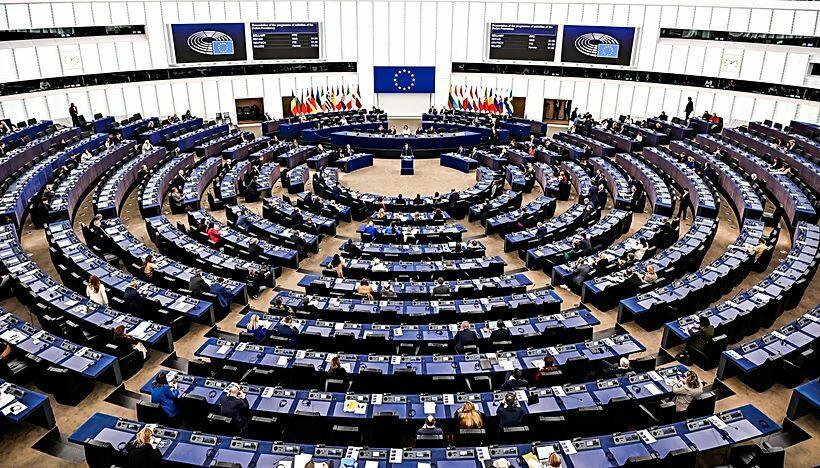
On Thursday, the European Parliament in Strasbourg delivered what many are calling one of the most significant setbacks in recent memory for the EU’s traditional bureaucratic and centrist consensus.

In a single day, MEPs advanced stricter mass deportation rules, rejected controversial mass surveillance of private communications (known as “Chat Control”), and moved forward on dropping tariffs on key U.S. goods as part of a broader transatlantic trade reset.
These outcomes reflect a pragmatic and unprecedented alliance between the centre-right European People’s Party (EPP) and right-wing to so-called 'far-right' groups such as the Patriots for Europe (PfE), European Conservatives and Reformists (ECR), and others. For the first time in years, traditional “firewalls” isolating nationalist voices have cracked, forcing Commission President Ursula von der Leyen’s agenda into retreat on sovereignty, borders, digital rights, and economic realism.
1. Mass Deportations Advance: A Tougher EU Return Regulation
The Parliament voted overwhelmingly to launch inter-institutional negotiations on a reformed EU Return Regulation - often called the “Deportation Regulation” by critics. The measure aims to make it far easier to deport rejected asylum seekers and irregular migrants. Key provisions include:
- Extended detention periods (potentially up to 24 months or more in some cases).
- EU-wide recognition of return decisions.
- Creation of “return hubs” - offshore detention and processing centers in third countries outside the EU.
- Stronger cooperation requirements from returnees and fewer procedural safeguards.
The vote builds on earlier committee approvals and the 2024 Migration Pact (full implementation due June 2026). Centre-right and right-wing MEPs formed a clear majority, overriding opposition from Greens, Socialists, and liberals who warned of a “historic setback for refugee rights.” The International Rescue Committee (IRC) condemned the move as leading to more raids, criminalization, and detention of vulnerable people.
Supporters argue it addresses years of failed integration, rising irregular arrivals, and public frustration post-2015 and 2022 migration surges. Similar national policies in Italy (under Meloni), Denmark, and the Netherlands have already normalized this harder line.
2. Chat Control Defeated: A Victory for Digital Privacy
In a nail-biter described as a “voting thriller,” MEPs rejected attempts to expand or extend untargeted mass scanning of private chats, messages, and photos for child sexual abuse material (CSAM). A narrow amendment (passed by a single-vote margin in key steps) limits any future scanning to targeted, judicially supervised cases involving suspected individuals or groups - explicitly ruling out blanket surveillance of entire platforms or users.
This effectively ends the temporary “Chat Control 1.0” derogation’s broader rollout and aligns with the Parliament’s long-standing 2023 mandate against indiscriminate monitoring. Digital rights advocates, including Pirate MEP Patrick Breyer and groups like DigitalCourage, hailed it as a historic win against Big Tech and Commission overreach. Critics had long argued the proposal violated fundamental rights and risked breaking end-to-end encryption.
The Commission and most of the Council had pushed hard for extensions, but Parliament’s stand - backed by a cross-ideological privacy coalition - prevailed. It sends a clear signal: Europe is prioritizing targeted security tools over mass surveillance.
3. Tariffs on U.S. Goods Dropped: Pragmatic Trade Reset with Trump’s America
MEPs advanced ratification steps for elements of the 2025 EU-U.S. Turnberry trade deal (struck last July in Scotland). This includes eliminating or suspending EU tariffs on major U.S. industrial and agricultural imports in exchange for American concessions and a 15% ceiling on most EU exports to the U.S. Earlier retaliatory tariffs on billions in U.S. goods were effectively sidelined.
The move comes amid ongoing Trump-era pressures - including threats of universal tariffs, LNG supply leverage, and even Greenland-related tensions. Committee votes (e.g., 29-9 in the trade committee) reflected realism: Europe needs stable U.S. energy and defense ties amid Ukraine stalemate and Iran conflict fallout. Full parliamentary approval is expected soon, with safeguards added to protect EU interests.
This de-escalation marks a shift from protectionist posturing to pragmatic partnership — one that right-wing voices have long advocated.
The Political Earthquake: Centrists Align with Nationalists
What makes Thursday truly historic is the voting pattern. EPP MEPs, traditionally the anchor of pro-EU centrism, repeatedly sided with PfE, ECR, and other right-wing blocs - overriding the old Renew-S&D-Green coalition. This “Venezuela majority” (named after an earlier symbolic vote) has now delivered on concrete policy.
Von der Leyen, re-elected in 2024 with broad centrist support, is reportedly furious. Multiple no-confidence motions from the Patriots have failed so far, but her Green Deal, globalist migration, and regulatory agenda face constant erosion. So-called 'far-right' groups now act as kingmakers, reflecting the post-2024 election reality where populist parties dominate polls in France (RN), Germany (AfD), Austria (FPÖ), and beyond.
Broader Context: Europe’s Rightward Shift in 2026
These votes are not isolated. They mirror a continent-wide backlash against open borders, digital overreach, inflation/energy crises, and perceived bureaucratic elitism. National trends reinforce the momentum:
- France: Marine Le Pen’s RN leads polls ahead of 2027.
- Germany: AfD hits record highs in western states.
- Hungary: Viktor Orbán faces a tough April 12 election but frames the EU as the real threat.
- Italy: Giorgia Meloni’s government remains stable and influential.
Upcoming local and national tests - plus full implementation of the Migration Pact in June - will determine if rhetoric translates to results. Farmers’ protests, youth discontent, and security concerns continue to fuel the shift.
Implementation Challenges and the Road Ahead
While today’s votes are symbolic victories for sovereignty advocates, real change will take time. Return hubs require third-country agreements; Chat Control’s targeted approach still needs enforcement; trade safeguards could face U.S. pushback. Courts, NGOs, and some member states are expected to challenge the hardest edges.
Yet the Overton window has permanently shifted. The old centrist consensus is fracturing. As one MEP from the Patriots group put it anonymously: “We’re at a tipping point.”
Europe isn’t undergoing a full revolution overnight, but Thursday's actions crystallized a new pragmatic realism. Voters demanded borders, privacy, and economic common sense - and for the first time, a critical mass of MEPs listened. Whether this delivers tangible improvements before the next electoral cycle will define the decade.