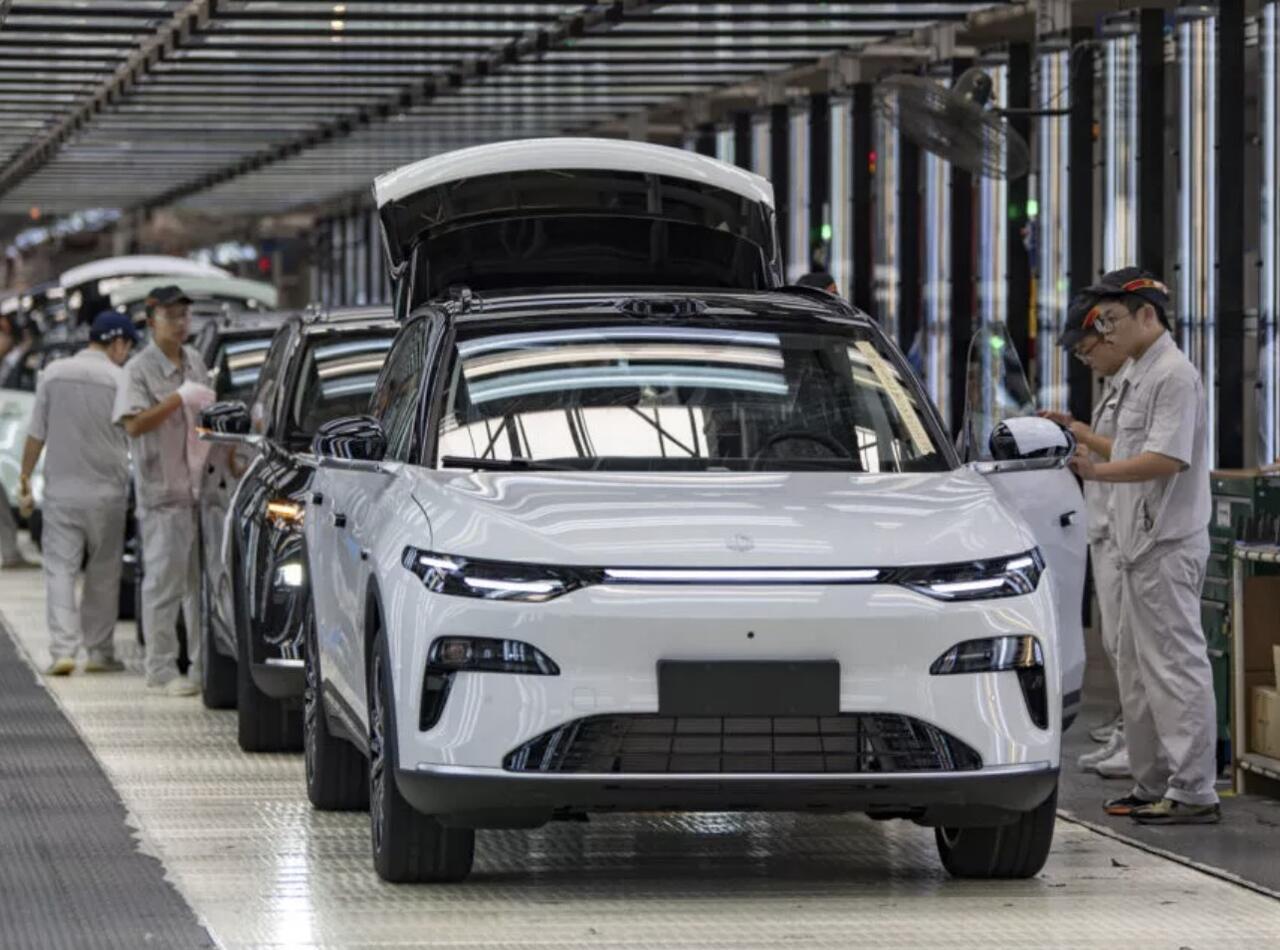
A sharp rise in oil prices tied to the US-Israel confrontation with Iran is likely to speed up the global transition to electric vehicles, strengthening a shift that has already helped China overtake Japan as the world’s top car seller, according to South China Morning Post.
Crude prices have surged past $100 a barrel amid fears of disruption to energy supplies, particularly through the Strait of Hormuz. US President Donald Trump escalated tensions by warning he would “obliterate” Iran’s power plants if shipping through the strait was not restored within 48 hours.
Analysts say such risks could have a direct impact on consumer behavior. “The closure of the Strait of Hormuz could be a game-changer for EVs,” said David Brown of Wood Mackenzie. He noted that the recent “eye-watering” 50 per cent spike in oil prices would make electric vehicles more financially attractive. “In those countries with access to low-cost Chinese EVs, the competitive advantage over gasoline-engined cars will come even sooner.”
HSBC economist Justin Feng echoed that view, arguing that prolonged volatility in fuel markets would reinforce EVs as a clear “cost-savings proposition,” particularly across Asia where price sensitivity is high.

SCMP writes that the broader shift is already underway. The number of countries where EVs make up more than 10 per cent of car sales has risen dramatically in recent years, reaching 39 compared with just four in 2019. Adoption has been especially rapid in developing economies, in some cases outpacing wealthier nations.
China stands to benefit significantly from this trend. Its automakers became the world’s largest sellers of vehicles in 2025, ending Japan’s long-held dominance. Companies such as BYD and Geely have also moved ahead of Japanese rivals including Nissan and Honda, while Chinese brands now make up a growing share of the global top 20 by sales.
Exports have played a major role in that rise. China shipped 8.32 million vehicles overseas last year, a 30 per cent increase, with electric vehicles accounting for 2.32 million units, up 38 per cent. Europe remains the biggest market, followed by Southeast Asia, Latin America and the Middle East.
At the same time, higher energy costs could create complications for EV production in the near term. Manufacturing remains energy-intensive, leaving some countries exposed to rising fuel costs. Thailand, which relies heavily on energy imports from the Gulf, is particularly vulnerable.
China, however, is expected to be better positioned to absorb such shocks thanks to its more integrated supply chains and greater flexibility in energy sourcing, allowing its EV sector to continue expanding even amid global uncertainty.