As electric vehicle (EV) adoption grows in the United States, a segment of American consumers is increasingly drawn to Chinese-made models—largely due to their affordability, advanced technology, and feature-rich designs. However, steep trade barriers and political resistance continue to keep these vehicles out of the U.S. market, according to Reuters.
With the average price of a new car in the U.S. մոտ $50,000, Chinese EVs—many of which sell for under $30,000 in international markets—are gaining attention for offering strong value. Models from automakers such as BYD, Geely, and Zeekr often include premium interiors, advanced driver-assistance systems, and unique features like in-car entertainment and mini refrigerators, typically found in higher-end vehicles.
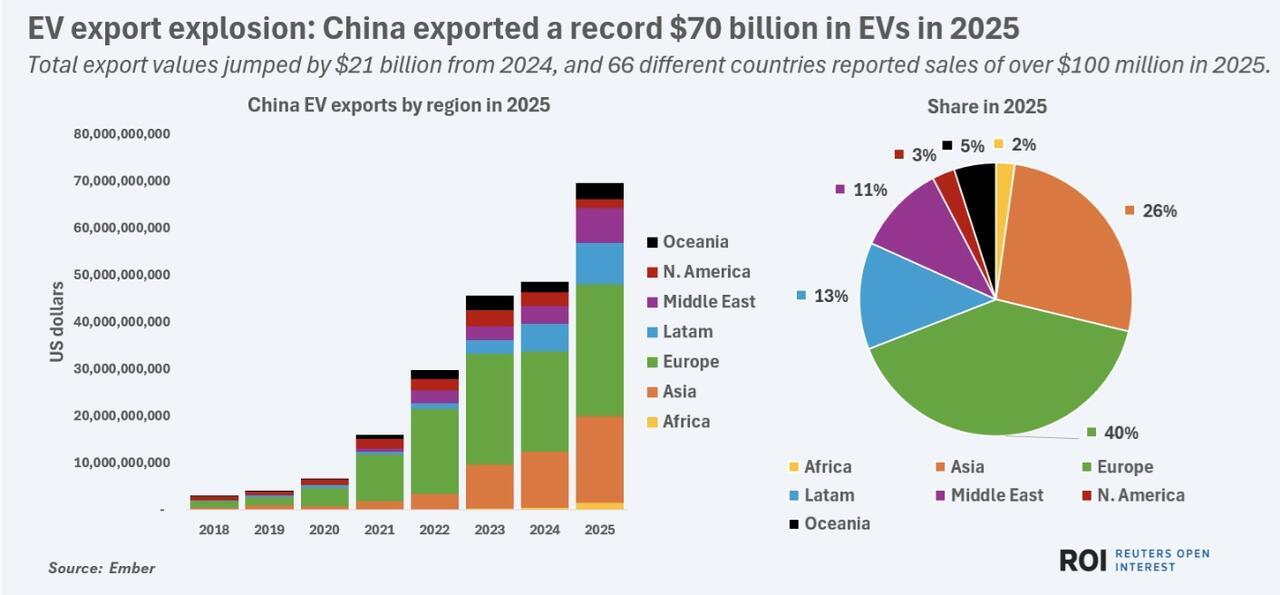
Reuters writes that industry experts note that Chinese automakers have rapidly improved both quality and innovation. China has recently surpassed Japan to become the world’s largest vehicle exporter, with growing sales across Europe, Latin America, and parts of North America. Countries such as Canada and Mexico have already begun integrating Chinese EVs into their markets at lower tariff rates.

In contrast, the United States has imposed tariffs exceeding 100% on Chinese vehicles, effectively blocking their entry. Policymakers cite concerns over data security, regulatory compliance, and the potential impact on domestic manufacturing jobs. Major U.S. auto industry groups have also urged continued restrictions, arguing that domestic automakers could face significant competitive pressure.
Despite these barriers, consumer curiosity remains strong. Surveys indicate that nearly half of prospective U.S. car buyers view Chinese vehicles as offering high value, and a notable share support allowing them into the domestic market. At the same time, concerns persist around safety standards, data privacy, and broader economic implications.
Auto dealers remain cautious. While many acknowledge that competitively priced Chinese EVs could attract buyers, only a small percentage currently support their introduction, citing uncertainty over compliance with U.S. regulations and market disruption.
For now, Chinese EVs remain largely absent from American roads. Yet as global competition intensifies and affordability becomes a growing concern for consumers, pressure may continue to build for greater access to lower-cost electric vehicles in the U.S. market.
* * * Be Prepared
