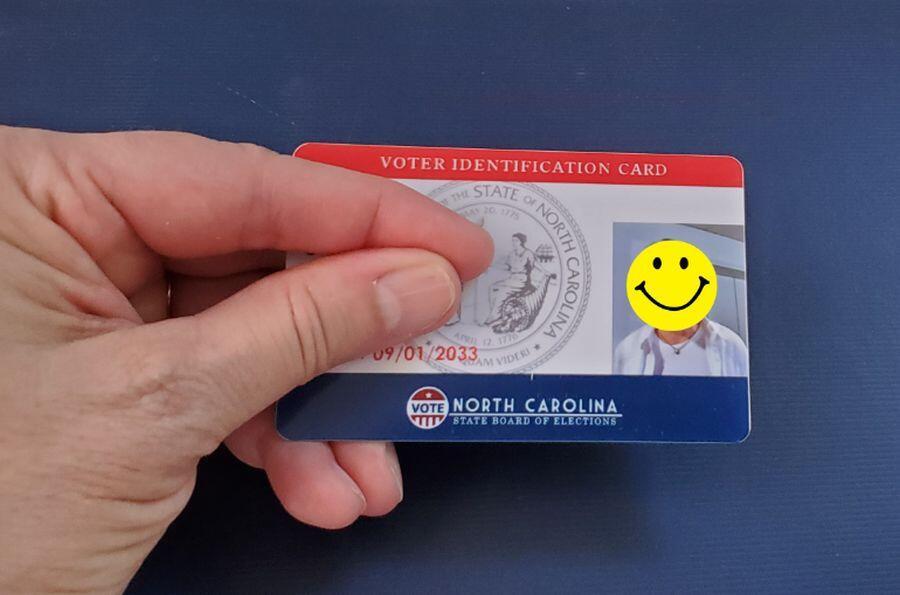
It took seven years, one reversed injunction, and an Obama-appointed judge to settle what most Americans already believed: requiring a photo to vote is not a civil rights violation.

This week, U.S. District Judge Loretta Biggs dropped a 134-page ruling upholding North Carolina's photo voter ID law and dismissing claims by the state NAACP and other left-wing civil rights organizations that Republicans designed the 2018 requirement to discriminate against black and Latino voters.
The decision is a huge victory for Republican legislative leaders, who have been litigating this question since the law passed, and it comes at a critical time, as the SAVE America Act is being obstructed by Democrats in the U.S. Senate.
“It is important that this Court begins by recognizing what this case is, and what it is not,” Biggs wrote in her order. “This case is not about whether North Carolina law will require that voters show photo identification when they go to the polls. That question was settled on November 6, 2018, when approximately 55% of North Carolina’s registered voters enshrined a photo voter identification requirement in the State Constitution.”
“Thus, there will be photo voter ID in the State of North Carolina,” Biggs continued. “In our democratic system of government, we must accept the will of the majority of voters on this issue unless or until the people of North Carolina decide otherwise.”
Despite her ruling, Biggs noted that North Carolina has an "undisputed history of extensive official discrimination against African Americans,” and even claimed that the law places measurable burdens on black and Latino voters, even though there is no evidence that minority voters face any institutional roadblocks in acquiring photo ID. However, she based her ruling on a controlling precedent, which compelled her to reach a different conclusion. Higher court rulings since the original lawsuit was filed left Biggs with one legally defensible path: defer to legislative good faith and apply established standards. The evidence, as she wrote, simply did not establish discriminatory intent under the legal framework she was bound to follow.
In fact, the law was designed to remove any possible roadblocks to obtaining a photo ID, including making IDs free at county election offices and the DMV, and expanding the acceptable forms of identification to include not just a driver’s license but also a military ID or a U.S. passport. Voters who show up without a qualifying ID can still cast a provisional ballot by using an exception form or by presenting their ID to election officials before certification.
Despite all these safeguards, it took seven years to finally end the battle.
Back in December 2019, Biggs had issued a preliminary injunction blocking the law for the 2020 election cycle, citing North Carolina's history of voter suppression and finding parts of the statute impermissibly motivated by discriminatory intent. The 4th U.S. Circuit Court of Appeals unanimously reversed her. Now, after a full non-jury trial in spring 2024, she arrived at the same destination the appellate court had pointed her toward years earlier. The State Supreme Court also upheld the law in a separate case.
Sen. Phil Berger, the North Carolina Senate's Republican leader, was thrilled that the issue is finally settled.
“Finally. After seven years, we can put to rest any doubt that our state's Voter ID law is constitutional," he said. Seven years is a long time to wait for a court to affirm something 55% of North Carolina voters already decided at the ballot box in 2018 — by constitutional amendment, no less.
President Trump has made the SAVE America Act, which would mandate a photo ID to vote and proof of citizenship to register to vote, a central part of his agenda this year. Biggs’s ruling now undercuts the opposition from Democratic leaders Hakeem Jeffries and Chuck Schumer, who oppose the SAVE Act despite consistent bipartisan polling in its favor.