Authored by Mike Fredenburg via The Epoch Times,
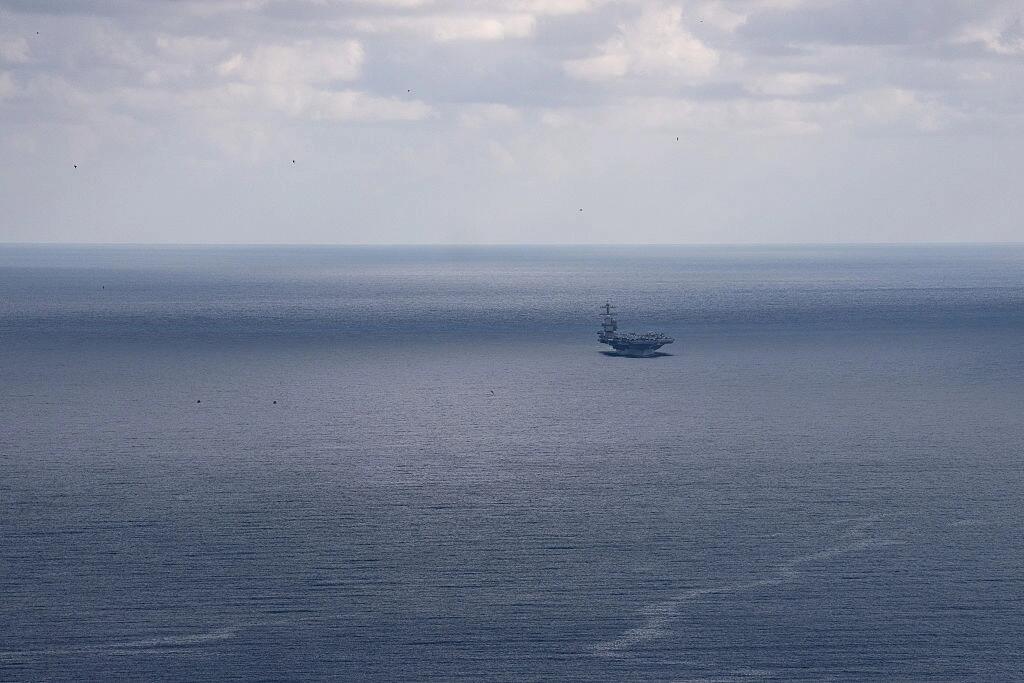
The $15 billion USS Ford was forced to cut short its deployment due to a 30-hour laundry fire that did millions of dollars in damage. And it has been revealed that even while it remained on station in the Gulf, Ford could not generate combat sorties for two days due to the raging 30-hour laundry fire that drove some 600 sailors out of their sleeping quarters. Thirty hours to get a laundry fire under control raises a couple of questions. Why would a laundry catch on fire, and why did it take the firefighters and damage-control personnel of the USS Ford so long to put out the laundry fire? Sadly, the answers can be found in some wrongheaded decisions the Navy made in its effort to be viewed as being “green.”
Design for the Ford-class carrier began in March 1996, and finally, more than $15 billion later, the USS Ford was fully certified for combat in April 2023. Due to a misguided green initiative, instead of installing inherently super energy-efficient steam-based laundries, the Ford-class carriers have standardized on more expensive, more complex, inherently fire-prone, ozone-based systems.

The green reason for these systems is that they supposedly save energy and water by being able to operate with cold water only, while also needing 30 percent less water than the steam-based systems the U.S. Navy has historically relied on. A Jan. 12, 2012, Navy memo made this revealing statement:
“Ozone technology is increasing the earth-friendly aspect of shipboard laundering and moving navy laundries towards a ‘greener’ process. Good for the sailor… good for the ship… good for the earth!”
This sure sounds wonderful, but just a bit of analysis shows that the ozone-based laundries, like so many of the U.S. military’s so-called green initiatives, actually weaken our military while costing more than the mechanically robust, battle-tested systems they replace.
First, it must be pointed out that when you look at the energy budget of a typical warship, including propulsion, less than 1 percent of the warship’s total energy budget is expended on freshwater production and laundry services, with the vast majority of energy being used for the ship’s propulsion and the rest of the systems described by the Expanded Ship Work Breakdown Structure for Navy ships.
What’s more, the annual cost for producing fresh water on our entire fleet of Navy ships is just $22 million, and the water for the laundry is a fraction of this. Further, every Navy ship can produce far more fresh water than it needs for its average daily use. For example, both Ford- and Nimitz-class carriers can produce double the average amount of water needed daily. Getting more specific, installing an ozone-based laundry on an Arleigh Burke destroyer, which uses gas turbines instead of steam turbines, does result in a 30 percent reduction in energy used by its laundry system, including the energy savings from reduced freshwater desalination. But with laundries consuming less than 1 percent of ships’ overall energy consumption (including propulsion), this would result in less than 0.3 percent energy savings. All other things equal, that might make sense, especially if the systems were built into the ship from the outset. But the ozone-based systems cost more, require more ongoing maintenance, are more dependent on expensive shore-based vendor support to keep them operational, and are built around a potent oxidizer—ozone.
Finally, the ozone-related laundries end up creating a much drier environment than the moist atmosphere created by steam-reliant systems. It was the drier environment that helped create the extremely dry lint that caused the Ford laundry room fire. And these high-tech laundries require very expensive, corrosion-resistant piping, fittings, and seals, along with 24/7 monitoring to ensure the highly corrosive, lung-irritating, fire-accelerating ozone does not find its way past the specialized, very expensive seals. So, even for ships that rely on gas turbines or marine diesels, such as our Navy’s destroyers and some of our larger warships, the case for ozone-based systems is highly debatable, to say the least.
But when it comes to ships like our carriers, submarines, and about 10 other large warships and support vessels whose prime movers are steam turbines, the ozone-based systems are a big, expensive step backward in pretty much every area, including the environment. This is the case because our ships’ high-pressure steam turbines naturally produce relatively low-pressure waste steam that can either be recondensed by using cold ocean water or used to heat water for a ship’s laundry and provide heat for the ship’s clothes dryers. In other words, this is nearly free energy. In contrast, the ozone-based laundry is 100 percent reliant on electricity from the ship’s generators. Thus, steam-reliant laundries are much more energy efficient or “green” than ozone-reliant ones. And while the gray water discharge from ozone-based systems is technically superior to that from steam-reliant systems, the sun and natural mechanisms in the ocean rapidly remediate all gray water discharges. Hence, from a practical environmental perspective, the gray water discharges are identical.
Sadly, not only does it seem as if the Navy wants to make ozone-based systems standard, but it has spent countless millions ripping out robust fire-resistant steam-based laundry systems on Nimitz-class carriers in order to install the expensive, high-tech, less reliable, more vendor-dependent ozone-based systems.
And there are still Nimitz-class carriers scheduled to undergo the “upgrade,” for which it would not at all be surprising to find costs of more than $10 million each to rip out the highly integrated steam-reliant laundries and replace them with ozone-reliant laundries.
Hopefully, the USS Ford fire will get the Navy, and maybe even Congress, to put a stop to the needless and arguably harmful green tech that provides no practical environmental benefits.
Hopefully, the U.S. military, under pressure from the Trump administration, will permanently move away from green virtue signaling and get back to investing in systems that provide the best possible lethality for the dollar, while maximizing the chances that our sailors, soldiers, airmen, and Marines return home safely.