Startup CEOs who are “tokenmaxxing” are bragging that they are spending more money on AI compute than it would cost to hire human workers. Astronomical AI bills are now, in a certain corner of the tech world, a supposed marker of growth and success.
“Our AI bill just hit $113k in a single month (we’re a 4 person team). I’ve never been more proud of an invoice in my life,” Amos Bar-Joseph, the CEO of Swan AI, a coding agent startup, wrote in a viral LinkedIn post recently. Bar-Joseph goes on to explain that his startup is spending money on Claude usage bills rather than on salaries for human beings, and that the company is “scaling with intelligence, not headcount.”
“Our goal is $10M ARR [annual recurring revenue] with a sub-10 person org. We don’t have SDRs [sales development representatives], and our paid marketing budget is zero,” he wrote. “But we do spend a sh*t ton on tokens. That $113K bill? A part of it IS our go-to-market team. our engineering, support, legal.. you get the point.”
Much has been written in the last few weeks about “tokenmaxxing,” a vanity metric at tech startups and tech giants in which the amount of money being spent on AI tools like Claude and ChatGPT is seen as a measure of productivity. The Information reported earlier this month on an internal Meta dashboard called “Claudenomics,” a leaderboard that tracks the number of AI tokens individual employees use. The general narrative has been that the more AI tokens an employee uses, the more productive they are and the more innovative they must be in using AI.
Stories abound of individual employees spending hundreds of thousands of dollars in AI compute by themselves, and this being something that other workers should aspire to. There has been at least a partial backlash to this, with Salesforce saying they have invented a metric called “Agentic Work Units” that attempts to quantify whether all this spend on AI tokens is translating into actual work.
Shifting so much money and attention to using AI tools is, of course, being done with the goal of replacing human workers. We have seen CEOs justify mass layoffs with the idea that improving AI efficiency will reduce the need for human workers, and Monday Verizon CEO Dan Schulman said he expects AI to lead to mass unemployment.
But while big companies are using AI to justify reducing worker headcount, startups are using AI to justify never hiring human workers in the first place.
“This is the part people miss about AI-native companies - the $113k is not a cost, it is your headcount budget allocated differently,” Chen Avnery, a cofounder of Fundable AI, commented on Bar-Joseph’s LinkedIn post. “We run a similar model processing loan documents that would normally require a team of 15. The math works when your AI spend generates 10x the output of equivalent human cost. The real unlock is compound scaling—token spend grows linearly while output grows exponentially.”
Medvi, a GLP-1 telehealth startup that has two employees and seven contractors was built largely using AI, is apparently on track to bring in $1.8 billion in revenue this year, according to the New York Times (Medvi is facing regulatory scrutiny for its practices). The industry has become obsessed with the idea of a “one-person, billion-dollar company,” and various AI startups and venture capital firms are now trying to push founders to try to create “autonomous” companies that have few or no employees.
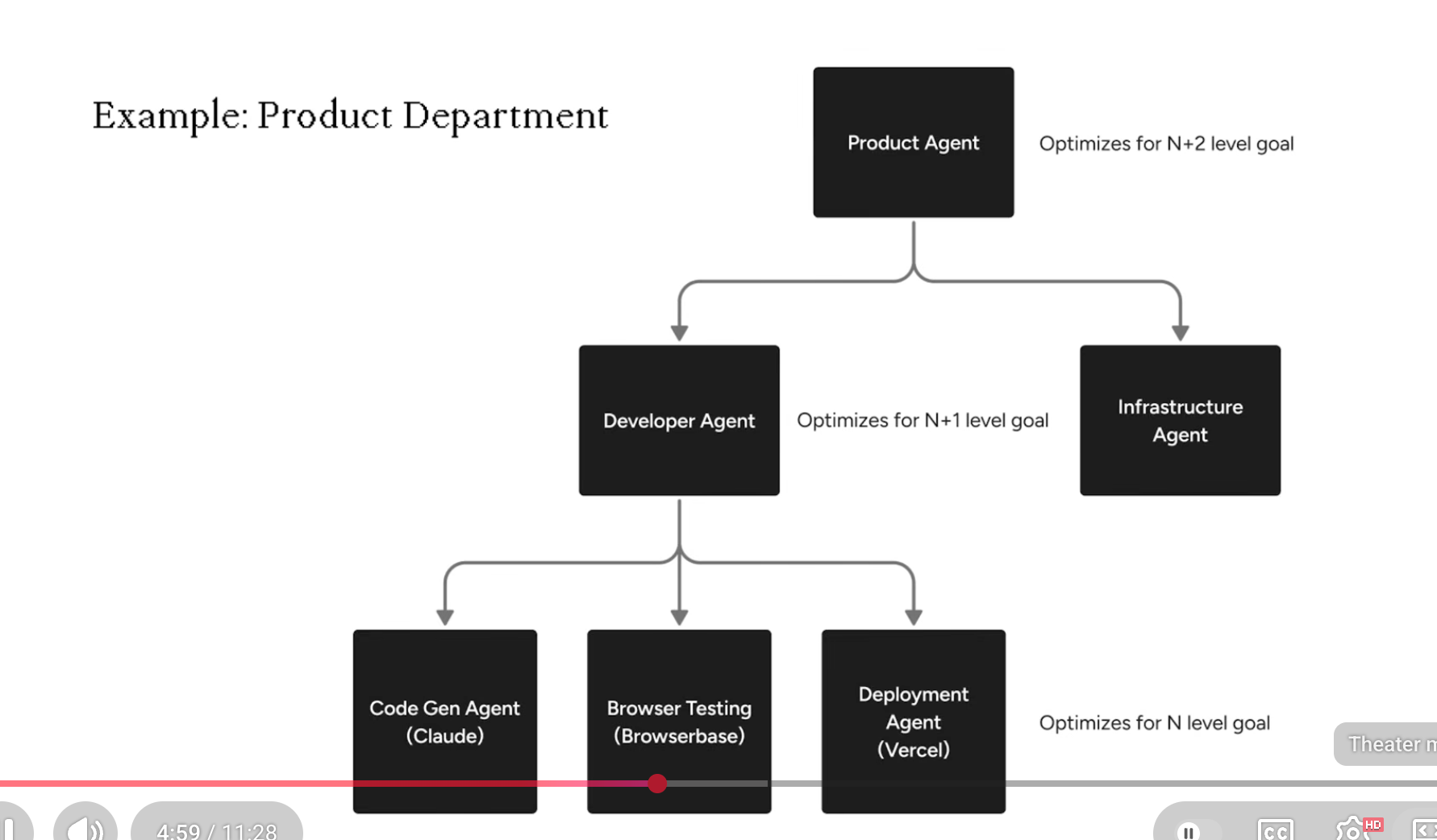
Andrew Pignanelli, the founder of the dubiously-named General Intelligence Company, gave a presentation last month in which he explained that many of the “jobs” at his company are just a series of AI agents, and that he now usually spends more money on AI compute than he does on human salaries.
“We’ve started spending more on tokens than on salaries depending on the day,” he said. “Today we spent $4 grand on [Claude] Opus tokens. Some days it’ll be less. But this shows that we’re starting to shift our human capital to intelligence.”
What’s left unsaid by these tokenmaxxing entrepreneurs, however, is whether the spend on AI compute is actually worth it, whether the money would be better spent on human employees, what types of disasters could occur, and whether any of this is actually financially sustainable.
Companies like OpenAI and Anthropic are losing tons of cash on their products; even though artificial intelligence compute is expensive, it is underpriced for what it actually costs, and it’s not clear how long investors in frontier AI companies are going to be willing to subsidize those losses. Meanwhile, we have reported endlessly on “workslop” and the human cleanup that is often needed when AI-written code, AI-generated work, and customer-facing AI products go awry. There are also numerous horror stories of AI getting caught in a loop and burning thousands of dollars worth of tokens on what end up being completely useless tasks. Regardless, there’s an entirely new class of entrepreneur who seems hell-bent on “hiring” AI employees, not human ones.