
The seed of this post was hearing “I Don’t Wanna Wait” on the radio while shopping for groceries. The song rips off “Dragostea Din Tei” by O-Zone, which anyone who was on the Internet in 2004 knows as “Numa Numa”.
Gary Brolsma’s lip-syncing video was one of the Internet’s earliest memes, and perhaps the best. It was pure, joyful, spontaneous, and released with no expectation of fame or commercialization. It was just some guy in front of a webcam having the time of his life. Now everyone is lip-syncing all the time on TikTok, except there is no joy, no spontaneity, only endlessly choreographed offerings to the almighty algorithm.
I’ve been mourning the old Internet over the past year or two. Kids growing up today will never know that the Internet used to be different. Golden ages are usually defined in retrospect. As a kid on the Web from the early 2000s through the mid-2010s, we knew we were living through something special, but it always felt like there was something better around the corner.
Newgrounds was creative and transgressive; YouTube was goofy and unrehearsed; early Facebook was a fun way to connect with people you knew and forge bonds of common interest with people you didn’t. Showing “Badger Badger” to my aunt on her bulky, beige desktop computer shouldn’t be a fond childhood memory, but it is.
Some of this is nostalgia, sure. But there really was a time when the Internet still felt amateur in the best sense of the word. People made things because they were bored, lonely, funny, obsessive, angry, horny, curious, or touched by some minor and inexplicable form of madness. A lot of it was bad. Much of it was embarrassing. But it wasn’t content creation.
That spirit is what feels gone. Not memes or videos themselves, of course. There are more of those than ever. What’s missing is the sense that they came from somewhere in particular. The dead Internet theory no longer feels like a joke so much as a plain description. The online world is hyper-optimized, relentlessly commercialized, algorithmically dead-eyed: the MrBeastification of everything.
Marc Andreessen, who has done more to popularize the Internet and to destroy it than almost anyone else, recently joked:
It’s becoming clearer how we’re going to tell that something wasn’t written by AI.
AI slop is bad. But it did not descend on a healthy Internet. It arrived after years of platforms teaching people to write, film, pose, joke, and think like machines. AI did not kill the Internet; it inherited an Internet with the fun already optimized out of it.
For most of my life online, it was possible to believe each new thing on the Internet might improve on the last: a cooler platform, a richer medium, a better way of finding people and being found by them. Now the old Internet is gone, and with it the faith that the next thing would be better.
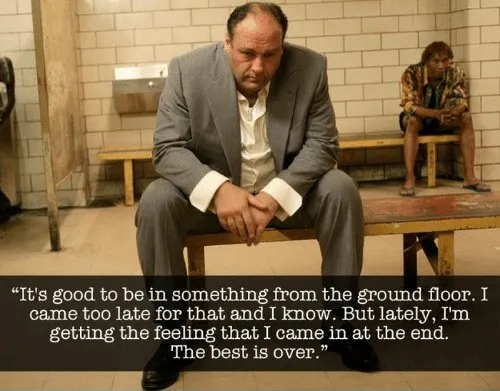
The best is over.