
Authored by Ciaran Kelly via DailySceptic.org,
If you want a snapshot of how far Britain has drifted from its liberal inheritance, consider the spectacle of a 78 year-old grandfather and retired pastor being warned by police that he must not preach from the Bible within a public area. His offence was not harassment, obstruction or intimidation. It was reciting and commentating on a verse many learned as children: “For God so loved the world…”
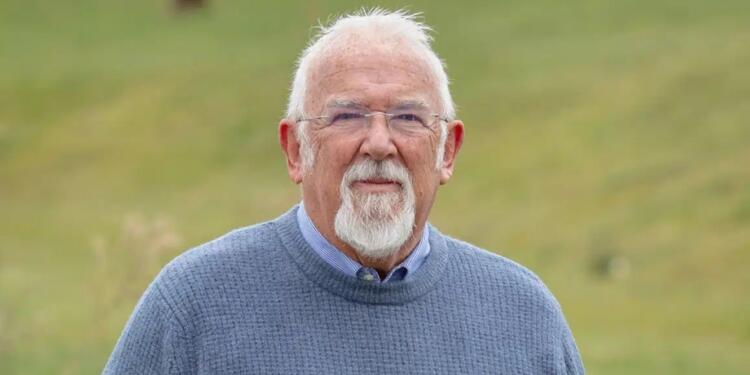
Clive Johnston’s alleged crime was breaching a ‘buffer zone’ around a hospital which houses a sexual health clinic where abortions are performed – despite the fact it was a Sunday afternoon when there were no scheduled abortions, and he made no reference whatsoever to abortion, nor motherhood, nor babies.
The state maintains he risked “influencing” anyone accessing the clinic in relation to abortion or anyone working there – a crime punishable by fine. He was prosecuted, and this week found guilty for doing so.
At this point, it is worth stating plainly: this is no longer about the cultural debate on abortion ethics.
It is about whether the state may decide which ideas are permissible in public space and which must be confined to the private sphere. In footage from the initial confrontation with police now circulating on X, the policeman literally tells Johnston his religious views should be expressed only in a “safe” place like a chaplaincy – not out on the street, where anyone passing by might hear.
Johnston’s case is the latest example in a pattern that has been building for years: the slow but unmistakable attempt to narrow the space in which Christians, in particular, are permitted to express their beliefs.
Take the school chaplain, Dr Bernard Randall, referred to Prevent for discussing Christian teaching during a school assembly. Or the numerous street preachers removed from public areas simply for speaking about Christ. Or the growing list of individuals questioned by police for nothing more than silent prayer within ‘buffer zones’ – cases in which no words were spoken, no signs displayed, no interactions initiated. The mere possibility of internal deviance in belief, it seems, is now sufficient to trigger official concern.
Abortion ‘buffer zones’ were introduced with a defensible aim: to protect women from harassment at a vulnerable moment. Few would quarrel with that objective (albeit one that was already adequately covered by pre-existing laws banning harassment). But like many well-intentioned measures, the law is being stretched beyond its original purpose. If “influence” can be inferred from the mere act of expressing Christian faith – irrespective of what is actually said, and whether it relates to abortion – then we are no longer policing conduct, but the hypothetical impact of ideas. To put it more bluntly, we are policing thought.
Once the elastic concept of “influence” becomes an offence, the implications are difficult to contain. If spoken words are suspect, what about the mere presence of someone with a certain belief? If preaching from the Bible is counted to be too influential, what about someone within the area wearing a Christian cross, or indeed a hijab? Could that deter a woman from an abortion because she knows of faith-based objections to abortion, and therefore be criminal? If influence is defined so subjectively, then almost any expression of belief becomes, in the eyes of someone, a potential offence.
The premise of the law banning “influence” rather than “coercion” or “harassment” is absurd. It suggests that we aren’t all influenced by one another on a daily basis. It isn’t immoral to change one’s mind on a topic – and indeed, it’s patronising to assume members of the public are so feeble-minded that to be in the presence of somebody with an alternative view would cause genuine harm.
Britain has developed a habit of elevating the avoidance of offence above the protection of liberty. From the proliferation of ‘non-crime hate incidents’ to the policing of speech on university campuses, the direction of travel has been unmistakable: fewer risks of discomfort at the cost of fewer freedoms.
Buffer zones are simply the latest and most disproportionate frontier. What is now being tested is not just the boundary of acceptable behaviour, but the boundary of acceptable belief. You need not share Clive Johnston’s theology to see the danger.
A country that tells its citizens their faith belongs only in designated “safe areas” is not protecting pluralism, but actively dismantling it.