
For decades, Muse Omar Jama made a living swapping currencies in Mogadishu’s Bakara market, where customers once lined up to trade Somali shillings for dollars and mobile money. Now his office sits mostly silent, and the safes around him are stuffed with cash no one wants, according to The Guardian.
The problem began when traders in Somalia stopped accepting worn-out shilling notes, saying the bills were too damaged to use. The boycott quickly spread to shops, buses, and businesses across the country, wiping out the value of savings held in local currency. Jama describes the shock bluntly: “It’s like we went bankrupt overnight.”
He can no longer exchange the piles of shillings stacked in his office for US dollars, and many former customers leave empty-handed. “I have to turn them away because my safes, shelves and tables are already full of Somali shillings,” he says.
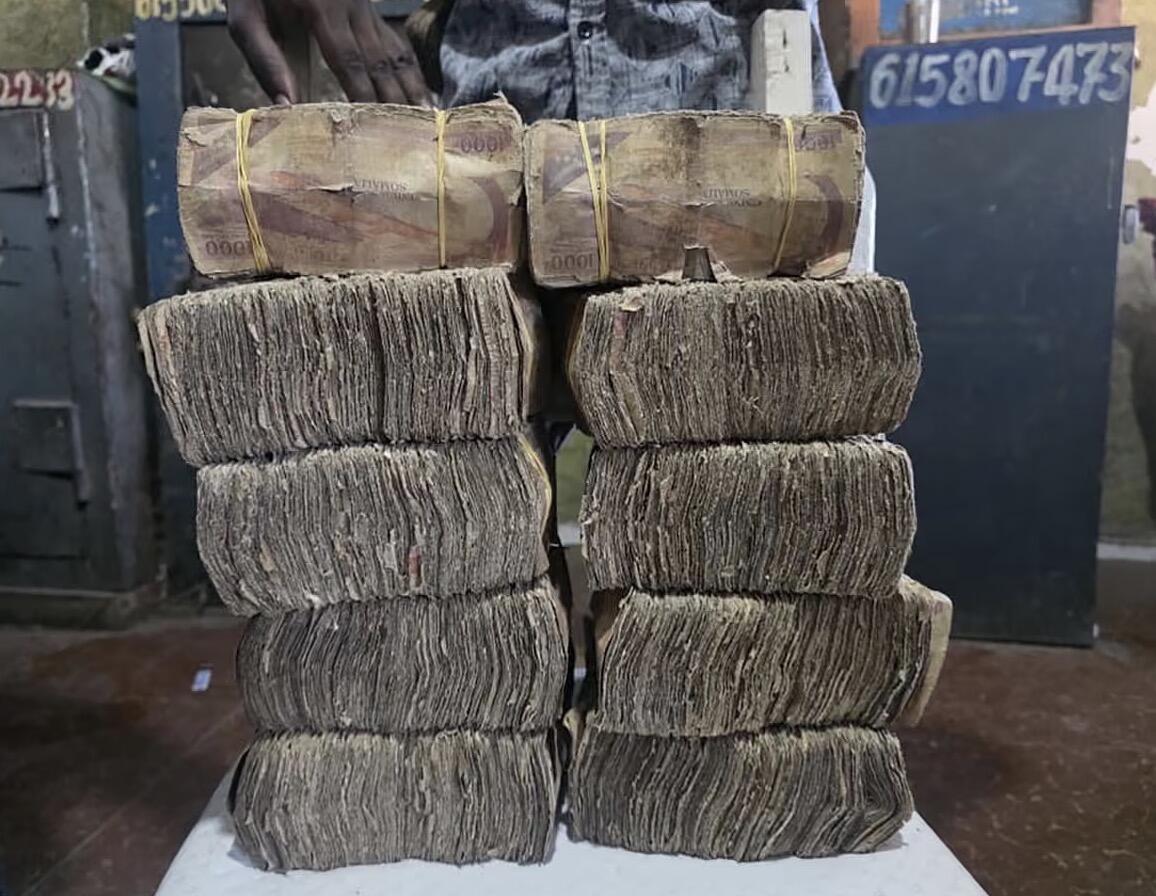
The Guardian writes that the crisis reflects Somalia’s long shift toward a dollar-based economy. The country hasn’t printed new banknotes since dictator Siad Barre was overthrown in 1991, when the central bank collapsed. Since then, US dollars, remittances sent through hawala networks, and mobile payments have increasingly replaced local currency.
The fallout has hit poor households hardest. Prices for essentials like food, medicine, and transport have risen sharply—one small bag of powdered milk reportedly doubled in price. Jama now walks five kilometers to work because buses no longer accept shillings.
Vegetable seller Asha Ali Ahmed says the change has also hurt small traders. Farmers in Afgoye now demand mobile payments, driving up produce costs in Mogadishu markets. With drought already devastating crops, many customers can no longer afford basic groceries.
According to the World Food Programme, about 6.5 million people in Somalia face severe hunger, while 2 million children under five are suffering acute malnutrition.
The federal government has declared refusing Somali shillings a crime, but many traders doubt it can enforce the order. Jama remains pessimistic: “Millions are going to suffer… More families will be pushed into poverty.”