
Shortly after the Iran war started, with gold unexpectedly tumbling, we showed that the reason behind gold's paradoxical move - after all, the precious metal has traditionally been a store of value in times of geopolitical stress - was the furious liquidation of gold by emerging markets, in this case Turkey, scrambling to obtain reserve dry powder so Ankara could cover soaring costs of energy imports.
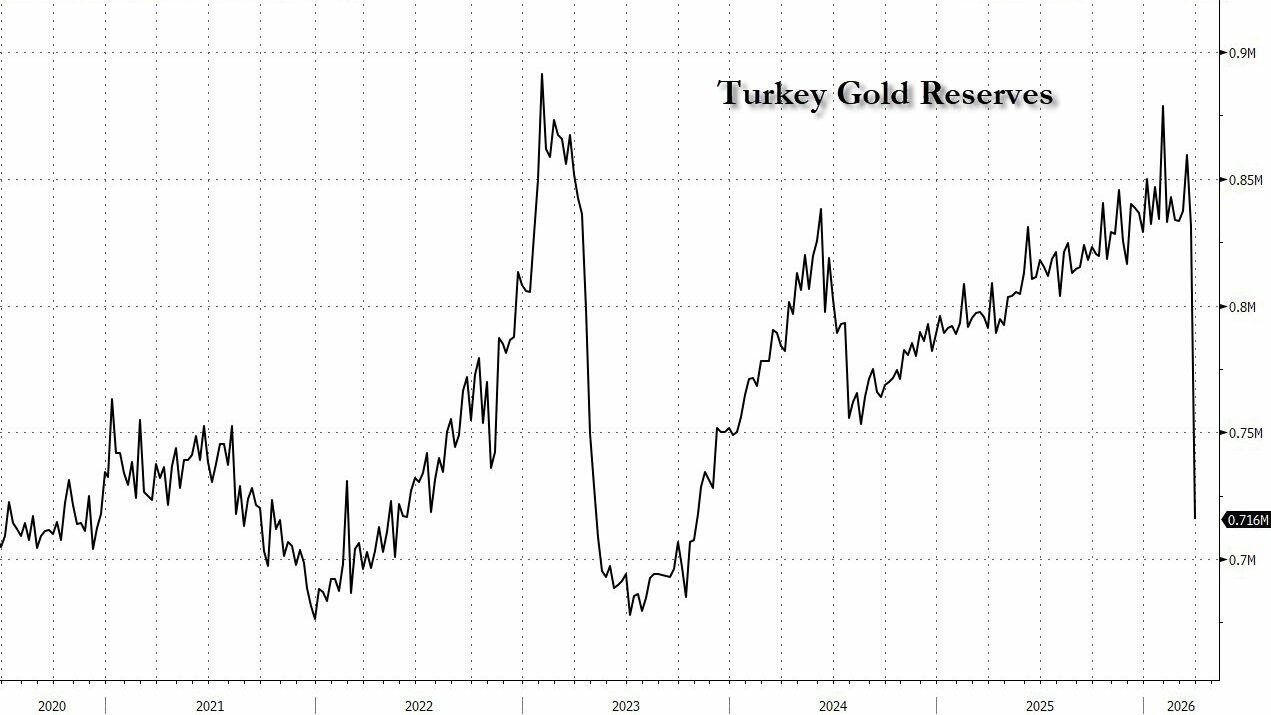
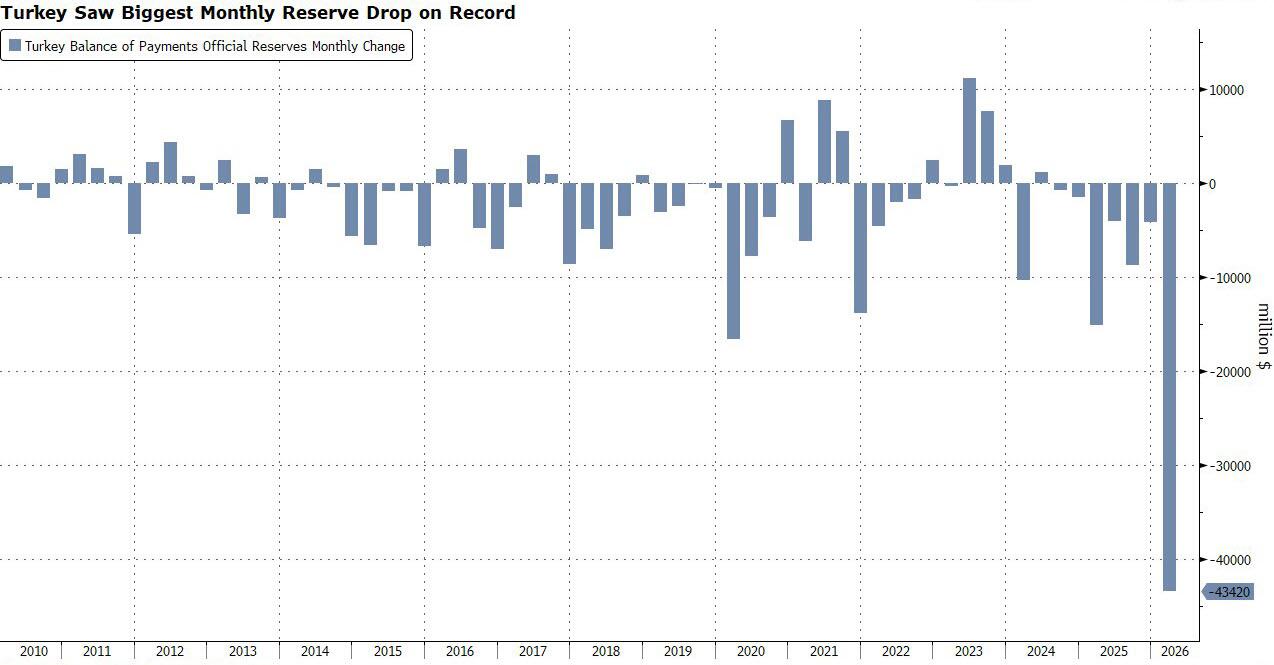
And indeed, the latest central bank data showed that Turkey’s foreign reserves had their biggest monthly decline on record in March, as the Iran war triggered global selloffs in emerging market assets and strained the lira.
According to balance-of-payments data released on Wednesday, Turkey's official reserves cratered by $43.4 billion in March. Part of the decline reflected state intervention to offset portfolio outflows. The current-account deficit, meanwhile, widened to $9.7 billion in March from $7.3 billion in February as a result of soaring commodity prices.
A major energy importer, Turkey has been hit hard by higher oil and gas prices caused by the effective closing of the Strait of Hormuz and the resulting disruptions to world supplies of crude and refined products. Meanwhile, global banks have started changing their formerly favorable outlook on the lira, citing the exploding current-account deficit. Should inflation pressures persist, Turkey will have no choice but to pursue another accelerated devaluation of the Turkish lira.
“As international institutions continue to raise their average oil price forecasts for 2026, disruptions in supply chains and ongoing regional tensions — and their potential negative impact on transportation and tourism revenues — keep upward risks alive in year-end projections” for Turkey, said Istanbul-based economist Haluk Burumcekci.
Turkish central bank Governor Fatih Karahan said last week that the ratio between the current-account deficit and gross domestic product would be “below historical averages” this year while acknowledging the upside risks.
Since President Erdogan’s reelection in 2023, a new economic team has sought to stabilize Turkey’s external finances by cooling demand through conventional tools such as higher interest rates and restrictions on credit growth.
The central bank has kept its benchmark rate at 37% for two straight meetings but has effectively lended from a costlier rate of 40% since the outbreak of the Iran war — a technical measure to tighten liquidity without instituting a formal rate hike.
Inflationary pressures persist, however, with annual price growth picking up to 32.4% in April, a number that is set to rise higher in the coming months.