
Today's FOMC minutes, released at 2pm ET, will be closely watched for further details surrounding the increasingly hawkish split within the Committee following the April meeting, Jerome Powell's last as Fed Chair. With three voters dissenting against retaining the easing bias - and Fedʼs Collins later suggesting she would have supported removing it too - markets will look to see how broad support was for removing the easing bias, particularly after Powell said more officials now view a hike just as likely as a cut, according to Newsquawk.
Discussions around inflation risks and the labor market will also be in focus given the current macro backdrop, with the jobs market viewed as stable while inflation remains above target and faces upside risks from the Middle East conflict. Traders will also watch for any early signs of debate surrounding future balance sheet policy with Warsh set to take over as Chair from Powell.
The April FOMC statement and vote split leaned hawkish. While outgoing Governor Miranʼs dissent in favor of a 25bps rate cut was widely expected, three voting members (plotted below) dissented against retaining the easing bias in the statement (Hammack, Kashkari, Logan).
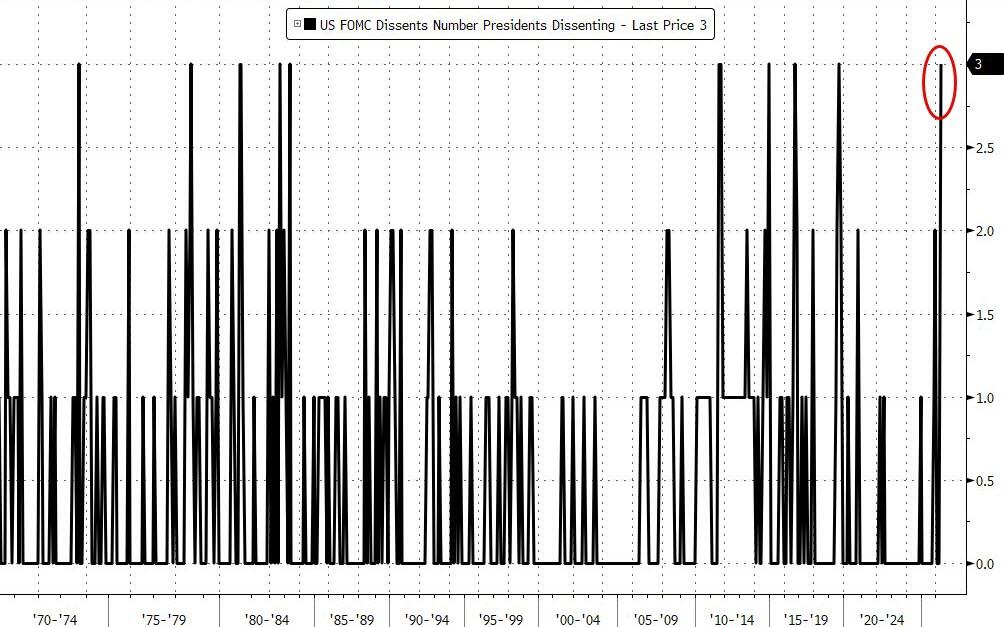
As a reminder:
- Hammack said the easing bias was no longer appropriate given broad-based inflation pressures, higher energy prices, resilient growth and a labour market near full employment.
- Kashkari said he wanted to signal growing rate hike risks, warning that a large price shock could unanchor inflation expectations and require tighter policy to defend the Fedʼs 2% target.
- Logan dissented because she believed the Fed should not imply easing given uncertainty around the outlook, stable employment and concern about getting inflation back to 2%.
Elsewhere, the statement shifted inflation language, replacing “somewhat elevated” with “elevated”, while also attributing the move to higher global energy prices. On the Middle East, the Fed dropped the prior “uncertain implications” wording, instead stating directly that developments are “contributing to a high level of uncertainty”. Growth and labor market language was otherwise largely unchanged, with activity continuing to expand at a “solid pace” and unemployment “little changed”.
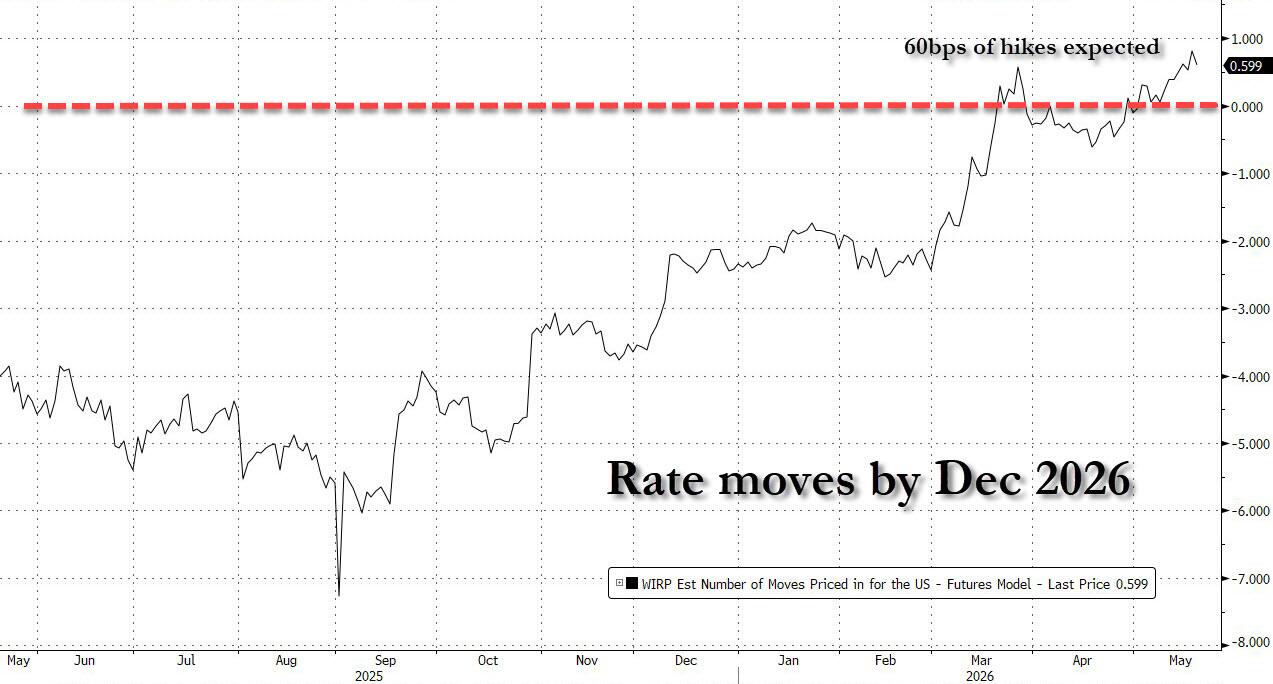
However, given energy prices have continued to rise in the wake of the meeting, and money markets are no longer pricing rate cuts this year (with markets currently discounting roughly a 60% probability of a hike by year-end), traders will look for evidence of how widespread inflation concerns were within the Committee and what conditions could push the Fed towards hikes. That said, the minutes reflect discussions held at the time of the meeting, meaning the recent hot CPI and PPI reports will not yet be incorporated.
Powell said policy remains in a “good place” to wait and see, but acknowledged the Committee is moving closer to dropping its easing bias, with more officials now viewing hikes just as likely as cuts. While he stressed no one is actively calling for hikes at present, analysts noted that the threshold for future easing has risen, with the Fed wanting more confidence around tariffs and energy prices before considering cuts. Powell also warned that core inflation risks are “real”. He added that, beyond the three official dissenters, several non-voters also favored removing the easing bias but ultimately supported the decision to hold rates.
That dynamic may create challenges for incoming Chair Warsh, whose first meeting will be in June. While Warsh has advocated lower rates, he may find limited support for a more dovish stance within the current Committee. Bowman and Waller remain among the more dovish officials, though neither has backed immediate easing in the way Miran did. Note, the latest reports suggest Kevin Warsh will be sworn in as Fed Chair this Friday at a White House event.
Additionally, Warsh has advocated for a tighter balance sheet policy. Last week, Fed Governor Barr argued that easing bank liquidity requirements to shrink the Fedʼs balance sheet would undermine financial stability and increase the Fedʼs market footprint. Barr said the 2023 banking stresses suggest liquidity requirements should rise, not fall. As such, traders will also watch the minutes for any discussion surrounding future balance sheet strategy alongside the debate over the easing bias.