
Authored by Kimberley Hayek via The Epoch Times,
The Senate advanced legislation Tuesday directing President Donald Trump to withdraw American forces from the Iran conflict unless Congress authorizes continued operations or declares war.
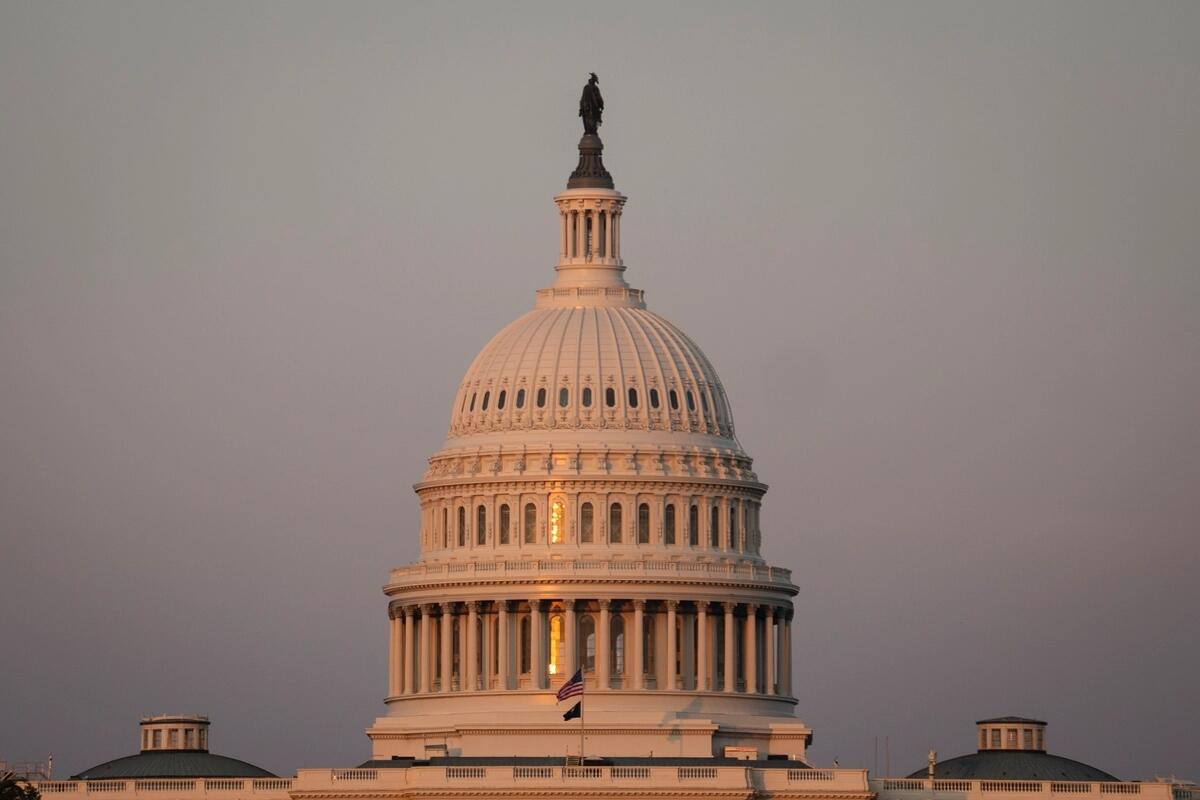
Lawmakers approved the resolution by a 50–47 vote.
The measure, rooted in the 1973 War Powers Resolution, cleared a key procedural hurdle after Sen. Bill Cassidy (R-La.) voted for the resolution. Cassidy, who had previously voted against similar measures introduced several times this year, delivered the decisive margin.
Three other Republicans—Sens. Rand Paul (R-Ky.), Susan Collins (R-Maine), and Lisa Murkowski (R-Alaska)—also voted for the resolution. Only one Democrat, Sen. John Fetterman (D-Penn.), voted against it. Three Republicans, Sens. John Cornyn (R-Texas), Thom Tillis (R-N.C.), and Tommy Tuberville (R-Ala.) were absent.
Senate Minority Leader Chuck Schumer (D-N.Y.) reacted immediately.
“Republicans are starting to crack, and momentum is building to check him,” he said in a statement after the vote, referring to Trump. “We are not letting up.”
Cassidy announced his changed position in an X post before the vote.
“While I support the administration’s efforts to dismantle Iran’s nuclear program, the White House and Pentagon have left Congress in the dark on Operation Epic Fury,” he wrote.
“Until the administration provides clarity, no congressional authorization or extension can be justified.”
The senator’s reversal followed his primary election loss Saturday in Louisiana. Trump had endorsed Cassidy’s challenger, Rep. Julia Letlow (R-La.), and the defeat left Cassidy defiant upon his return to Washington.
Letlow won more than 44.8 percent of the vote, while Louisiana Treasurer John Fleming received 28.3 percent and Cassidy received 24.8 percent, according to results after 99 percent of the votes were tallied.
Support for an Iran War Powers resolution has slowly gained support with each tally.
Sen. Mike Rounds (R-S.D.), who supports the initial decision to strike Iran’s nuclear sites but favors congressional debate, explained the shift in tone.
The War Powers Resolution of 1973 “does provide an avenue for that discussion and debate to occur.” He added, “But I think a number of our members maybe just feel like it’s time to have the debate.”
Democrats highlighted economic fallout from the stalemate. Sen. Chris Murphy (D-Conn.) said on the floor, “Peace negotiations are stuck and so day after day after day grocery prices climb, gas prices climb.”
The resolution would require the president to pull U.S. troops unless lawmakers act. Trump has maintained that a fragile ceasefire declared after initial strikes ended active hostilities, potentially sidestepping the law’s requirements.
The resolution would mandate congressional authorization of U.S. involvement in the conflict, which began with Israeli and U.S. strikes on Iranian targets at the end of February.
Previous attempts to end the Iran operation failed in the Senate. Republicans had blocked comparable resolutions until Cassidy’s vote and the rising concerns over increasing energy costs.
The conflict began on Feb. 28 when U.S. and Israeli forces launched strikes against Iran. Called Operation Epic Fury by the United States, it targeted Iranian nuclear sites and killed Iranian Supreme Leader Ali Khamenei along with other senior Iranian officials. Trump formally notified Congress on March 2 that U.S. forces had entered into combat operations, which set off the 60-day statutory clock under the 1973 War Powers Resolution.
The 1973 law states that a president “shall terminate any use of United States Armed Forces ... unless the Congress has declared war or has enacted a specific authorization for such use of United States Armed Forces” within 60 days of notifying Congress of hostilities.