
Since April 14, Morocco has been conducting large-scale deportation operations targeting sub-Saharan Africans migrating to Europe, reportedly arresting over 100 per day, local sources told Middle East Eye.
According to Moroccan human rights groups, around 800 people were detained during coordinated raids in the forests between Fnideq and Belyounech, in the northern tip of the North African state, where many were sheltering before attempting to reach Europe.
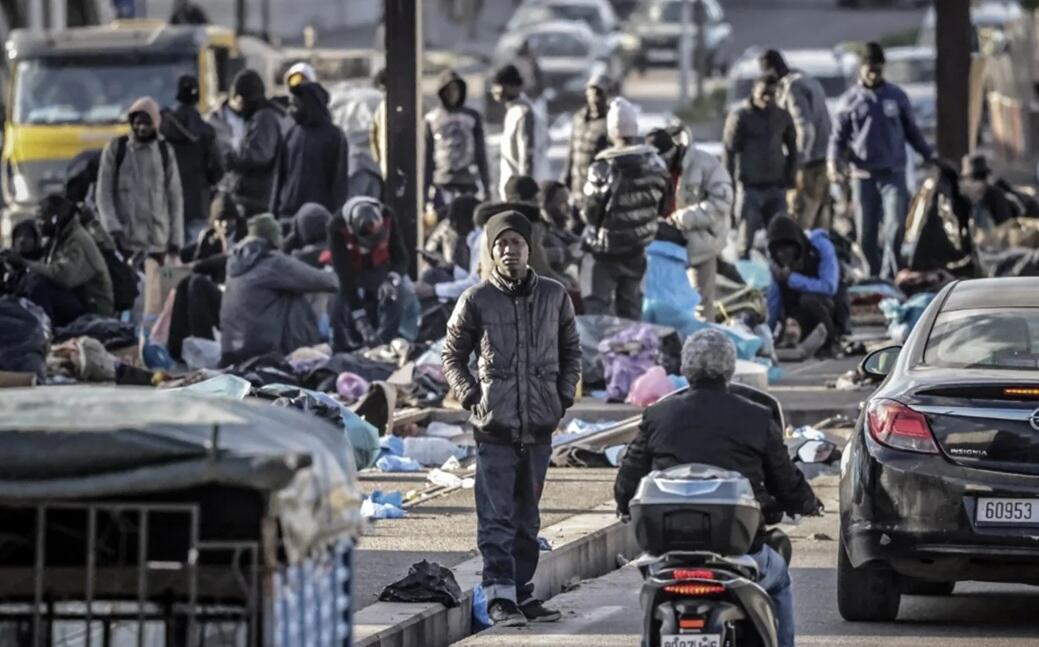
The operation is still ongoing, with authorities then moving their focus to operations in and around Tangier. Witnesses have described mass arrests, beatings, racist abuse and forced transfers toward the Algerian border.
Sudanese and Chadian detainees were bused south and abandoned near border zones, while people from countries including Senegal, Mali, Mauritania, Burkina Faso and Guinea were deported on flights departing Casablanca.
The crackdown comes as the European Union has intensified its cooperation with Morocco as part of its border externalization strategy, which is a key component of the bloc’s new Pact on Migration and Asylum set to take effect in June.
The EU increasingly outsources immigration enforcement to North African nations with poor human rights records, designating over €900 million within the bloc's Global Europe development instrument to fund stricter migration control, border management and surveillance initiatives across the region.
"The EU wants to restrict people’s mobility as far down the route as possible - what officials describe as stopping migration downstream," Frey Lindsay, a journalist on Statewatch's Outsourcing Borders project, which tracks how the EU outsources migration control, told Middle East Eye. "It's about exerting border control without getting your hands dirty, basically."
Raids and expulsions
Morocco is a key transit country for sub-Saharan Africans en route to Europe. They sail across the Strait of Gibraltar or climb the towering razor wire fence that separates Morocco from Ceuta and Melilla, Spanish enclaves within the kingdom.
Over the years, Morocco has increased cooperation with Frontex, the European Border and Coast Guard Agency, to prevent migrants from departing the North African coast. In 2025, Moroccan authorities thwarted 73,640 irregular migration attempts toward Europe, according to a report from the interior ministry, a slight decline from 2024 - attributed to alternative migration routes.
In recent weeks, Moroccan security forces have stepped up their role as Europe’s de facto border enforcer, carrying out regular raids on makeshift forest camps and key transit points used by people trying to reach Spain. Attacks on migrant camps have long been pervasive, but have escalated since April 14, with operations concentrated in the north of the country. People who are not deported are typically exiled to the south in an effort to disrupt migration routes.
"According to migrants we have been in contact with, they were subjected to various forms of humiliation, insults and mistreatment by authorities," Chad Boukhari, a journalist and member of Border Resistance, a grassroots collective that supports migrants across the Mediterranean, told MEE.
Some were abandoned near the Algerian border without food or water, where they were detained by Algerian forces. "The Algerian army allegedly tortured many of them. Some individuals also found the bodies of other migrants in the desert," Boukhari added.
In 2025, Algeria expelled more than 30,000 migrants to Niger, abandoning many "deportation convoys" in the Sahara desert. Testimonies of abuse, torture and enslavement have been reported. MEE contacted the Algerian, Moroccan and EU authorities for comment but had not received a reply by the time of publication.
Sub-Sahara Africans often reach Morocco by crossing the Sahel, the arid perilous land belt stretching across the continent. They typically cross through Niger into Algeria or via Mauritania to enter Morocco. Many of the countries along these routes are plagued by chronic instability and rank among the lowest on the Human Development Index.
Once in Morocco, migrants can spend months to years sleeping in the country’s dense, dry woodlands. Humanitarian groups tend to know the whereabouts of informal encampments and provide modest assistance, but even these efforts are often thwarted by authorities.
Since 2014, Human Rights Watch has documented repeated incidents where Moroccan police beat migrants, deprived them of their few possessions, burned their shelters and expelled them from the country without due process.
“Oftentimes, the Red Cross would enter the forest and provide us with blankets and clothing. But we knew that was always a bad sign. Shortly after the Red Cross visits, Moroccan security forces would appear, as if they were watching,” Ousman Sow, a Guinean man who spent a year in Morocco before he was able to cross into Spain, told MEE.
“They burned all of our belongings before driving us far away and dropping us off in remote areas without any possessions," added Sow, who now lives in Germany. The goal is to prevent migrants from reaching Ceuta and Melilla, the only European territories with a land border in Africa.
On 24 June 2022, at least 37 migrants, mostly from sub-Saharan Africa, were killed under unclear circumstances while attempting to climb the fence into Melilla. Another 70 people from that day remain missing, amid reports that Moroccan authorities were burying bodies in unmarked graves.
Externalizing control
Despite stricter enforcement, crossings from North Africa continue amid the war in Sudan and worsening instability across the Sahel. For many, the promise of Europe is still worth the risk.
“The more borders and walls you put up, the more dangerous ways people go around them,” Lindsay told MEE. “Securitization doesn't change the reason why people want to leave; it just means more people will die.”
Rights groups also say the latest crackdown is a consequence of the EU’s new migration pact, which seeks to overhaul the bloc’s current immigration system, expediting asylum case proceedings and deportations. The new system expands biometric surveillance and increases rejections on the grounds that people passed through a designated “safe third country” before reaching the EU.
Morocco is included in the list of safe countries alongside other nations accused of human rights abuses, such as Egypt and Turkey. If migrants passed through any of these nations on the way to Europe, their deportation will be expedited.
Over 50 NGOs formally objected to the pact, arguing the new expedited procedures deny the right to a fair and thorough review of asylum cases. The EU has progressively blocked migrants before their asylum case can be filed by externalising immigration enforcement, collaborating with countries outside of Europe to prevent migrants from reaching EU soil.
Under the Emergency Trust Fund for Africa, it has poured hundreds of millions of euros into strengthening migration enforcement in Libya, Morocco, Tunisia, Egypt and Algeria.
The adoption of the Pact on Migration and Asylum has put political pressure on the European Commission, which must secure member state backing for a politically contentious overhaul of EU asylum rules. “The new migration pact is a really critical legislative package for [European Commission President] Ursula von der Leyen and her cabinet. They need this to be a success politically, and will do everything to ensure the pact doesn’t fall apart,” said Lindsay.
“Member states have made it very clear that they are unwilling to go along with the pact if the European Commission doesn’t do everything it can to make sure people don’t arrive - and to deport as many people as possible,” he added.
The new approach has drawn particular scrutiny in Libya, where EU-backed groups have been linked to systemic abuses. The EU directly funds, trains and equips Libya’s coastal authorities, which have been accused of collaborating with human trafficking networks to capture migrants, subjecting them to exploitation, physical and sexual violence, and even enslavement.
The EU is now in the process of funding a maritime control centre in Benghazi aimed at intercepting migrants at sea and forcibly returning them to Libya. This requires cooperation with General Khalifa Haftar, who controls eastern Libya in opposition to the UN-recognised government in the west and has been accused of war crimes.
Similar patterns of violent pushbacks have emerged across Europe’s eastern borders. Along the Balkans route, Croatian authorities have been documented violently pushing people back into Bosnia, effectively preventing them from accessing asylum procedures on EU territory.
The new pact also introduces the concept of “return hubs”, nations where rejected asylum seekers may be transferred to and detained while awaiting deportation to their home countries. Migrants will likely have no connections to the designated countries they are deported to; the EU has proposed options everywhere from Bangladesh to Rwanda.
Rights groups say the Pact on Migration and Asylum embodies a broader hardening of attitudes and policies toward migrants across the EU member states, with detrimental consequences for those trying to reach Europe. "Whenever the political climate changes in Europe, you can feel it in Morocco," Sow told MEE. "If Europe wants immigrants, Morocco is okay. If not, it’s hostile there."