
Authored by Jacob Burg via The Epoch Times,
Google is seeking federal approval for a new program called "Debug" that would release up to 32 million mosquitoes in California and Florida to combat disease-carrying mosquitoes already found in the wild.
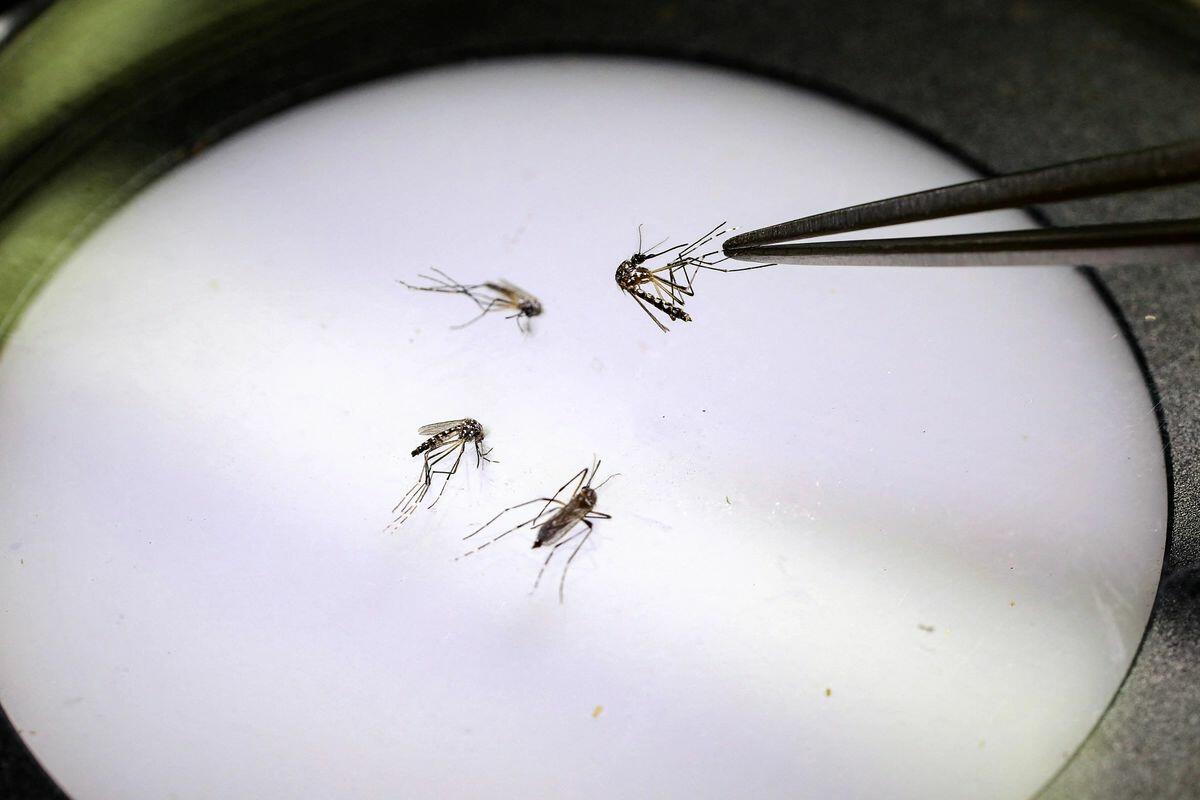
Pitched as a program to "stop bad mosquitoes by raising and releasing good ones," Google's Debug brings together a group of scientists and engineers to create technology to breed and release sterile mosquitoes to try to eliminate the ones that transmit diseases to animals and humans.
The Federal Register noted on May 1 that the Environmental Protection Agency (EPA) is reviewing Google's request for an experimental permit under section 5 of the Federal Insecticide, Fungicide, and Rodenticide Act. Public comment on the permit request must be received by June 5.
Despite their small size, mosquitoes are considered the "deadliest animal" in the world, according to the Centers for Disease Control and Prevention (CDC). There are more than 3,700 types of mosquitoes worldwide, and some are more dangerous than others.
The species Google's Debug is targeting - Aedes aegypti - carries dengue, Zika, yellow fever, and chikungunya. Some mosquitoes carry West Nile virus, malaria, and lymphatic filariasis, killing more humans than any other creature worldwide.
Malaria alone killed at least 597,000 people throughout 83 countries in 2023, the last year the data were available. That same year, the United States saw cases of "locally acquired" mosquito-transmitted malaria for the first time in two decades.
A "locally acquired" case of malaria means the victim was bitten by a mosquito carrying the parasite in the United States, rather than contracting the illness abroad while traveling.
There are roughly 2,000 cases of malaria reported in the United States every year, with most of them coming from people traveling overseas in places where malaria is rampant. West Nile virus is the leading culprit of mosquito-borne disease in the United States. More than 120 deaths are reported each year, with roughly 2,000 people experiencing the illness.
In Debug's landing page, Google notes that most mosquito-transmitted diseases lack effective vaccines or treatments.
"Attacking mosquitoes with pesticides is unsustainable because they're becoming less effective over time and can be toxic. Clearing standing water is not enough because people can never find all the places that mosquitoes breed," Google states on the project's website. "We need a new approach."
Google said it is using male mosquitoes carrying a naturally occurring bacterium, Wolbachia, that prevents them from reproducing with female mosquitoes in the wild. Since only female mosquitoes can bite and spread disease, the goal is to continually reduce the number of "bad mosquitoes" over time.
Google's technique "uses a naturally occurring bacteria and uses no chemicals, no toxins and doesn't involve genetic modification. Similar approaches have been used to safely combat other pests for decades," Google states. "We're combining the Debug team's scientific and engineering expertise with the help of international partners to raise and release lots of good bugs and stop bad mosquitoes that can spread disease."
Google said its Debug program has already completed multiple field trials with "promising results."
"Male mosquitoes don't bite, so residents within a trial area shouldn't notice any increase in nuisance biting mosquitoes," Google states on the project's FAQ page. "We expect to see a population decrease within weeks to months of the initial releases. The number of released male mosquitoes should also reduce over time as the neighborhood population decreases."
At least one lawmaker has criticized the company's approach.
In a May 31 post on X, Rep. Tim Burchett (R-Tenn.) said:
