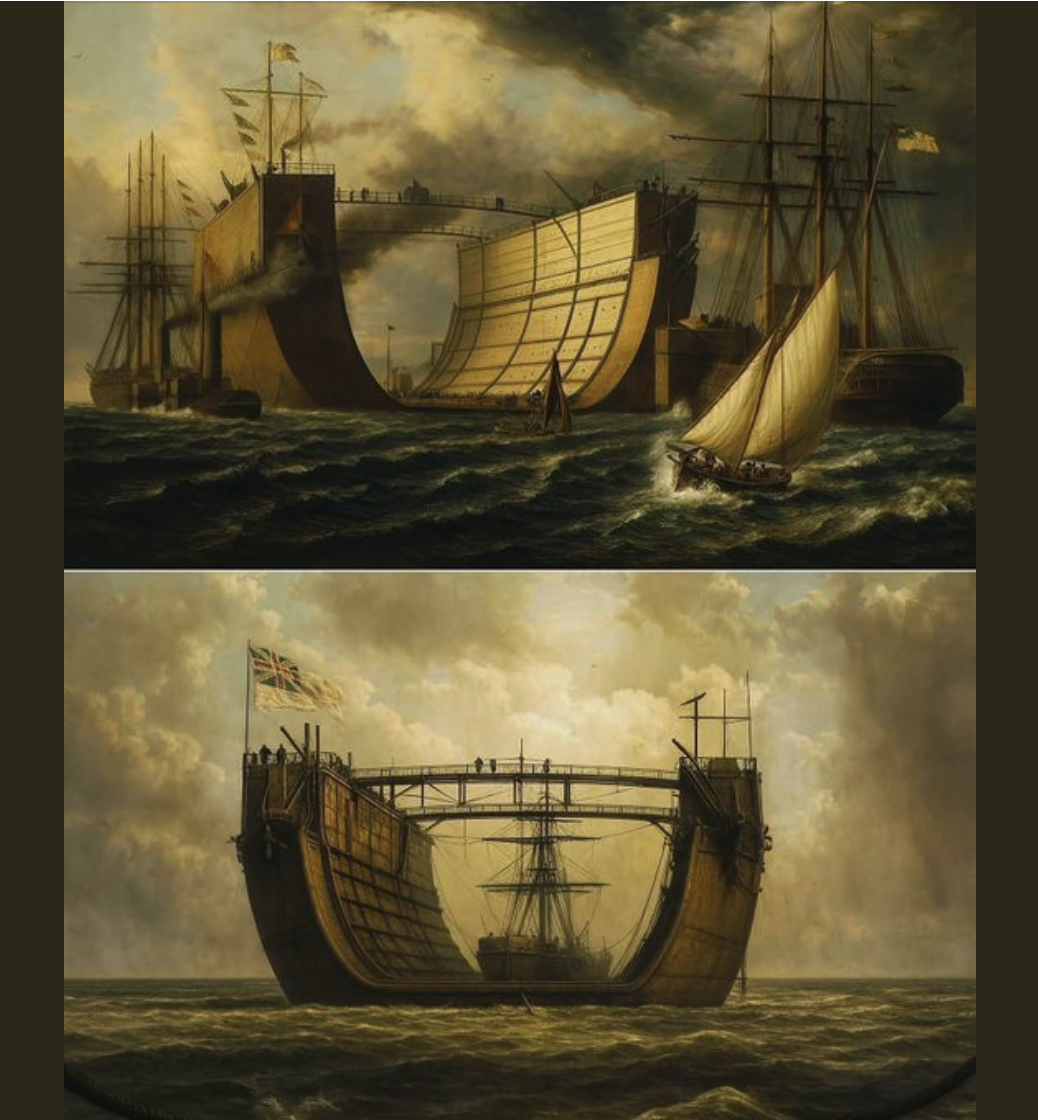

When Britain needed a solution for ship repairs in the Atlantic, engineers in the 1860s built the largest floating dry dock ever attempted, a 380-foot iron structure weighing over 8,000 tons.
Constructed near Woolwich on the Thames, the dock was designed to lift 10,000-ton ironclads like HMS Warrior and withstand the fouling threats of Bermuda’s warm waters.
Unable to build a conventional dry dock due to porous sandstone, the British opted for mobility and scale, creating a self-contained U-shaped platform that could sink and raise vessels from the sea with ballast compartments and powerful pumps.
In June 1869, this massive dock embarked on a nearly 4000 nautical-mile journey to Bermuda, towed in stages by Britain’s heaviest ironclads—Agincourt, Northumberland, Warrior, and Black Prince—assisted by HMS Terrible.
With closed ends to reduce drag and a sail rigged inside to capture tailwinds, the voyage reached speeds of over 6 knots.
Once in service, it supported Royal Navy operations for over thirty years before being replaced in 1906.
Source: Archeology, art and history of the ancient world