A collection of beautiful, high-resolution photolog scans reveals a colorful world of pastel-colored cars and whimsical signage.
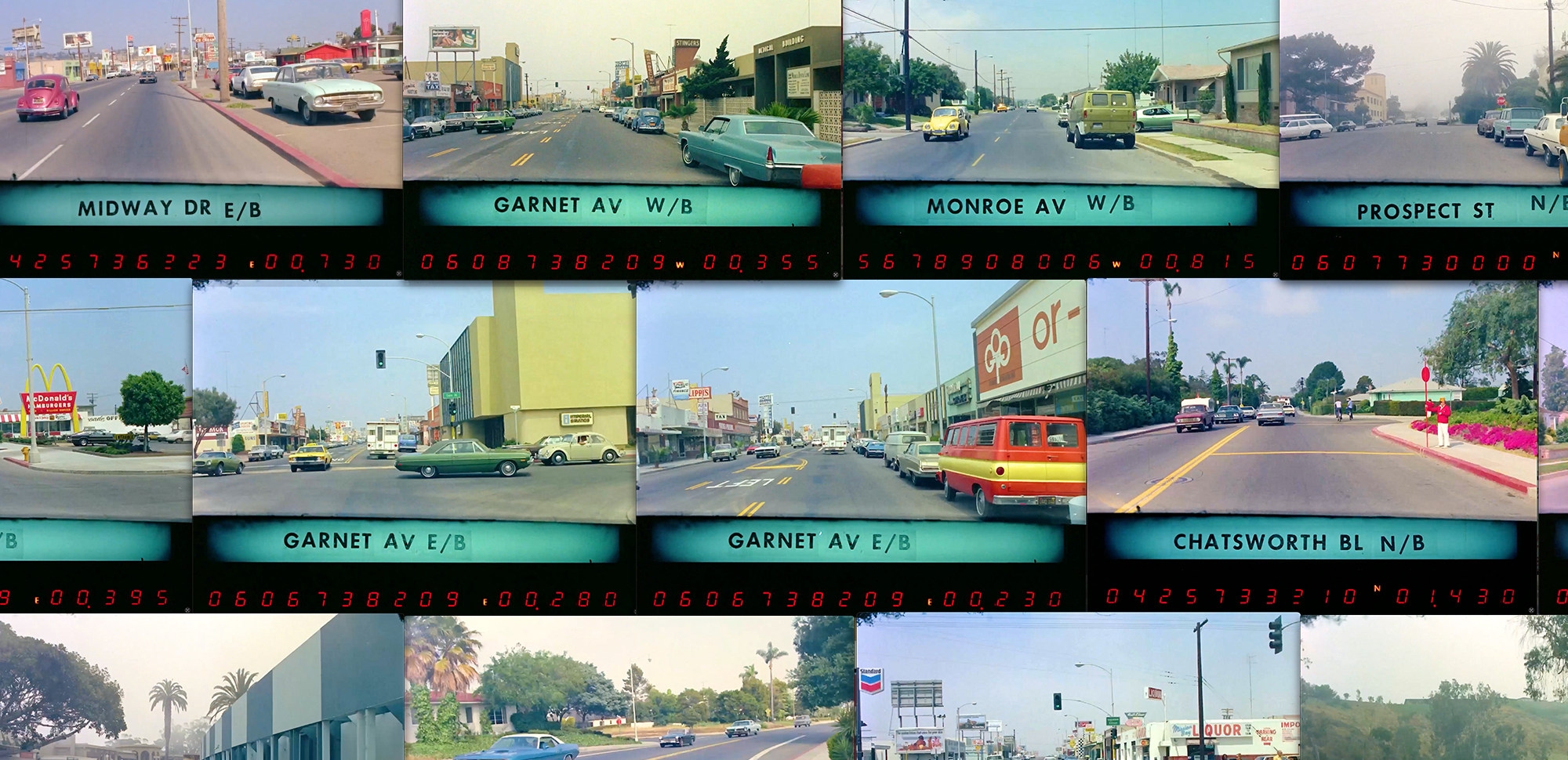
The very first post of this newsletter back in 2022 was about Connecticut’s highway photologs from the 1980s. Photologs were essentially an early, film-based version of Google Street View. Almost every state had one of these photolog programs with tricked-out vans logging every mile of road in their state, with some dating back to 1961. The Connecticut footage is a time capsule of the mid 80’s, but the frames are pretty low-res and grainy. While digging through the Internet Archive, I discovered the crispest, most beautiful photologs I've ever seen—captured in San Diego during the 1970s.
Collected by the San Diego Transportation and Storm Water Department, these sharp scans right from the 35mm film source let you peek through a window into the sunny streets of San Diego, full of pastel-colored cars, family restaurants like Bonanza, and some colorful people caught unaware.
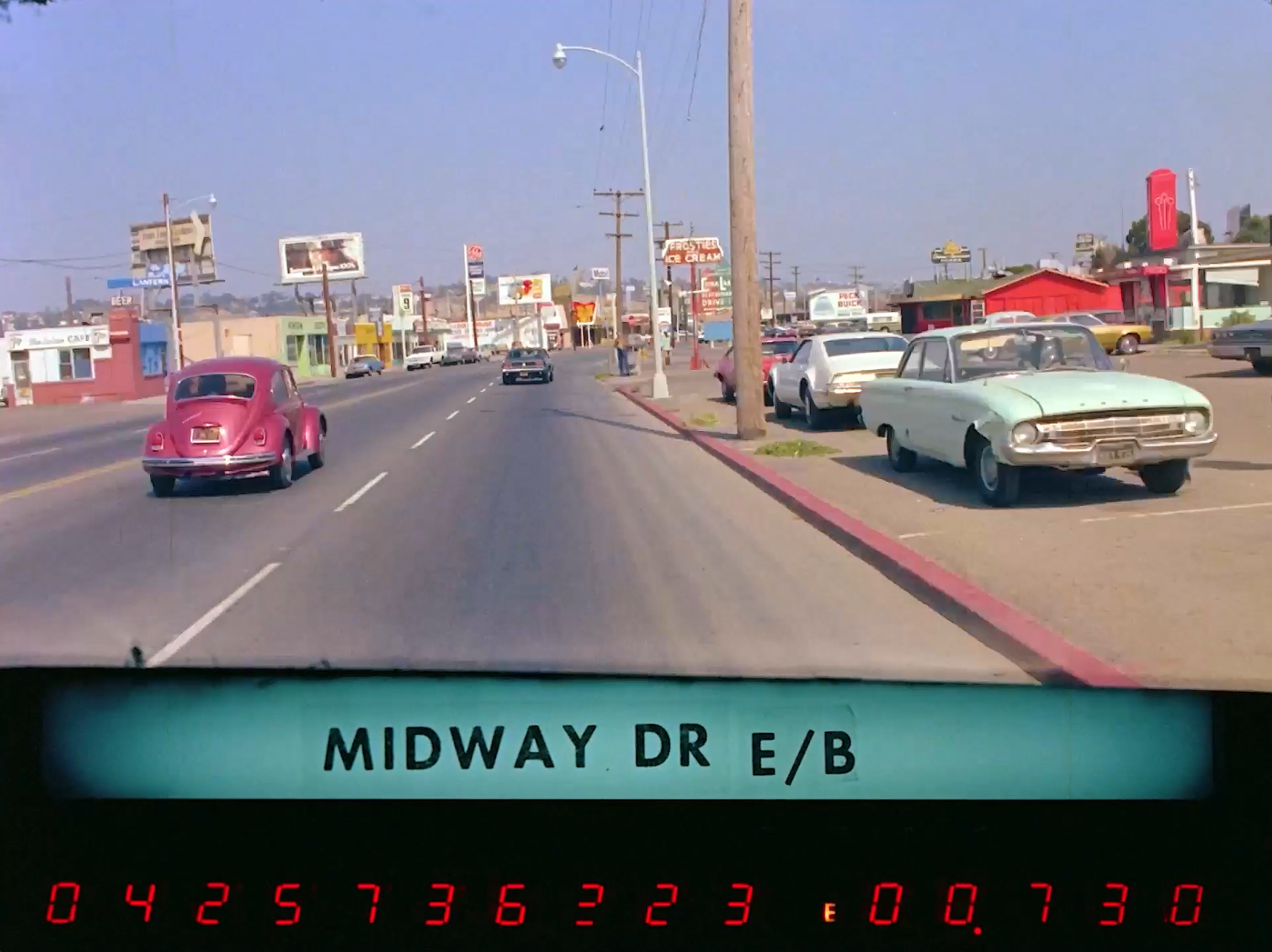
After poring over every frame of the ten videos in this collection, here are my takeaways:
- 🥩 People ate a lot of steak at themed restaurants
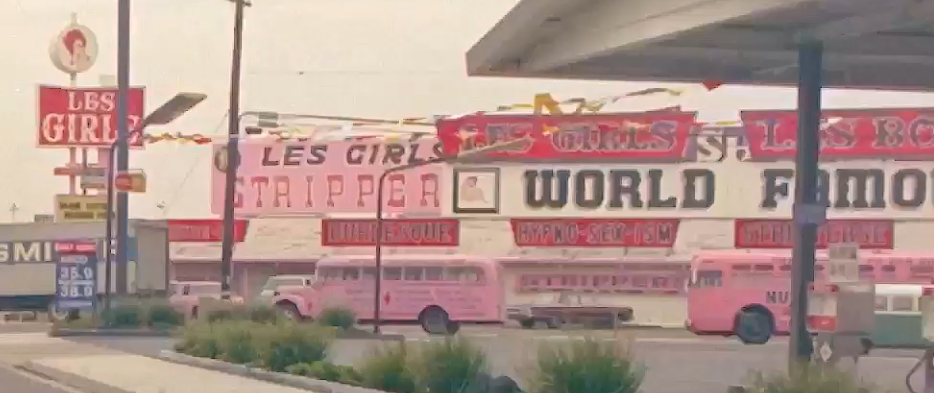
- 👯♀️ There were tons of strip clubs featuring “Go-go girls”
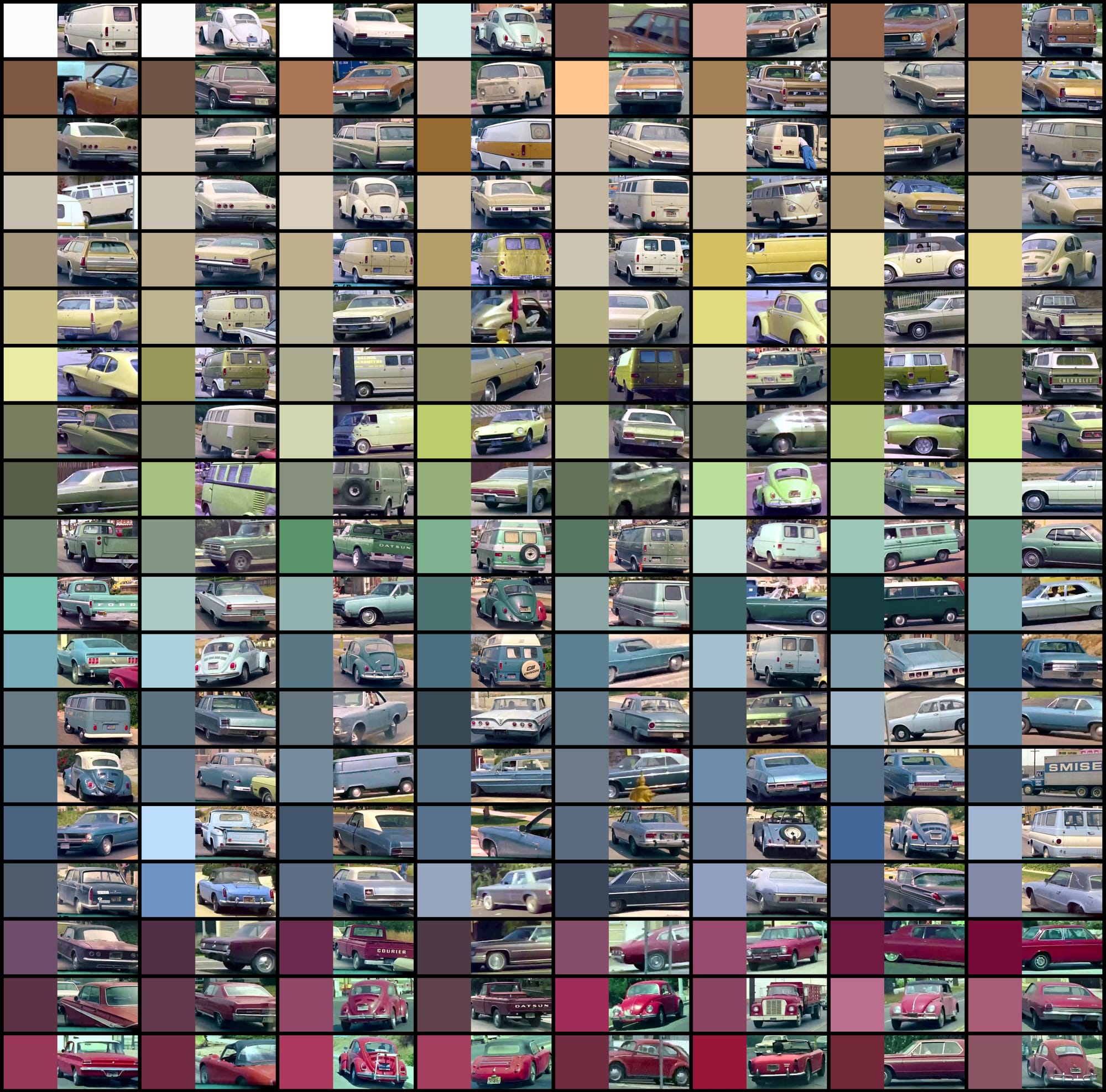
- 🚗 The range of car colors was amazing, with tons of pastels, bright reds, and a wild variety of greens
- 🤠 Signs for businesses were WAY more creative, and well-designed with great typography. And many were spinning.
- 🦩 Our world has lost its sense of whimsy
The original videos hosted on the Internet Archive look to be unaltered, and not adjusted for brightness. I took the liberty of doing some color correction, and boosting the contrast on these films. After removing the grey veil from this footage, I want to jump into this world—a version of Grand Theft Auto set in the sprawling San Diego of 1973.
View the full ten minutes of footage here.
Having grown up on the East Coast in the '70s and '80s, I find a lot of the businesses and landscapes unfamiliar. But some of the businesses like Jack-in-the-Box, Fotomat, Bonanza, and the 76 gas station ball all take me back.
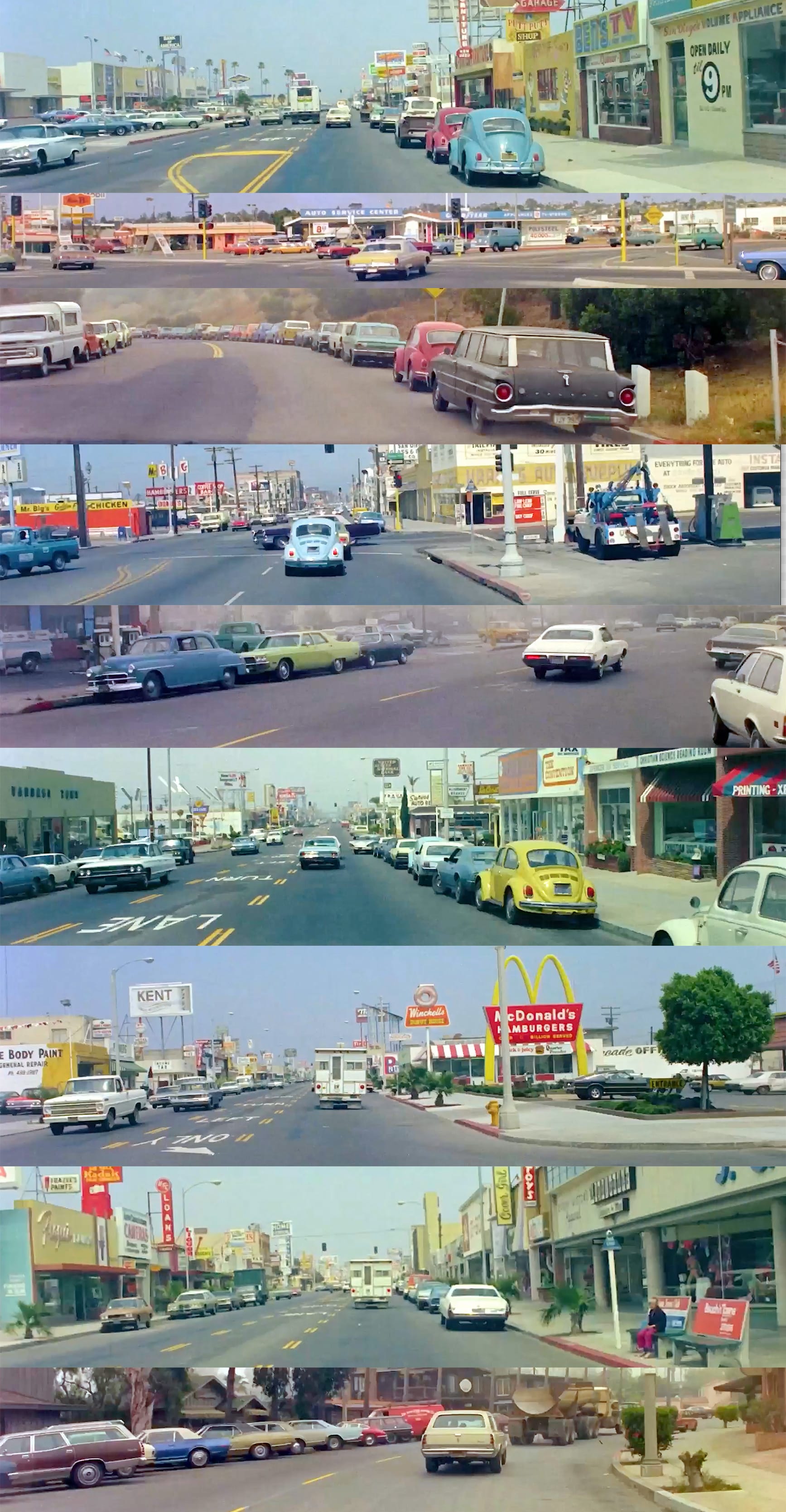
Nice bright colors
I’m really struck by just how colorful everything was. There are some moments captured on these frames that are just incredible compositions of color, geometry, and type.The footage has a distinctly Wes Anderson vibe—the Futura road labels and the warm, sun-washed palette. You can almost imagine Bill Murray or Jason Schwartzman emerging from a perfectly centered emerald-green Datsun parked beneath the blazing pink signs of "LES GIRLS," advertising "BURLESQUE" and "HYPNO-SEX-ISM."
The cars just look so simple. Heavy steel and glass, seat belts nobody used, and a rainbow of shiny colors. Today, cars seem to come in three colors: white, silver, and black. That’s pretty much it. It is truly sad to see how far the typical car has fallen from the colorful options that even basic cars had. Though projects like Slate auto’s DIY wraps do give me hope for a more colorful automotive future.
Staring at these frames, I can almost imagine being there. Nobody is looking at a phone. You're rolling down Camino Del Rio smoking a Lark, listening to Rare Earth, before pulling into a Texaco to pay $0.34 per gallon for low-lead Fire Chief gas and fill up your "Mellow Yellow" AMC Gremlin. Later you will go see Charlton Heston in The Omega Man at the Frontier Drive-In.
Signs of the time
There is a dazzling array of signage in these frames. So many of the signs were motorized — actually spinning. Barber shops, fabric stores, dry cleaners, upholsterers, and tire shops all had beautifully made signs with inspired typography — to say nothing of their architecture. Comparing the rich variety of signs from these frames with today's bland storefronts makes me weep for an entire industry of sign-painters, neon shops, and fabricators that were probably killed by vinyl banners and LED-lit boxes.
After absorbing all these signs, I emailed Aaron Draplin, acclaimed graphic designer and owner of Draplin Design Co. Had he been born 20 years earlier, Draplin would be running a workshop making signs like these. His work celebrates the thick lines and bold design of this era, so I asked him — how did we lose all of this?
Draplin sent me back a voice memo recorded on a walk: "Why those [signs] look different — 50 years ago, 40 years ago? Somewhere around 35 years ago, they become pretty predictable." What Draplin pointed to was the computer, and the precision it brought.
"Up to that point, you had the quality of the human element, the human error. That was beautiful. If you had to paint a sign, the spacing was off. Certain things were a little wider than they should be, but there's just a certain charm."
Draplin said those imperfections just don't exist with today's tools — even though designers still chase that look. "So there's just this kind of perfect sprinkle of 'shitty' to that stuff...no amount of filters or texture tricks or whatever can sort of nail," said Draplin.
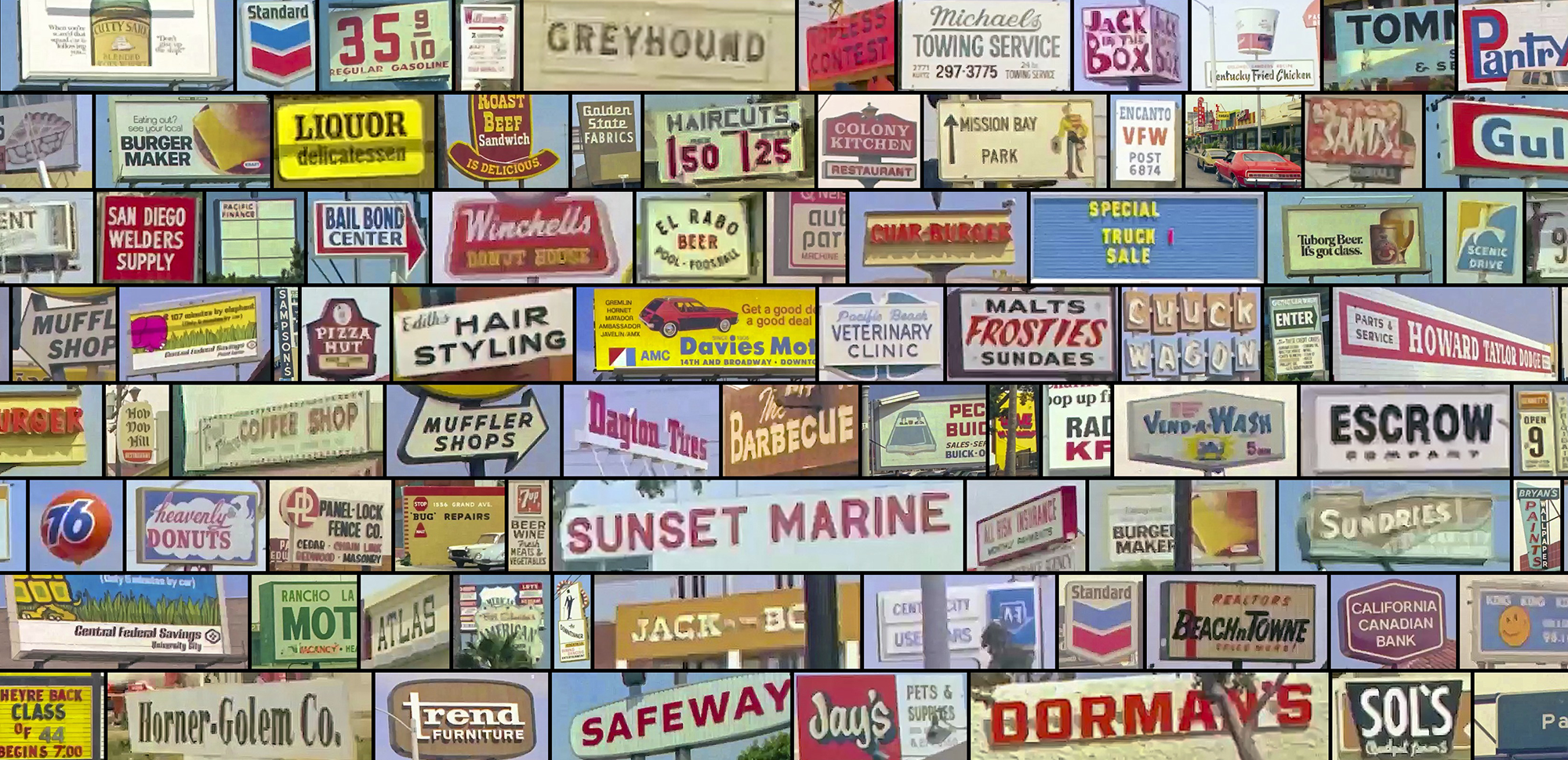
Spinning, off-kilter Kentucky Fried Chicken buckets, creepy Jack-in-the-Box puppets, Giant Arby's cowboy hats, and Chuck Wagon's ALL YOU CAN EAT – IT'S DELICIOUS cartoon cowboy sign are all wonderful commercial kitsch lost to time.
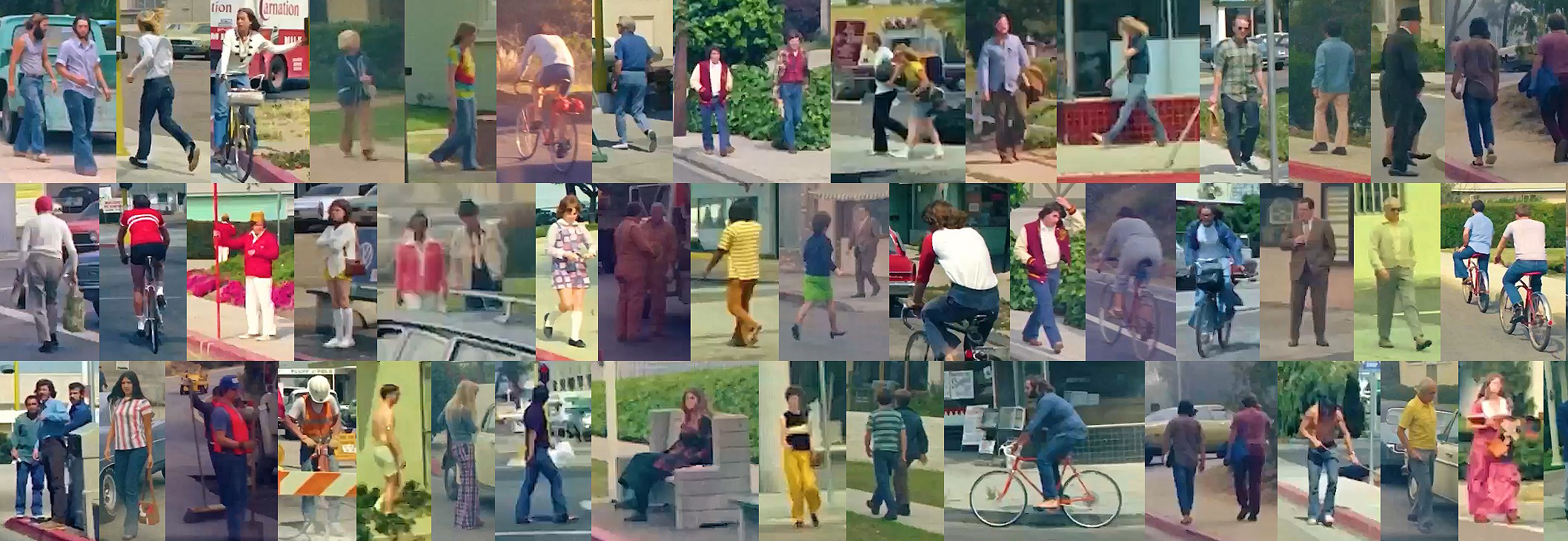
When I see all the people caught on these frames, going about their shopping, biking home from school, I wonder where they are today. These films appear to be from 1973. One woman crossing the road was holding her baby, who I realized is probably my age today.
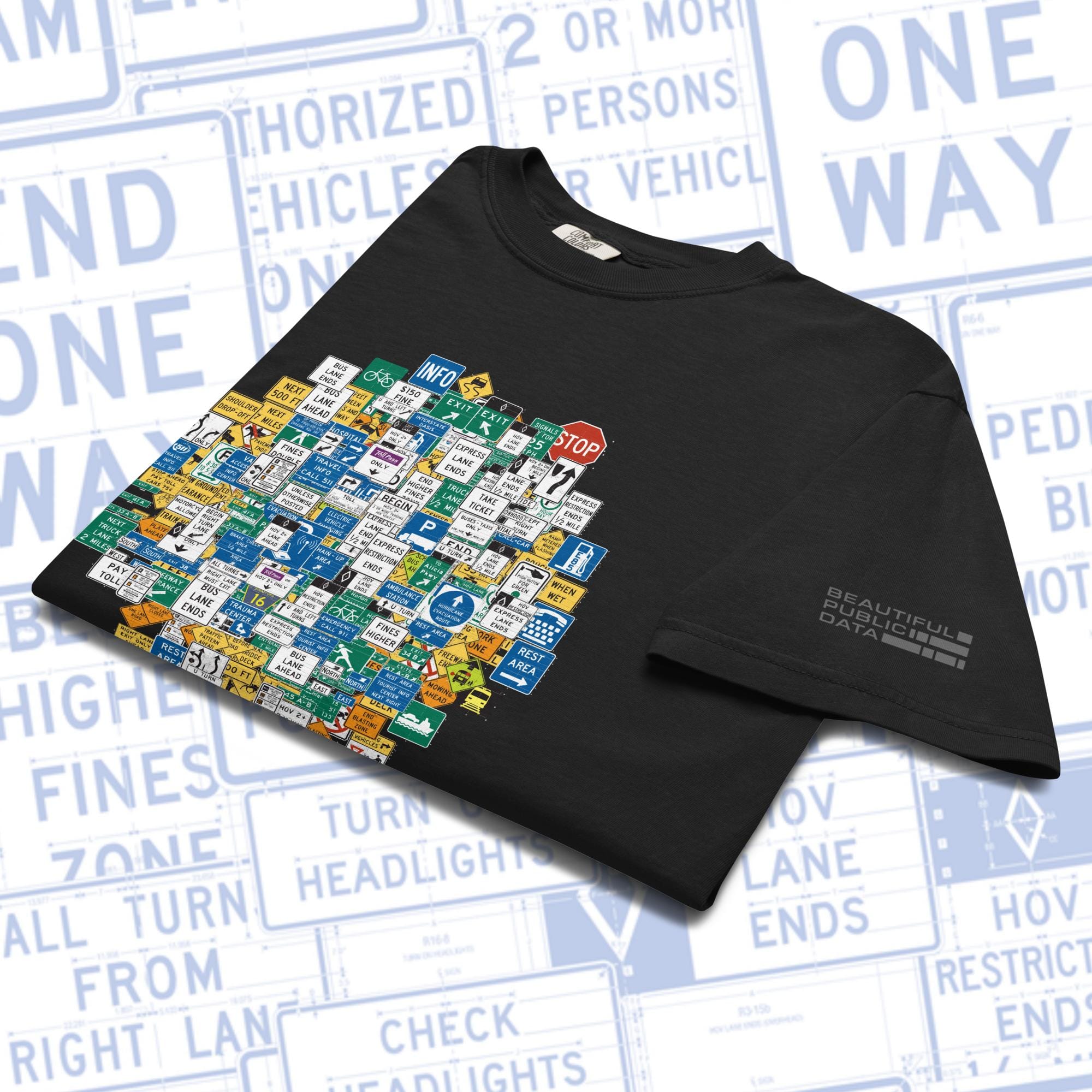
MUTCD Highway Signs T-Shirt
The Federal Highway Administration’s (FHWA) “Manual on Uniform Traffic Control Devices” (MUTCD), is a hefty tome consisting of close to 900 pages that contains the federal standards for all traffic safety signs, roadway markings and other “traffic control devices” that a driver on a road in the U.S. might encounter.
This shirt features an original design built from some of the signs you drive past every day on America's roads and highways.
Premium quality unisex garment-dyed heavyweight t-shirt made of 100% ring-spun cotton.
👨🏻💻
For this post, I used Claude Code to write Python scripts help extract cars, people and signs, which used Meta's SAM2 segmentation model.
I used ImageMagick to make the image quilts.
🙏🏻
You can subscribe to our newsletter to get future posts delivered to your inbox for free. 👉🏻 📫 Subscribe now.
☕️ Buy me a coffee
Say thanks with a one time tip.
Sharing is caring
📣 If you think your followers or friends may like it, please consider sharing it.
👕🖼️ Buy Beautiful Public Data merch on our shop.
Unique t-shirts and prints inspired by our stories
🙋🏻♀️ If you have any suggestions, comments or requests, please email them to [email protected]
Thanks for reading!
- Jon Keegan
Bluesky: @jonkeegan.com