The Customer Who Comes With a Checkbook and a Sledgehammer
Sometime in 2010, Airbnb was hemorrhaging money and growing slower than Brian Chesky had promised investors. The company had roughly $200 in revenue per week at one point. Into this vacuum walked a potential corporate client, the kind that could write a check large enough to solve all the immediate problems. The pitch was essentially: customize your platform for our needs, move toward corporate housing, and we’ll make you viable.
Chesky said no. Not politely declined. No.
That decision is easy to admire in retrospect, with Airbnb valued at over $70 billion. It is genuinely terrifying in the moment, when you have seven employees and can’t make payroll. And what makes it instructive isn’t the bravado of it. It’s that Chesky had a mental model clear enough to recognize that this customer, despite the money, was pointing toward a different company than the one he was trying to build.
Slack and Stripe have nearly identical versions of this story. So does almost every company that survived long enough to matter. The pattern is consistent enough that it deserves a name and an honest autopsy.
Why Early Enterprise Customers Are Especially Dangerous
There is a specific gravity that large customers exert on early-stage startups. It isn’t just the money, though the money is real and urgent. It’s that enterprise customers come with an implicit argument: we represent the real market. They have procurement processes, legal teams, integration requirements, and compliance needs. They seem like the grown-up version of your product’s future.
Stewart Butterfield has talked about the pressure Slack faced from large organizations in its early days wanting features that would have fundamentally changed what Slack was. The requests were reasonable on their face: more administrative controls, different permission structures, audit logging. Each one seemed like a logical extension. Taken together, they were a blueprint for a different product aimed at a different user. Butterfield’s team had to repeatedly decide what they were actually building.
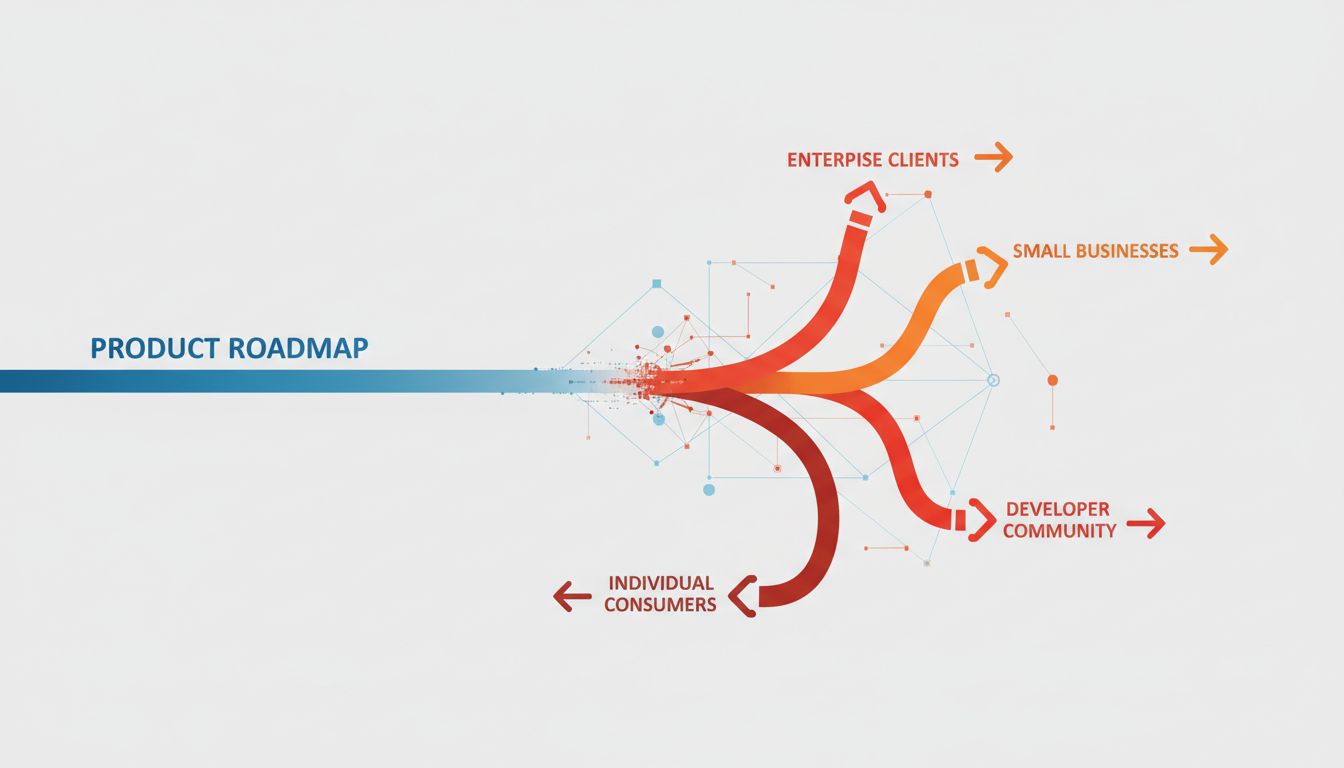
The reason this is dangerous, specifically in year one, is that startups in their early phase are not stable enough to resist the gravitational pull of a paying customer. Your team will naturally start solving the customer’s problems. Your roadmap will quietly reorient. You will tell yourself you’re not changing direction, just serving the customer. And then one day you’ll look up and notice that the thing you originally set out to build no longer exists.
The Stripe Version: When the Wrong Customer Is Also Technically Right
Stripe’s near-death variant of this story is subtler, which makes it more useful to examine. In the early years, Patrick and John Collison were approached by larger financial institutions and payment processors that wanted to build on top of what Stripe was creating. These weren’t fly-by-night operators. They were established companies with legitimate use cases.
The trap wasn’t obvious because the customers weren’t obviously wrong. The problem was that serving them would have required Stripe to become infrastructure for other payment companies rather than a direct developer tool. The margins, the relationships, and the product decisions all would have bent in that direction. Stripe would have been building for the people who were building for developers, rather than for developers themselves.
Patrick Collison’s public comments over the years have consistently circled back to the idea that Stripe’s clarity about its customer (the developer, not the financial institution) was a survival decision as much as a strategic one. When you are small, you can only build one product well. Choosing who that product is for is not a marketing exercise. It is an existential one.
This is why the loudest customer in your inbox is often a trap. Volume of communication and size of potential contract can both mislead you about fit.
What “Saying No” Actually Requires
The startup mythology version of this story is annoyingly clean. Visionary founder rejects big customer, stays true to the mission, later becomes a billionaire. Standing ovation.
The reality is that saying no to a significant customer in year one requires something most founders don’t have in sufficient quantity: a specific, falsifiable thesis about who your product is for and what problem it solves. Not a vision statement. Not a positioning document. An actual belief about the mechanism by which your product creates value, expressed concretely enough that you can test a proposed customer against it.
Chesky had a specific thesis about why Airbnb worked: trust between strangers, enabled by profiles and reviews, in the context of authentic local experiences. A corporate housing play violated almost every element of that thesis. That’s what made the no possible. It wasn’t stubbornness. It was clarity.
Without that clarity, founders tend to fall back on gut feel, which is inconsistent, or on financial pressure, which almost always says yes. Neither produces good decisions when the numbers on the check are large enough.
The Specific Failure Mode: Scope as a Proxy for Commitment
Here’s the part that doesn’t show up in the TED talks. Many early-stage companies don’t lose their direction through a single catastrophic yes. They lose it through a series of small accommodations, each of which looks like responsiveness to customers.
A feature request comes in from a large prospect. The team builds it. Another request. Built. A third. Built, with the caveat that you’ll generalize it later. Six months in, you have a product that’s 40 percent custom work for customers who don’t represent your target market, and you haven’t made progress on the core thing that was supposed to differentiate you.
This failure mode is particularly common when the sales process involves significant customization promises before the contract is signed. You make commitments in a competitive moment that your product team then has to honor, and those commitments accumulate into a product roadmap that nobody designed.
The first hundred customers rarely come from the plan, which means early customer acquisition is already chaotic. Layering in undisciplined customization commitments on top of that chaos is how companies end up with a Frankenstein product by month eighteen.
The Counterintuitive Truth About Constraints
What Butterfield, Collison, and Chesky all figured out, in different ways, is that constraints imposed by a clear customer definition are protective rather than limiting. If you know exactly who you are building for, you have a principled basis for declining requests. Your engineers know what success looks like. Your sales team knows who to approach. Your product roadmap has a spine.
The companies that don’t develop this clarity early end up in a particularly miserable position: they have customers, which means they have support obligations and contractual commitments, but they don’t have a coherent product, which means they can’t scale. They’re too successful to pivot cleanly and not successful enough to survive without continuing to change. Consulting firms in startup clothing.
Constraint also has a compounding quality. Every time you decline a misfit customer and serve an ideal one instead, you get smarter about what makes that customer ideal. Your product gets sharper. Your messaging gets sharper. You start to build a reputation with the right audience rather than a vague reputation with everyone.
The startup that wins enterprise deals by saying no demonstrates this precisely. Saying no to the wrong enterprise customer is often the prerequisite for saying yes to the right one later.
What This Means
The lesson here isn’t “don’t take big customers” or “stay scrappy.” It’s more specific and more demanding than that.
First: you need a thesis about your customer concrete enough to function as a filter. Not a persona document. An actual mechanism. Why does this type of customer get value from this specific product? If you can’t answer that with something testable, you’re going to make customer acquisition decisions based on whoever shows up with money.
Second: the most dangerous customers in year one are the ones who are almost right. The obviously wrong ones you decline without much anguish. The ones who stretch your model just a little, in a direction that seems defensible, are the ones who gradually hollow out what you’re building.
Third: no early-stage company survives this perfectly. Butterfield, Collison, and Chesky all made accommodations they later walked back. The question isn’t whether you’ll bend. It’s whether you maintain enough clarity about your core to recognize when you’ve bent too far and correct before the product becomes unrecognizable.
The customer who almost killed these companies wasn’t malicious. They were just solving their own problems, as customers do. The founder’s job is to know which problems are yours to solve.