
The Supreme Court on Monday ruled 5–4 to uphold a Mississippi law providing that absentee ballots do not have to be received by Election Day – and that states may count ballots postmarked by Election Day but received afterward.
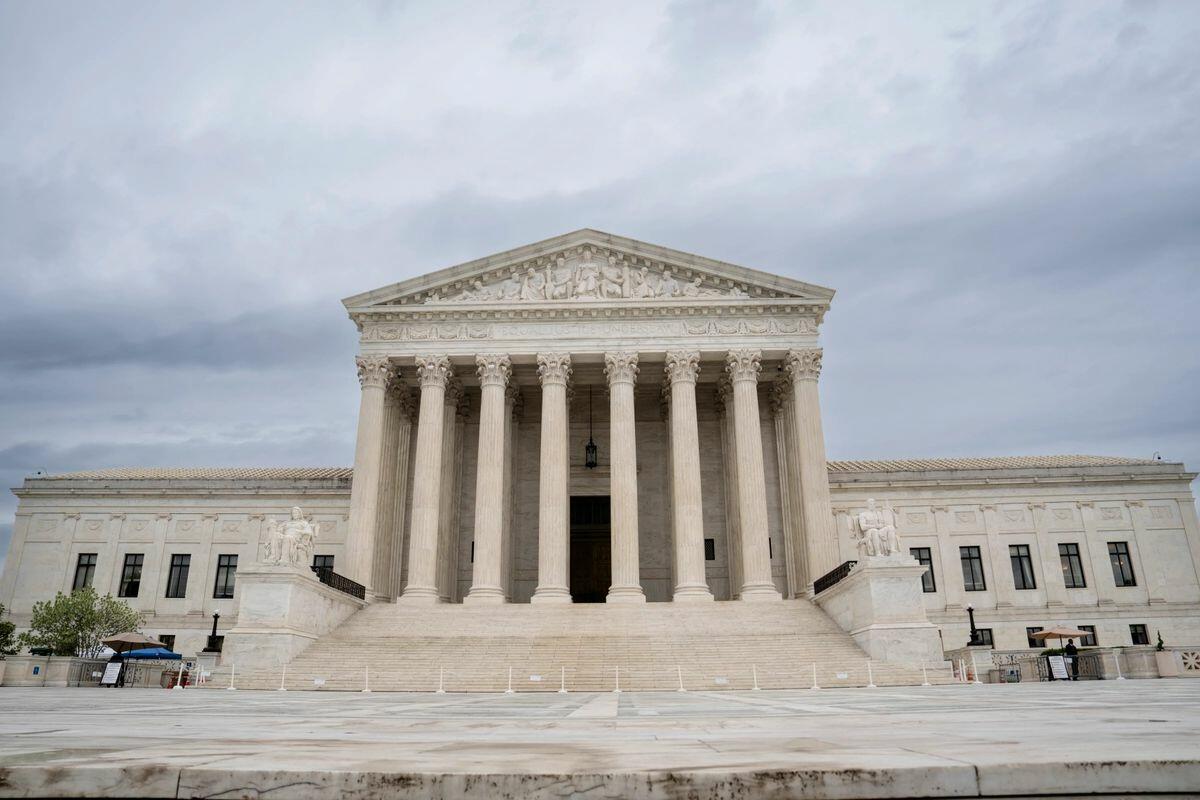
The ruling in Watson v. Republican National Committee reverses the Fifth Circuit, which had sided with the Republican National Committee and the Mississippi Republican Party. It leaves in place the ballot receipt practices of roughly 30 states and puts Congress, not the Court, on the hook if anyone wants a nationally uniform receipt deadline.
The Case
Mississippi lets certain residents – including college students away from home, senior citizens, and others – vote by absentee ballot. They can mail their ballots or send them by common carrier. The deadline: ballots must be postmarked on or before Election Day and received by the registrar no more than five business days afterward.
The RNC argued that the three federal Election Day statutes – governing presidential electors, House members, and senators – use the word “election” to mean two things at once: ballot casting and ballot receipt. So when Congress set a day for the “election,” the RNC argued, it also set a receipt deadline. The Fifth Circuit agreed. The district court had not.
Writing for the majority, Justice Amy Coney Barrett framed the question at the outset: does counting ballots postmarked by Election Day but received up to five days later violate the federal statutes?

Barrett’s argument runs on three tracks: text, statutory context, and constitutional structure.
On text, “election” has always meant the act of choosing. Webster’s 1869 dictionary defines it as “[t]he act of choosing a person to fill an office.” The Court’s own precedent in United States v. Classic (1941) called an election “no more and no less than the expression by qualified electors of their choice of candidates.” That choice, Barrett writes, is made when voting is complete – not when ballots land on a registrar’s desk. The statutes set when the people vote, and says nothing about when the mail arrives.
The 2022 amendment to the presidential Election Day statute reinforces this point. When Congress inserted the phrase “election day” and defined it, it tied the definition to “the period of voting” – not the period of receipt. That is the act Congress was governing.
The Electoral College has always separated the act of voting from the act of transmission. Electors “give their Votes” on a uniform day and then “transmit” those votes to the seat of government. The Constitution mandates that the voting day be uniform; it says nothing about the day of receipt. The federal Election Day statutes follow the same architecture. As Barrett closes the majority opinion: “The election-day statutes say nothing about ballot receipt, and we cannot add to the words Congress chose.”
The Dissent Comes Out Swinging
In a scathing dissent, Justice Samuel Alito argued that an “election” is a collective act, not an individual one. The electorate does not express its choice until the full collection of ballots is in official custody. Until that moment, the choice is not made – it is still in transit, still subject to recall, and still incomplete. Receipt is therefore part of the election, not merely an administrative matter.

He cited two centuries of practice to support that view: from the founding through most of the 20th century, Election Day was the day ballots were collected. Even during the Civil War, when states had every logistical incentive to extend receipt deadlines for soldiers at the front, none did. Alito finds it implausible – a “delicately put understatement,” he says, borrowing the majority’s own phrase – that extending receipt deadlines simply never occurred to Civil War-era legislatures as an option. In short, he argues, they understood federal law to require receipt by Election Day.
Alito also cites Foster v. Love (1997) – the Court’s only prior interpretation of the Election Day statutes – which defined “election” as the “combined actions of voters and officials meant to make a final selection of an officeholder.” If officials receiving ballots is part of that “combined action,” then officials receiving ballots must occur on Election Day. The majority, Alito argues, quietly reads the “officials” half of that formula out of the statute.
And he raises a practical alarm: what is the outer limit of today’s holding? Mississippi uses a five-day window. Washington state allows receipt up to 21 days after Election Day. The majority’s reasoning sets no federal floor. Could states eliminate receipt deadlines entirely? Could a voter hand a ballot to an Uber driver on Election Day for delivery weeks later?
What Happens Next
The immediate effect: Mississippi’s five-day post–Election Day receipt window survives. The Fifth Circuit’s ruling is reversed and remanded.
The broader effect: the roughly 30 states that already count ballots postmarked by Election Day and received afterward are now on solid federal legal footing. No federal preemption argument runs against them under today’s ruling.