
For three years, everyone from Goldman, to Richmond Fed President Thomas Barkin, to tech CEOs have been forecasting mass unemployment due to AI wiping out jobs - which would only be accelerated by the proliferation of cheap(er) Chinese models. Ford Motor CEO Jim Farley said last year that AI would replace "literally half of all white-collar workers in the U.S."
And while that may only be a matter of time, tech CEOs have changed their tune - albeit while facing public pitchforks over data centers, the cost of electricity, and their own forecasts of workforce doom.
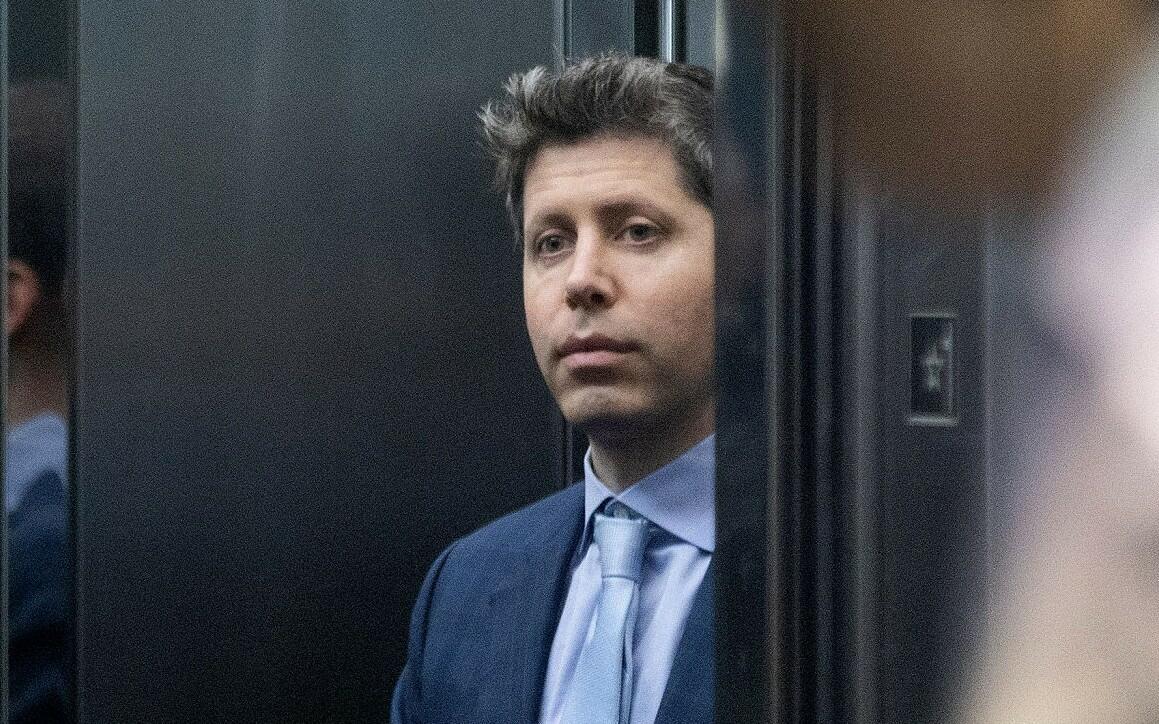
"Our industry underestimated how much we’re going to be able to keep people at the center of everything," OpenAI CEO Sam Altman said earlier this year. In May he told CNBC "We’ve been roughly right on technological predictions and pretty wrong on the social and economic implications."
Last year, Anthropic CEO Dario Amodei warned that AI could eliminate half of entry-level jobs. Now, however, Amodei has changed his tune - suggesting that AI can maximize productivity, the WSJ reports. "They can do the same thing with less resources, and that leads to things like layoffs, or they can do more with the same amount of resources. But that requires creativity," he said.
In a June essay, the executive wrote that in giving warnings of job displacement, he wanted policymakers and the private sector to have the best chance at adapting—he wasn’t trying to be a “prophet of doom.” (He also wrote that the possibility of “enduring job loss” remains.) -WSJ
Meta CEO Mark Zuckerberg is also singing a different tune - recently saying that if employees can boost productivity faster than the rise of automation (lol ok), "in theory there should be more jobs in the future, not less."
Even Ford has hired several hundred engineers that they attributed to concerns over the quality of work that had been automated - with one spokesman telling the Journal: "Engineers with deep technical expertise leveraging the power of AI is a powerful combination that is driving quality gains at Ford."
And so, as the Journal notes, "Collectively, the narrative has shifted from worker-light doomsday scenarios caused by AI to a future in which workers keep their jobs - and get a productivity boost."
The sentiment change isn’t limited to tech leaders: A survey by EY-Parthenon found that the percentage of CEOs who believe AI investments will result in significant reductions in head count fell from around 46% in January 2025 to 20% this May.
Last month a California think tank found that there has been "no evidence of a surge in AI-related layoffs" outside of one group of people; college-educated workers from industries with high exposure to AI - unemployment claims showed an increase after the 2022 launch of ChatGPT-3.5 and have remained high through May 2026.
Giant Needle Skip
Just as we were seemingly hurtling headfirst into the AI jobpocalypse, major companies began blowing their budgets on tokens - with one Anthropic enterprise client (thought to be Amazon) spending $500 million in Claude charges in a single month.
In April, Uber's CTO went on the record saying the company had burned through its entire 2026 Claude Code budget in four months, leading to a hard cap of $1500 per month, per employee, peragentic coding tool. In mid-May, Microsoft began winding down internal Claude Code access. And then there's Amazon, which encouraged employees to spend AI tokens via a leaderboard, only to shut it down months later.
Related:
Meanwhile, UBS found last month that less than 20 cents of each dollar spent on AI tokens reaches real users.
According to a survey of corporate executives by technology and management-consulting firm Emergn, around 20% say the AI deployment reports they're getting paint a rosier picture than the facts on the ground - with some saying that their staff are obscuring failures.
"They may have noticed that the labor market is genuinely not changing (i.e., imploding) as rapidly as they expected," David Autor, a professor of economics at the Massachusetts Institute of Technology, told the WSJ. "They may have realized it was simply bad business to say that your great new product will destroy the economy."
Another study by financial-technology company Ramp and workforce-intelligence firm Revelio Labs supports the notion that AI adoption has been positive for job growth - finding that companies making the largest AI investments grew employment by roughly 10% over otherwise similar companies that hadn't yet adopted the technology.
TL;DR
With pitchforks out across America over data centers, AI CEOs have changed their tune - and are now saying their earlier warnings of mass unemployment were greatly exaggerated.