
While the BOJ understandably refuses to admit it spent a record $140BN (across all markets, $90BN on EBS) to briefly manipulate the Japanese yen higher...
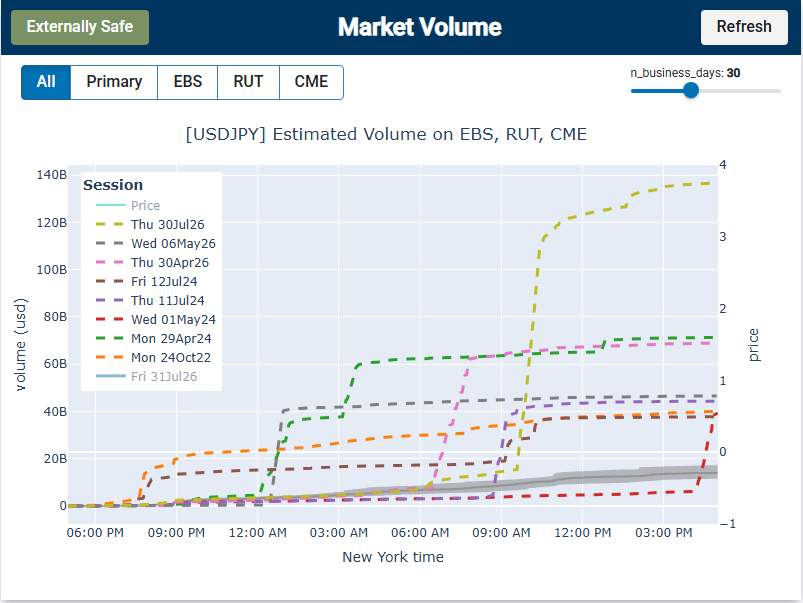
... ahead of yet another disappointing (non-rate hike) decision (according to some calculations, Japan's central bank is about 100 bps of rate hikes behind to stop the ongoing collapse of the yen), others are less shy.
According to Reuters, similar to the last failed intervention by Japan and citing "a source familiar with the matter", the US Treasury informed a number of banks that it may intervene in the Japanese yen market on Friday and that they should "stand ready for future action."
The notice to banks, channeled through the Federal Reserve Bank of New York, comes a day after Japanese authorities stepped in to prop up the yen, setting the currency up for its biggest weekly rise since February, pulling it off of four-decade lows against the dollar (although the yen has since erased much of its gains).
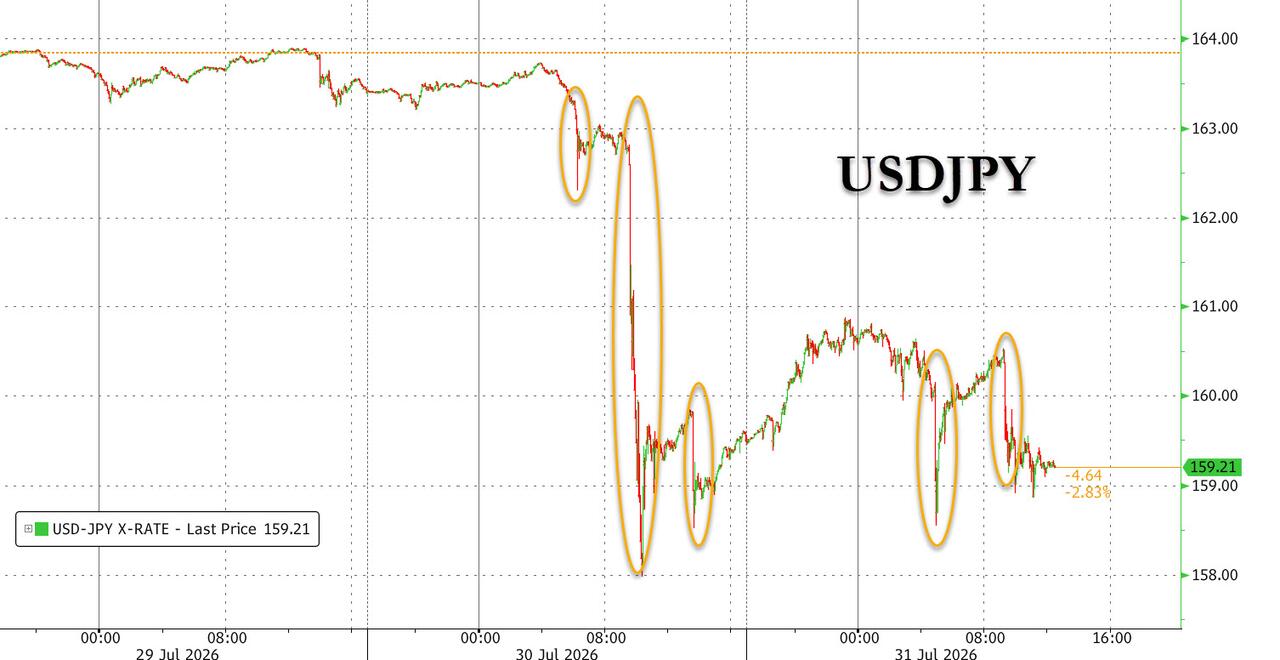
News of the potential intervention by the U.S. Treasury helped push the yen higher against the dollar on Friday. It last traded at 159.22 to the dollar after trading as low 163.65 on Thursday. As shown below, the past 48 hours have seen no less than 5 distinct intervention attempts by the BOJ and/or the US Treasury to push the yen higher.
The method of potential Treasury intervention was not immediately clear. The Federal Reserve has maintained a dollar liquidity swap line with the Bank of Japan and four other major central banks since 2013.
Japan's top currency diplomat Atsushi Mimura in Tokyo Friday declined to comment on intervention but hinted at U.S. involvement in the effort to stem the yen's decline, including so-called "rate checks" -- requests to dealers for indicative dollar/yen quotes that are considered a precursor to interventions.
Mimura added that the U.S. support "goes beyond psychological support."
The Reuters report of Treasury's notice to banks of potential intervention "fits in with the view in the market that the New York Fed has been carrying rate checks, so it's adding to the nervousness of market participants that there could be further intervention," said Lee Hardman, currency strategist at MUFG in London. "It definitely helps support the idea that there is intervention risk on the table."
US Treasury Secretary Bessent said in a post on X that the Treasury maintains "a strong relationship and close coordination" with Japanese authorities, but did not confirm the intervention preparations.
He said he looked forward to meeting with Bank of Japan Governor Kazuo Ueda at the U.S.-hosted G20 finance ministers and central bank governors meeting in Asheville, North Carolina, at the end of August.
"Japan's economy continues to perform well under Prime Minister Takaichi, Governor Ueda and the Bank of Japan Board, which has demonstrated a strong commitment to monetary and financial stability,"
On Thursday, Bessent told Fox Business Network that the yen "seems very undervalued to me" and that Japanese Prime Minister Sanae Takaichi was enacting "strong policies" that would help Japan's economic fundamentals. Bessent added that "we think excess volatility in the yen isn't healthy" and that the yen has "substantially overshot what would be called an equilibrium price."
The last time that the US Treasury intervened directly to prop up Japan's yen was in 2011 as part of a coordinated action by G7 countries to stabilize the currency following the devastating earthquake and tsunami rocked Japan.
The Treasury last fall intervened to prop up Argentina's peso market ahead of parliamentary elections and provided President Javier Milei's government with a $20 billion currency swap line to help stabilize the currency and Argentina's dollar bonds. The aid to Argentina relied partly on the Exchange Stabilization Fund, which had total assets of about $217 billion as of June 30.