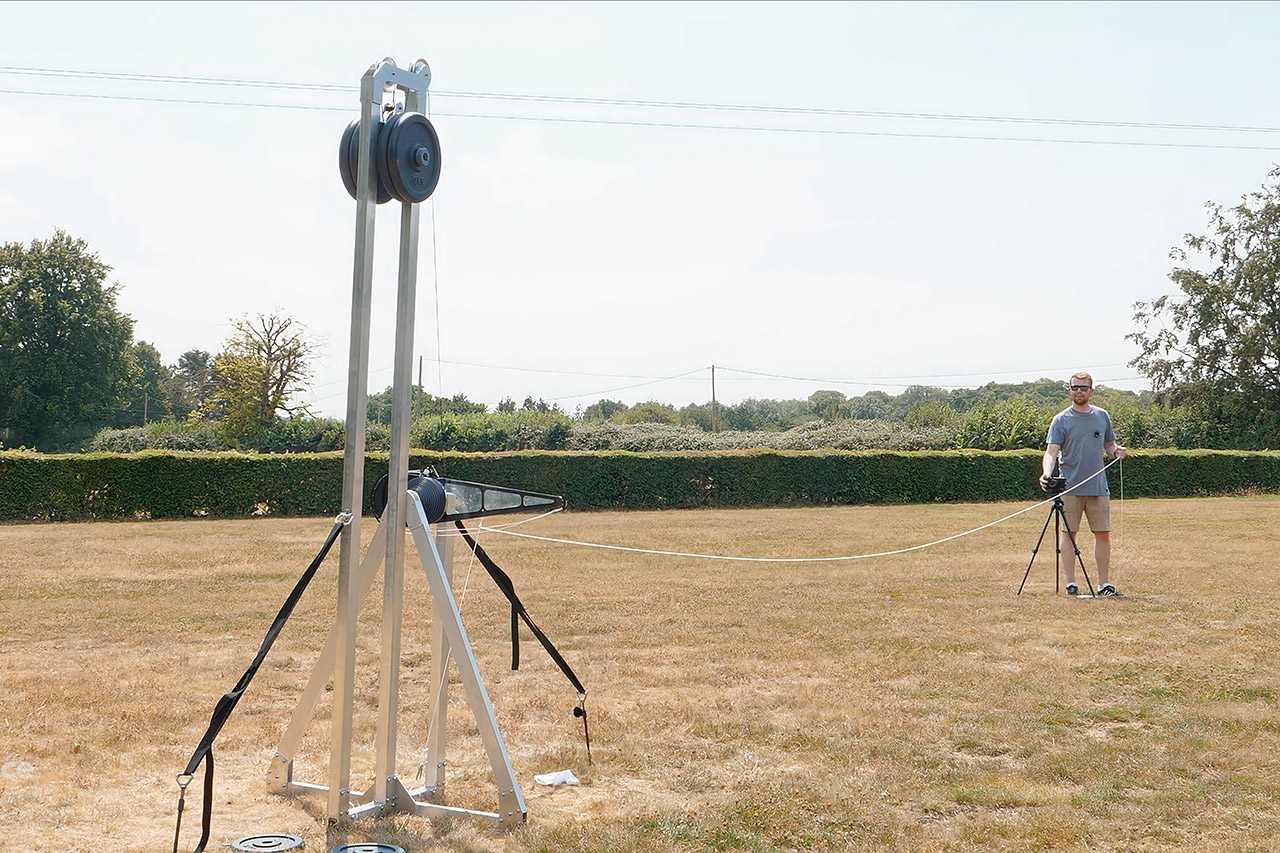
Tom Stanton has spent years chasing a number that gravity itself seemed to forbid. On a quiet field somewhere in the UK, a 40-kilogram mass dropped a short distance, spun a carbon-fiber arm past 2,300 revolutions per minute, and sent a 4-gram projectile into the air at 776 miles per hour. That is nine miles per hour past the speed of sound. For the first time, a purely gravity-powered trebuchet crossed the barrier.
Medieval engineers created these machines to fling huge stones at castle walls. The basic idea is to hoist a large heavy weight, let it fall down, and then use the lever and sling to redirect that energy into a much lighter projectile. Unfortunately, physics gets in the way. A weight in free fall accelerates at a maximum of 9.81 meters per second squared; drop one from 2 meters and it smacks into the ground at around 6 meters per second. No matter how heavy you make the weight, the speed remains constant, and a typical arm is like a car with a bike chain stuck in first gear, with lots of torque at first but just enough to get it moving by the end.
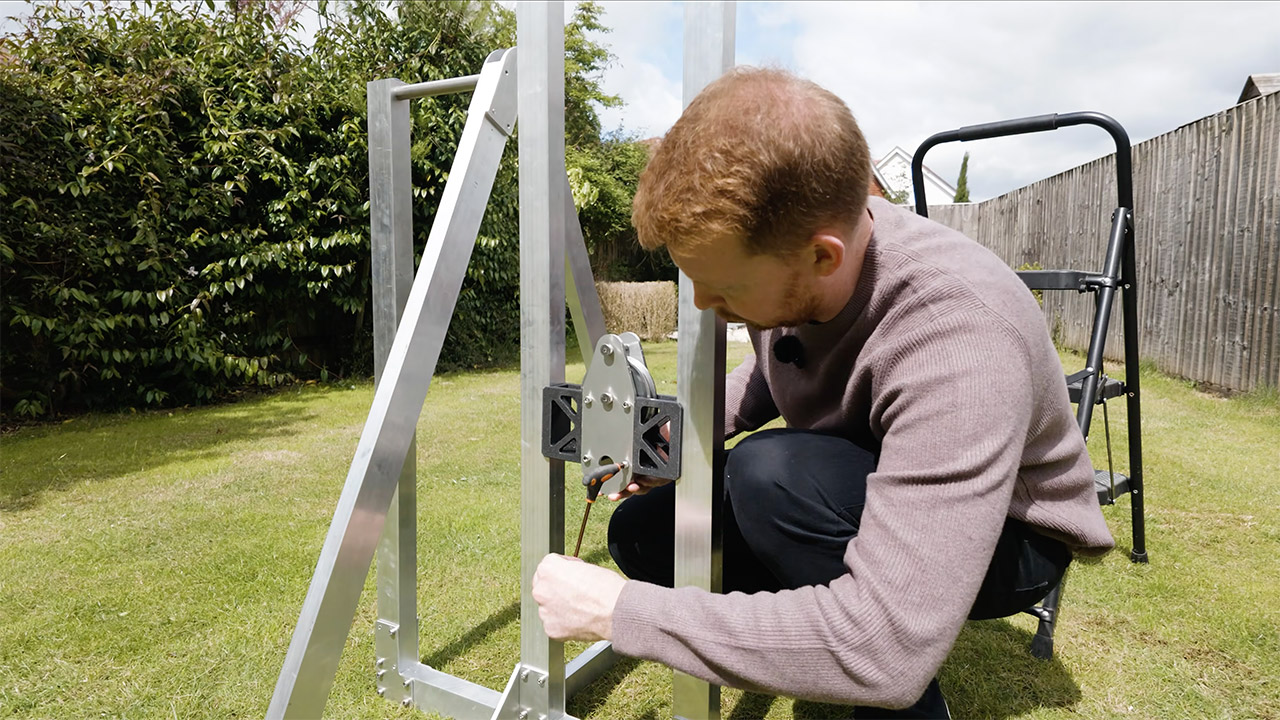
Stanton devised a creative engineering solution to the speed problem. The counterweight is suspended from a pulley system with a 3:1 ratio, as a large diameter at the beginning propels the arm with plenty of force, and as it winds down, the smaller diameter end provides a significant jump in rotational speed. In the end, the drum was redesigned so that weight could be lifted up to 1.9 meters, storing more power in the system than previous iterations.
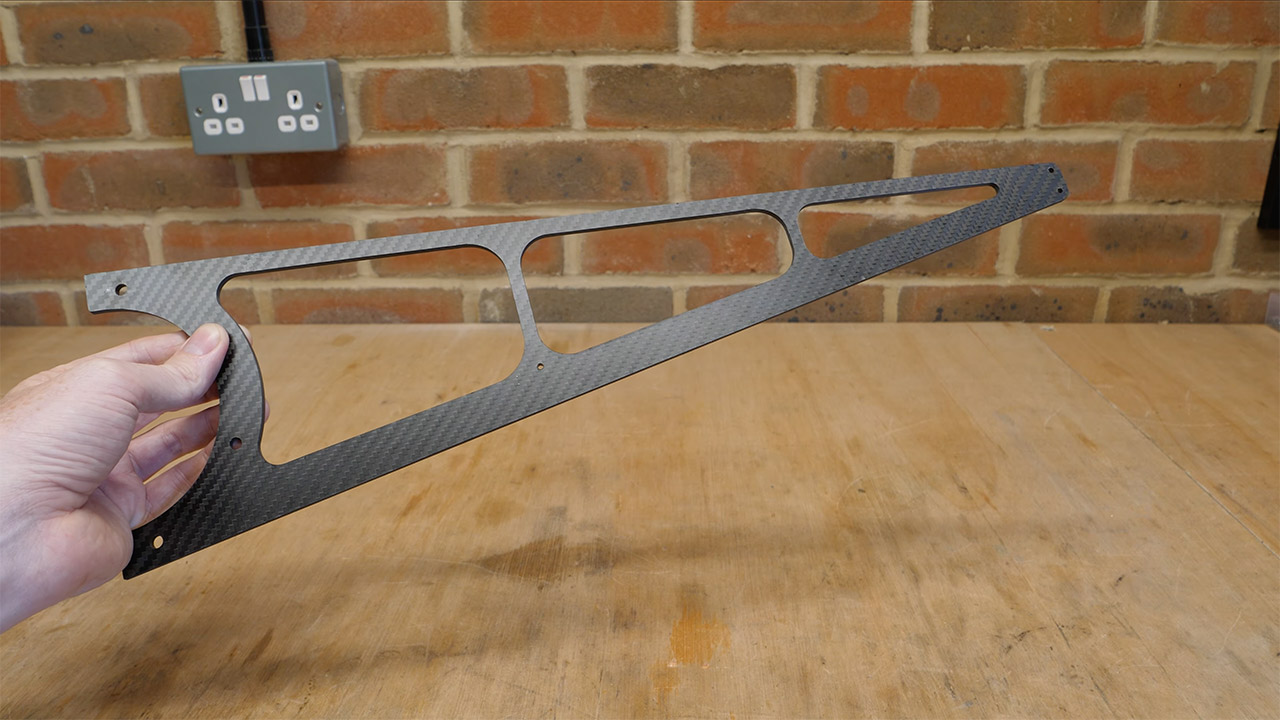
The arm has to be both incredibly light and super rigid. Carbon fiber was really the only option because it isn’t heavy enough to weigh down the entire system while yet being able to withstand punishment. Stanton used his homemade CNC mill to carve the piece, keeping the dust under control with a HEPA vacuum and a good spray of water. It weighs only 116 grams. Stress tests and numerous defective 3D printed prototypes revealed that it would buckle under the sling’s pressure, so he modified the design to compensate, removed material from the tensioned side, toughened up the opposite side, and added some extra bracing for good measure. Aluminum hubs connect the arm to a short counter-arm, keeping the spinning bit as balanced as possible.
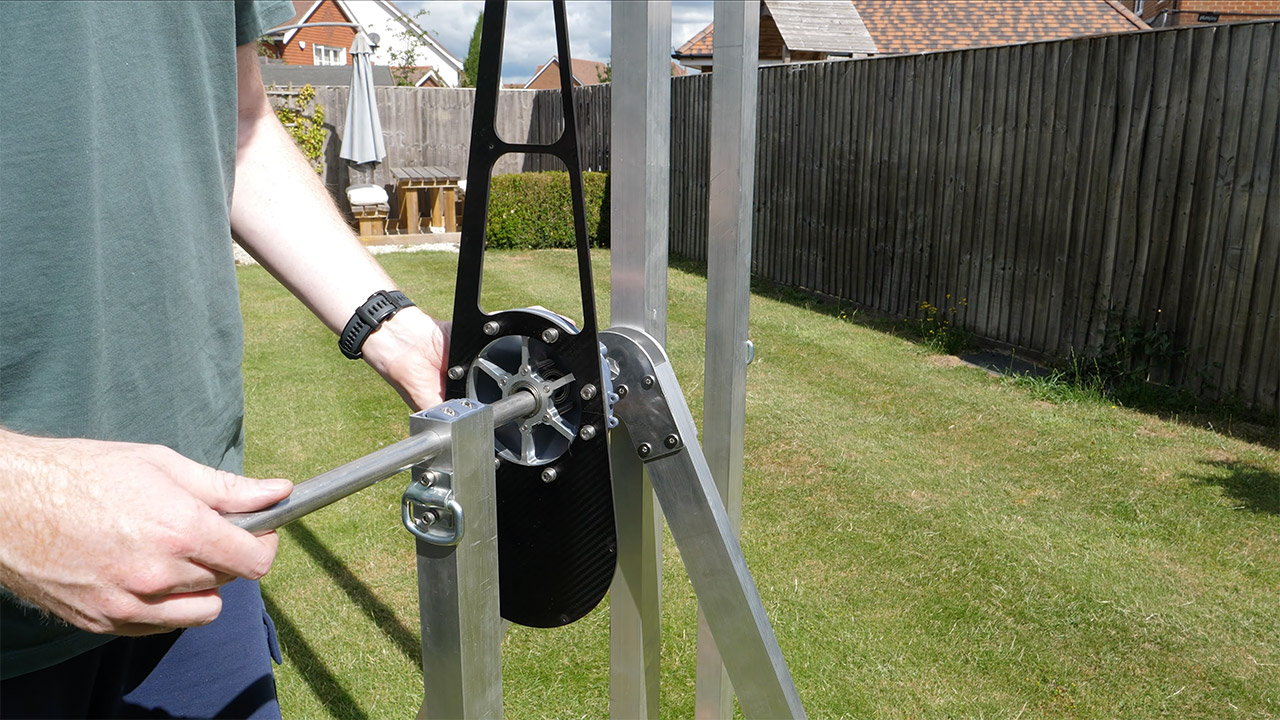
The projectile now starts near the axle, wrapped firmly in a sling that unwraps at just the right moment. The entire system is mechanically released, using a spring-loaded catch that opens after a certain number of rope rotations. The release window is only a few milliseconds long, which is plenty of time to complete the task. Early iterations failed under stress, but the final pin-and-loop structure held up.
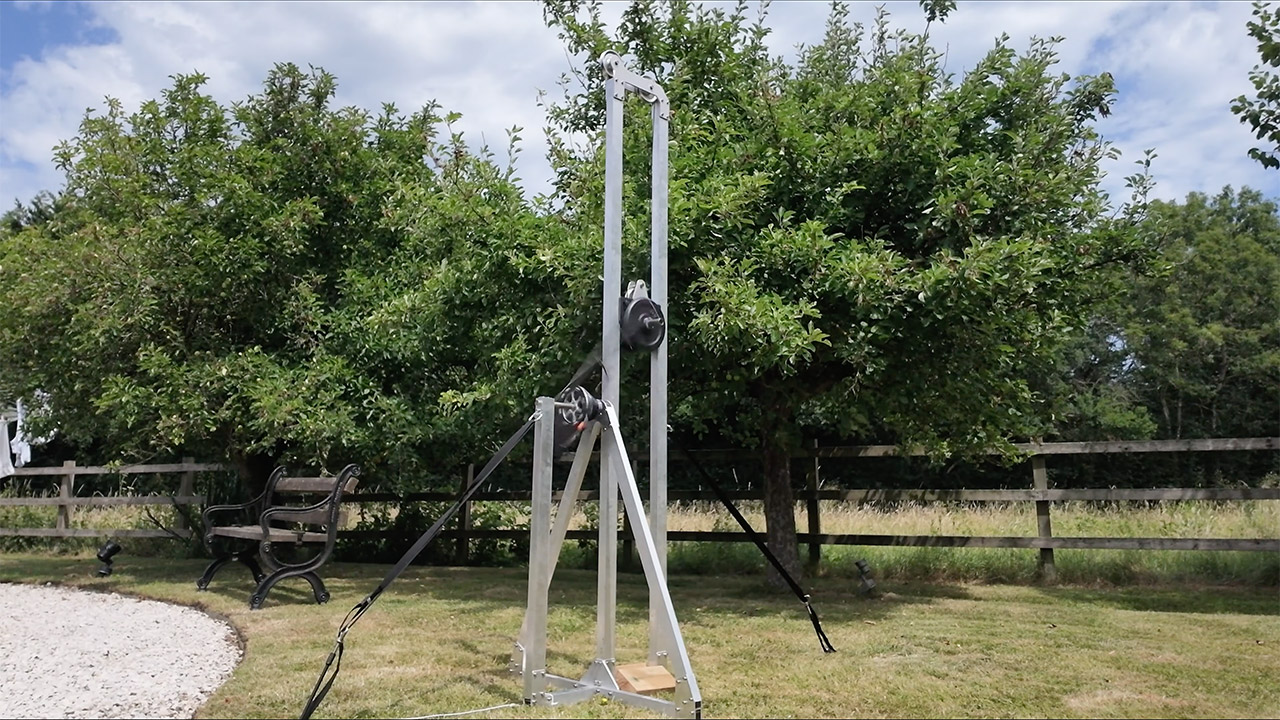
Testing was carefully increased, and he began with a 10 kg weight. The modified aerodynamic arm reached a respectable 1248 rpm and launched at 394 mph with an incredible 43.7% efficiency. Twenty and thirty kilograms passed thru without a hitch. 40 kg, on the other hand, sped the arm to 2336 rpm and the missile to a blistering 716 mph, falling only 51 mph short of the magic barrier. The machine eventually snapped, and the clasp shattered beneath the weight of 50 kg. Stanton reduced the projectile weight to approximately 4 grams, changed the drum taper once more, and returned to the test area with the 40 kilogram setup.
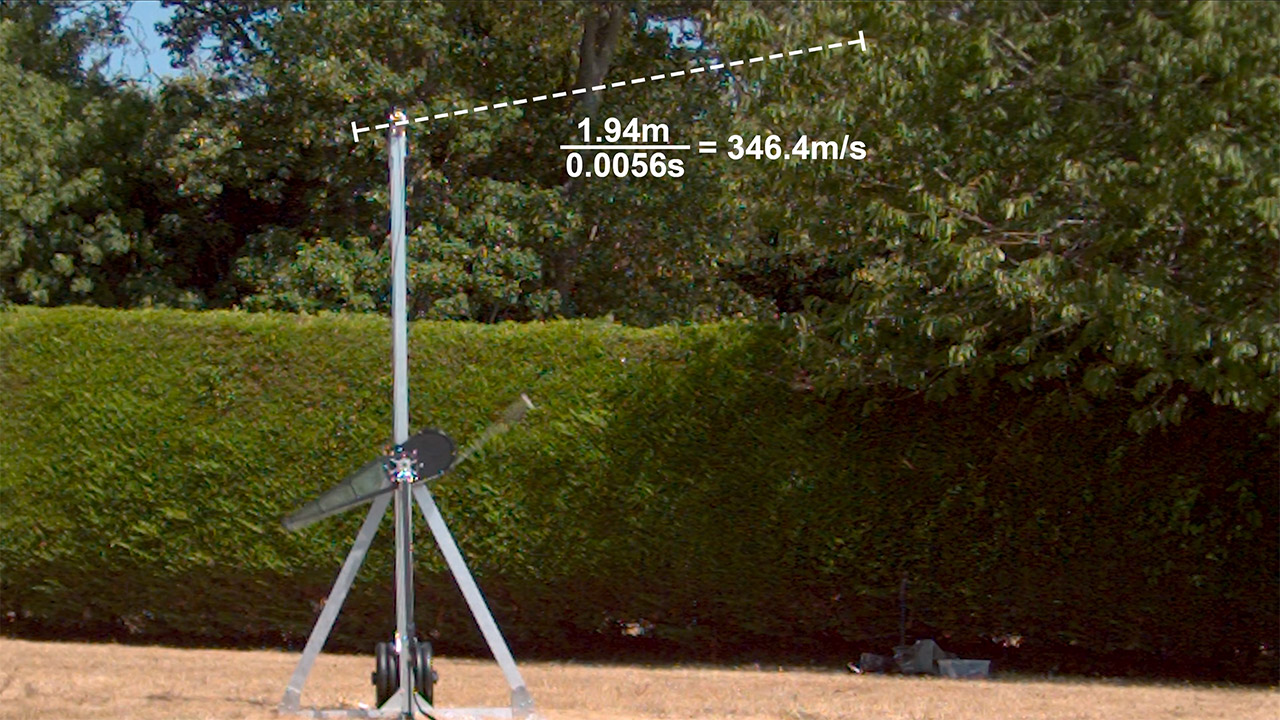
The final test is obviously the most important, since the arm spun up to 2342 rpm. Tip speed reached a staggering 274 mph. The high-speed footage was truly eye-opening, as the missile traveled 1.94 meters in 5.6 milliseconds. Crunching those statistics yields 346.4 meters per second, or a more than respectable 776 mph. To top it all off, there was a loud crack followed by a pleasant echo, confirming the sonic boom to everyone within earshot. Not one aspect of the machine came close to failing, or so we’d like to think.