
He might be flirting with a radical policy recalibration even if he soon changes his mind...
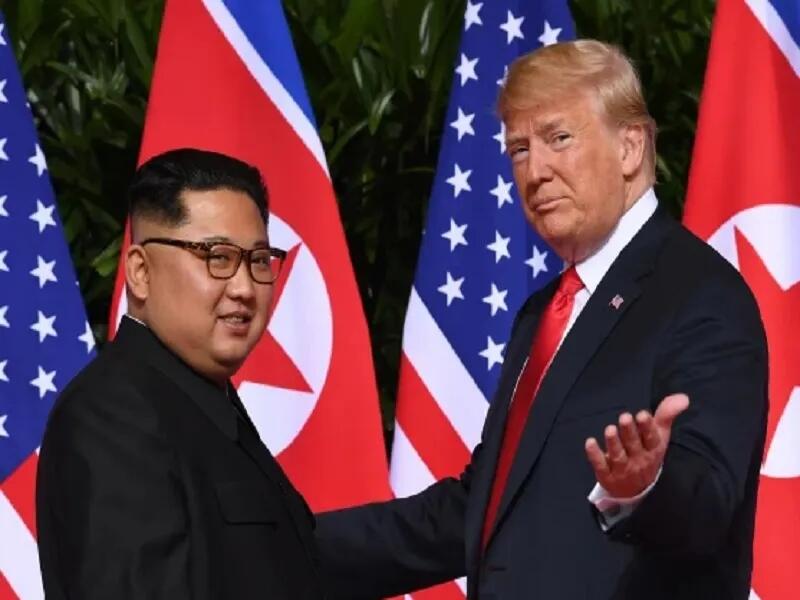
Trump unexpectedly announced that the US will “substantially reduce” its participation in the annual Ulchi Freedom Shield large-scale joint military drills with South Korea that he was apparently unaware of till just recently and which began this week. He described his decision as being “Based on my very good relationship with Kim Jong Un” and aimed at not “send[ing] a signal that is totally inappropriate and hostile”. He also complained about its costs and South Korea’s refusal to help the US fight Iran.
Trump’s favor to Kim was unexpected because he mentioned North Korea alongside Russia, China, and Iran as “US adversaries” just last month who have the ability to manipulate US elections. His Under Secretary of War Elbridge Colby was also in Southeast Asia in early August, where he was replicating the NATO 3.0 concept through what can be called AUKUS+. While it’s mainly aimed at containing China, fearmongering about North Korea could raise its appeal among some South Koreans and Japanese.
On that topic, those two states are US mutual defense allies, and they share similar threat perceptions of China and North Korea. They’re also rapidly militarizing, with South Korea planning to build its first nuclear submarine with American assistance and Japan considering abandoning its Three Non-Nuclear Principles, both of which have heightened regional tensions to the US’ divide-and-rule benefit. The same goes for the latest Russian-Japanese tensions over the Southern Kurils in which the US backs Japan.
It was therefore completely unexpected that Trump would do Kim a favor as significant as “substantially reducing” the US’ participation in its annual large-scale joint military drills with South Korea since this goes against all of the abovementioned policies. While only he can account for his reasons, and it’s possible that he simply felt like it and there’s nothing deeper, it can’t be ruled out that he has some plan in mind. His South Korean counterpart’s recent call to resume talks with the North could provide a hint.
Trump might thus be considering the resumption of his own talks with Kim, whether bilaterally like during his first term and/or somehow connected with his “Board of Peace” initiative, the motivation of which could be a blend of personal and geostrategic calculations. As regards the first, he might want to cement his legacy as a “president of peace” like he’s previously described himself as while also distracting from the political-military debacle of the Third Gulf War that he initiated earlier this year.
On the geostrategic front, Trump might fear that Russia, North Korea, and China could strengthen their military-security ties to the point of a de facto alliance in the face of the challenge that AUKUS+ poses to them all, which could risk World War III by miscalculation if North Korea carries out more nuclear and/or missile tests amidst worsening regional tensions. Essentially, the speculative resumption of Trump-Kim talks could therefore be for escalation-control purposes, though only if they’re successful.
It’s admittedly premature to analyze anything beyond what was already mentioned in this piece, and even that which was written is reasonable conjecture, but it’s nevertheless notable that Trump unexpectedly did such a significant favor for Kim in spite of the rising regional tensions that the US is responsible for. After all, this single move goes against all of the US’ policies in Northeast Asia, so it’s not far-fetched that he might be flirting with a radical policy recalibration even if he soon changes his mind.