A rare, approximately 2,500-year-old colossal statue has been unearthed in the ancient city of Sardis in Manisa, Turkey, the country’s ministry of culture announced on Tuesday (4 August).
The statue, depicting a young man holding fruit, was found in two pieces but once stood seven feet high, according to a ministry statement. It is understood to date back to the first half of the fifth century BC, around the beginning of the Classical period in Greek art. It has been exceptionally well preserved because it was reused as a Roman-era paving stone on a colonnaded street, and “offers significant insights into the art and social life of the period”, the statement adds.
Sardis, inscribed as a Unesco World Heritage site last year, was the capital of the Lydians, a powerful Iron Age civilisation (eighth-sixth centuries BC) known for its wealth and early coinage production. According to Unesco, the Lydians were located at a crossroads between the Greek world and contemporary Near Eastern cultures.
The sculpture dates from the period when Sardis was the capital of the western province of the Achaemenid Persian Empire. It presents a mixture of styles: the upright stance and long hair speak to sculptural traditions of the sixth century BC while the carving of the face and hands are typical of the first half of the 5th century BC, the ministry statement says.
What’s more, the garments depicted on the figure—a Greek-style outer cloak worn over a tunic-like lighter garment and another item marked by horizontal lines—are of a combination not seen before in similar sculptures originating in Greece or Anatolia from this period, the statement adds. The ministry statement suggests the work sheds light on the “clothing traditions and visual language of Lydia”.
“It’s a wonderful piece, and we’re still kind of astounded and a bit perplexed by it,” Nicholas Cahill, the field director of the Sardis Expedition—which discovered the sculpture—tells The Art Newspaper. The Sardis Expedition, sponsored by Harvard and Cornell universities, continually excavates the area with the permission of Turkey’s culture and tourism ministry.
“I’m always struck by how little we know about the Lydians. There is only one major Lydian site, and that’s Sardis. We’re still almost in the infancy of our studies of ancient Lydia, despite working at Sardis for more than 70 years. And we have never been fortunate enough to find such a monumental sculpture—indeed these things come up very rarely worldwide.
“The combination of the very old-fashioned hairstyle, clothing, and such with the more modern rendition of the hands with veins, the facial features, the turn of the neck and such, is quite striking as well,” he continues. “This is a sculptor who knew about what’s going on in Greece and Italy, but chooses to portray the person as his ancestors had been portrayed.”
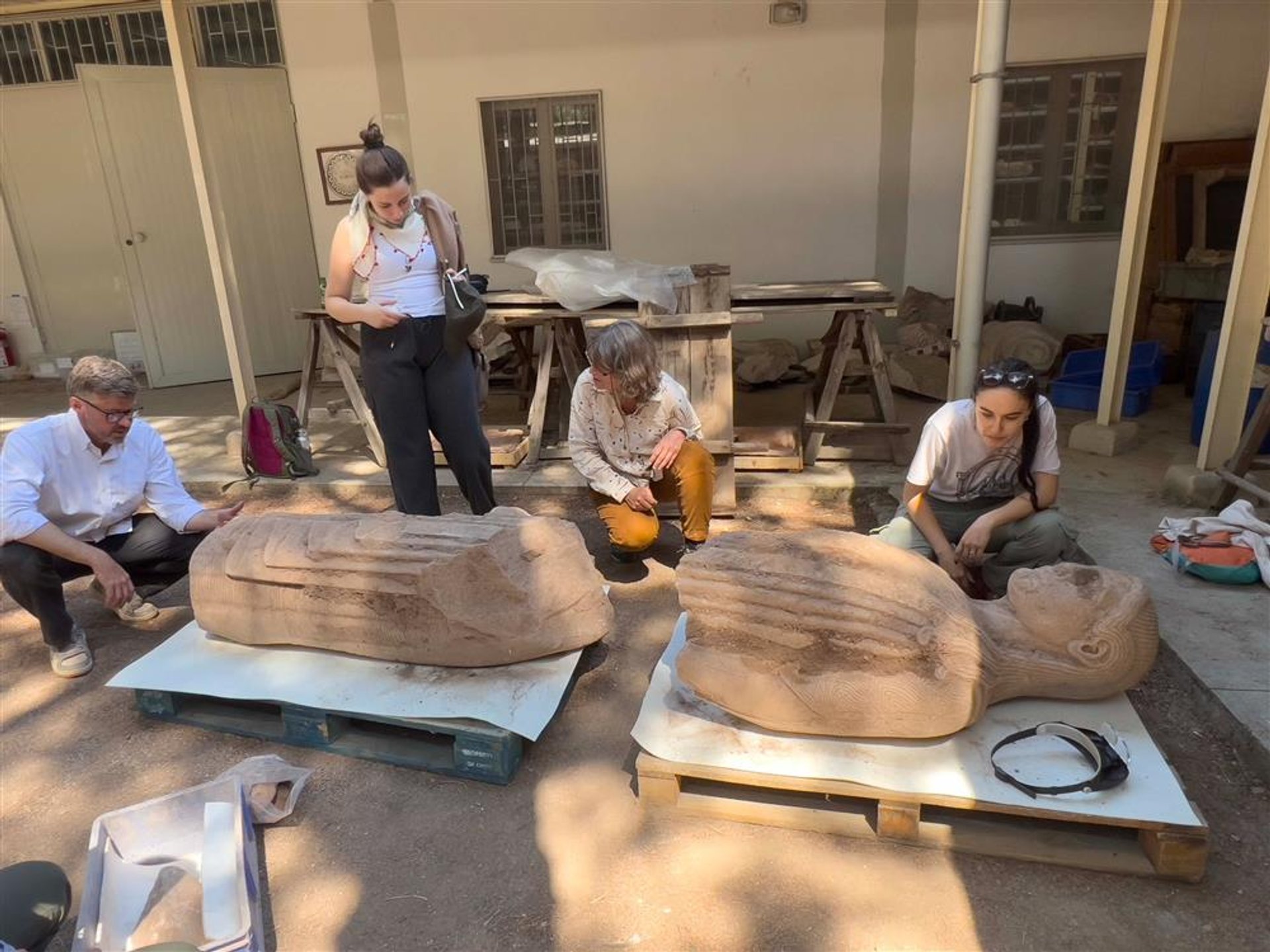
The statue was discovered in two parts
Courtesy of Republic of Türkiye Ministry of Culture and Tourism
The archaeologist Hector Williams, who has worked at the site and made multiple trips there over the decades, says: “It is one of the most unusual pieces of sculpture to emerge from excavations in western Turkey in the last decades. Specialists in Greek sculpture are going to have field day with it.
“The city itself is a remarkable mixture of the great Lydian culture that invented the first coinage, the relatively brief Persian occupation after the defeat of Croesus in 546 BC, the long period of development as a great Greek and then Roman city, the importance of its early Christian period, and so on,” he continues. “In my opinion, however, this statue is one of the most remarkable discoveries at this large urban centre and students of the late archaic/classical period (around 525-460 BC) await with considerable interest its full study and publication.”
A discovery in ancient Aspendos
Meanwhile, on Thursday (6 August) it was announced that 1,800-year-old marble sculptures depicting Asklepios, the Greek god of medicine and son Telesphoros had been discovered at another Unesco World Heritage site in Turkey: the ancient city of Aspendos.
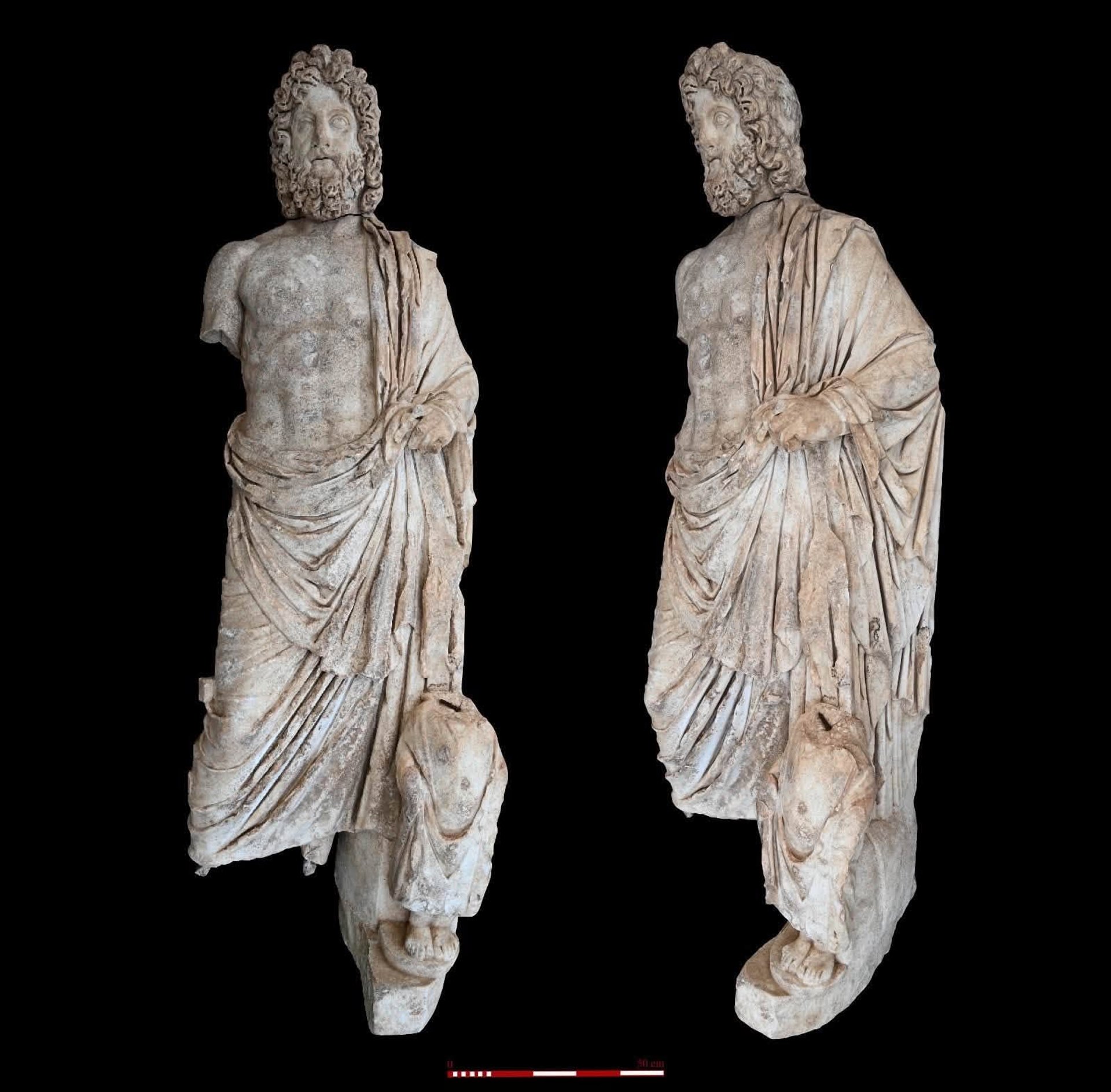
The sculptures of Asklepios and Telesphoros that were discovered in the ancient city of Aspendos
Courtesy of Republic of Türkiye Ministry of Culture and Tourism
Turkey’s minister of culture and tourism Mehmet Nuri Ersoy praised the “intricate craftmanship” of the Roman-period work in a statement on social media. In Greek and Roman mythology Asklepios represented medicine and healing while Telesphoros represented treatment, convalescence and recovery. “Consequently, the artwork serves as a powerful symbol that holistically conveys the healing process, spanning from the treatment of an illness to the individual's complete recovery,” Ersoy added.