Today, we learn to drive our own cars -- and manage our own computers. The University of Houston's College of Engineering presents this series about the machines that make our civilization run, and the people whose ingenuity created them.
Historian Kevin Borg talks about a 1906 headline in the New York Times: "Chauffeurs Lord It Over Their Employers." The headline typified a rising problem in the first days of the automobile. The wealthy were having trouble with a new breed of servant.
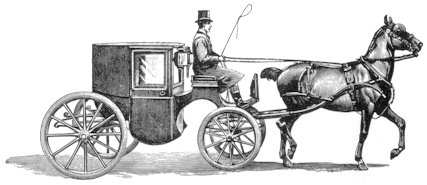
Before the 20th century, only the wealthy owned the fancy sort of carriage that was driven by a coachman. A separate staff of servants would typically care for the horses and equipment, and do the driving. When automobiles first came on the market, it was those same wealthy owners who could afford them. So coachmen became the natural heirs to the care and handling of autos. But, of course, they could not have been more wrong for the job.
The first automobiles needed constant repair. In 1903, Cadillac advertised that, "When you buy a Cadillac, you buy a round trip." That meant, of course, that it might get you home before it broke down.
The role of the head coachman was well defined. Toward his superiors, he was deferential and obedient. He skimmed the salaries of servants that he managed and money he received for supplies. He had neither the talents nor the temperament of a mechanic.
Now coachmen had to be replaced by a new kind of employee. But twentieth-century mechanics had the egalitarian instincts of people who'd created automobiles in the first place. They had no sense of the old social stratification and weren't about to play that game.
They ran roughshod over their new bosses. They went joyriding in the expensive cars in their care. Of course, they too skimmed their operations money, but they did so without the veneer of social decorum. They were in control, for who else could deal with those terribly complex new machines?
By the end of WW-I, two things had happened with automobiles. They stopped needing constant repair, and their owners learned to drive them. Chauffeurs didn't vanish, but they did lose their power. A new kind of boss/employee relationship stabilized.
That same drama plays out in any new technology. I spent years at the mercy of technical typists. They were underpaid, but they were in control. When word processors came on the market, I was first in line to buy one. It was my ticket out of a relationship that degraded everyone.
During the past twenty years, the typist and the file clerk have been replaced with computers and with people who know how to use them. And what about power? Well, it's now in the hands of whoever really understands those computers. Sometimes those are the people in the data-entry trenches; sometimes it's their bosses. In large organizations we find computer specialists. And they're in danger of falling into the same role as those early chauffeurs.
So knowledge is power, all right, but it's temporary power. For knowledge flows. What one person knows, another can also know. The only people condemned to be bossed about by others are the ones who deny their own ability to learn. They're the ones who fear their own automobile -- or their own computer.
I'm John Lienhard, at the University of Houston, where we're interested in the way inventive minds work.
(Theme music)
Borg, K., The "Chauffeur Problem" in the Early Auto Era: Structuration Theory and the Users of Technology. Technology and Culture, Vol. 40, No. 4, October 1999, pp. 797-832.

