In English, there is an “indefinite” article a that can go before a word. For example, a raccoon. But for some words, we use an. For example, an apple.
When procedurally generating text, I want a function
a_or_an("apple") that tells me which article to use. That seems
like it’d be easy. We can check the first letter to see if it’s a
vowel. But that would mean we output an unicorn, not a unicorn.
The actual rule is not whether the written word starts with a
vowel letter, but whether the spoken word starts with a vowel
sound. The word unicorn starts with vowel letter (u) but a
consonant sound (Y). The word hour starts with a consonant letter
(h) but a vowel sound (OW).

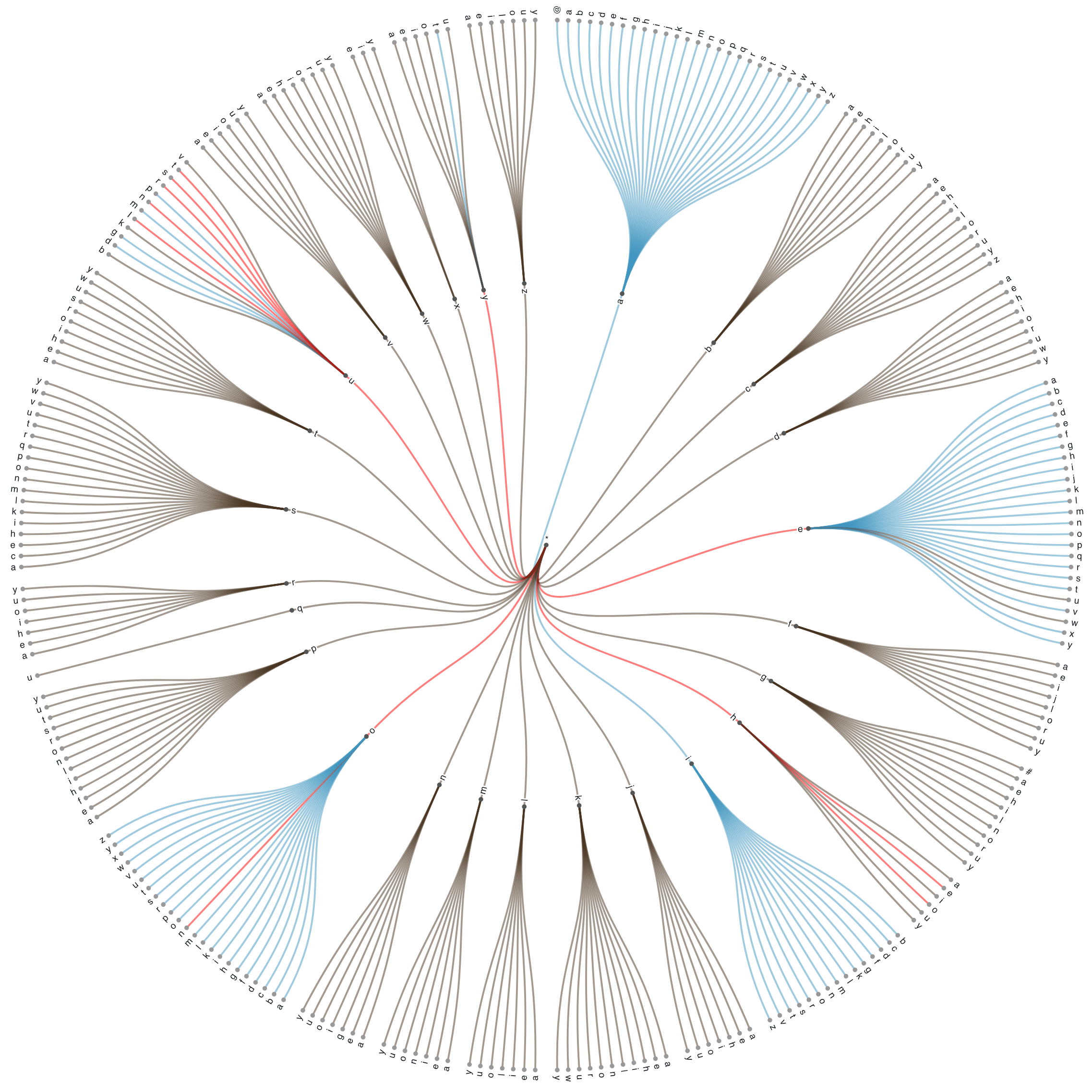
I was curious how often these exceptions occurred, and whether they can be grouped together, so I spent a day looking at the data and building some visualizations and wrote up the results. I was surprised that only 129 of the 32,455 words in my list needed exceptions.
[LLM note: I did not use LLMs to write any of this code, but in hindsight, I should have. This is one-off code to answer a question. It doesn’t need to be clean or maintainable. It only needs to be correct. I would’ve spent more time on the trie simplification algorithm and less time on parsing cmudict and re-learning d3.js.]