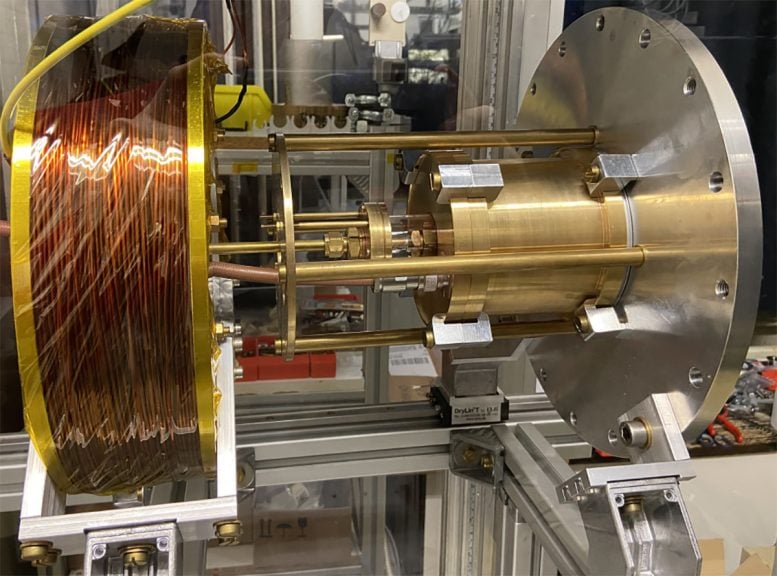
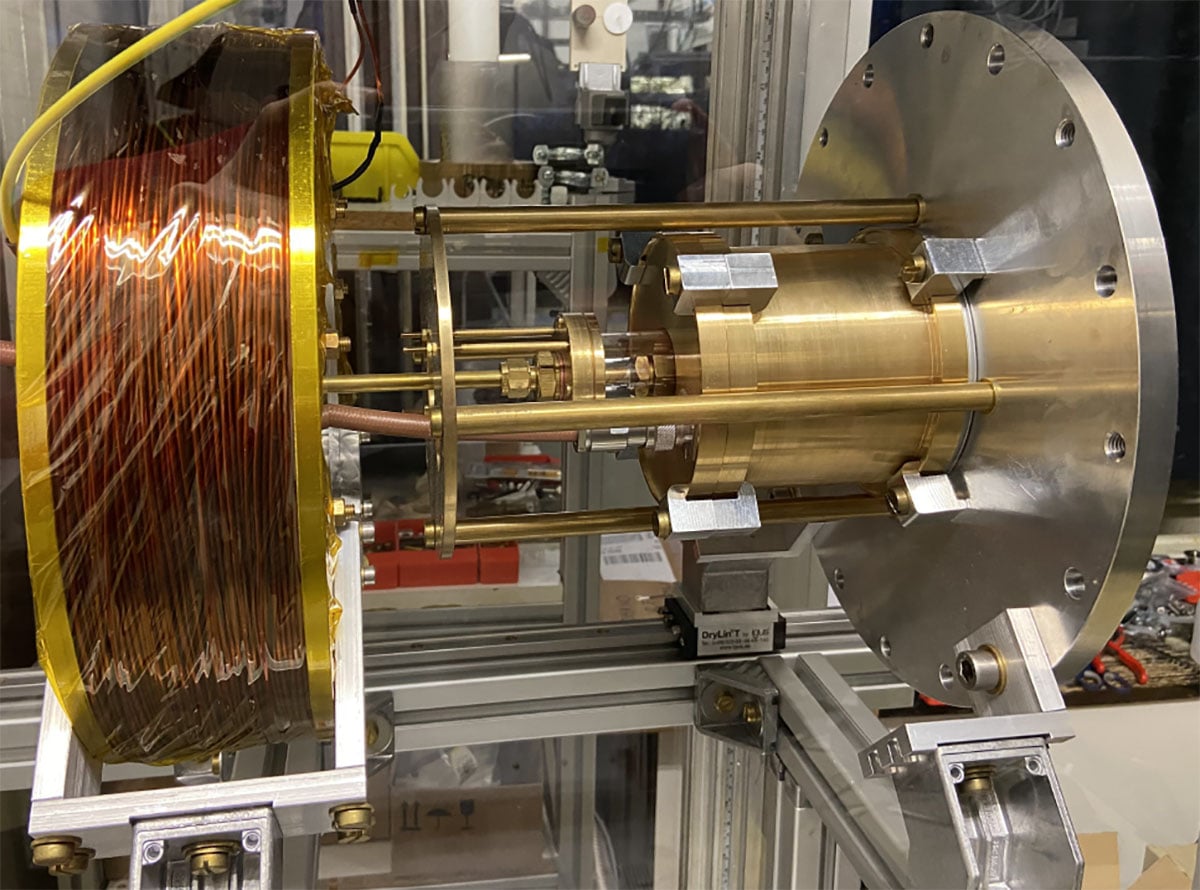
A satellite engine that uses atmospheric gases as fuel shows promise in laboratory tests and modeling, but its performance on a mission remains unproven.
Choosing an orbit for a satellite involves balancing benefits and drawbacks. Very Low Earth Orbit (VLEO), which spans roughly 100 to 450 km (62 to 280 miles) above Earth, offers several advantages. Remote sensing cameras can capture sharper images, communications and radar systems need less power, and atmospheric drag helps remove inactive satellites from orbit naturally.
That same atmosphere also creates a major challenge. Even at these altitudes, air resistance slows spacecraft down, so satellites must produce thrust almost continuously to remain in orbit. Conventional propulsion systems require onboard fuel, often costly gases such as xenon.
As part of his PhD research at the University of Stuttgart, published on arXiv, Francesco Romano explored a different approach. His concept uses the atmospheric molecules responsible for drag as fuel for a plasma engine, potentially allowing satellites to remain in VLEO indefinitely without carrying a conventional supply of propellant.
The technology belongs to a class known as atmosphere-breathing electric propulsion (ABEP). These systems collect the extremely thin air in front of a spacecraft (or, in some cases, a missile) and direct it into an electric engine. The engine converts the incoming molecules into plasma and expels it from the rear to generate thrust.
The basic idea is straightforward, but turning it into a practical propulsion system requires solving several difficult engineering problems.
Atomic oxygen eats away at engines
First is atomic oxygen (AO). In the upper atmosphere, UV radiation splits O2 into this aggressive, single atomic form of the gas that we all need to breathe. AO is notoriously oxidative, corroding metal electrodes, acceleration grids, and even the cathodes used in standard Hall thrusters or other types of ion engines.
Perhaps most importantly, AO burns through the cathodes used in the “electron gun” that neutralizes the spacecraft so that the whole thing doesn’t become charged and simply suck the charged particles right back to itself, nullifying the thrust they provide. Without that feature, the whole ion propulsion system fails.
Another difficult feature when designing engines for use in VLEO is the variability of the atmosphere itself. It changes based on the day/night cycle, the latitude, and even solar activity. Making sure an engine can continually operate in all these different conditions has proven difficult so far.
A mirror that gathers thin air
To solve these problems, Romano developed a contactless, neutralizer-less radio-frequency (RF) helicon plasma thruster and paired it with an optimized atmospheric intake system. Let’s tackle the intake system first.
He actually trialed three different versions of an intake – one called an “enhanced funnel design,” which acted as a molecular trap to capture air particles that are spread so far apart they never run into each other. Next, he used a “diffuse intake” that used a compact hexagonal design made out of a coated titanium alloy. And finally, he designed what he called a “specular intake,” which is a parabolic mirror coated with graphite or silicon dioxide that bounced particles directly into the engine.
The clear winner, both in terms of collection efficiency and alignment sensitivity, was the specular intake. It collected ~94.3% of the particles of air (which was AO, argon, or nitrogen in a wind tunnel test), and the efficiency only dropped by 8% when subjected to a 15° tilt.
A plasma jet without a neutralizer
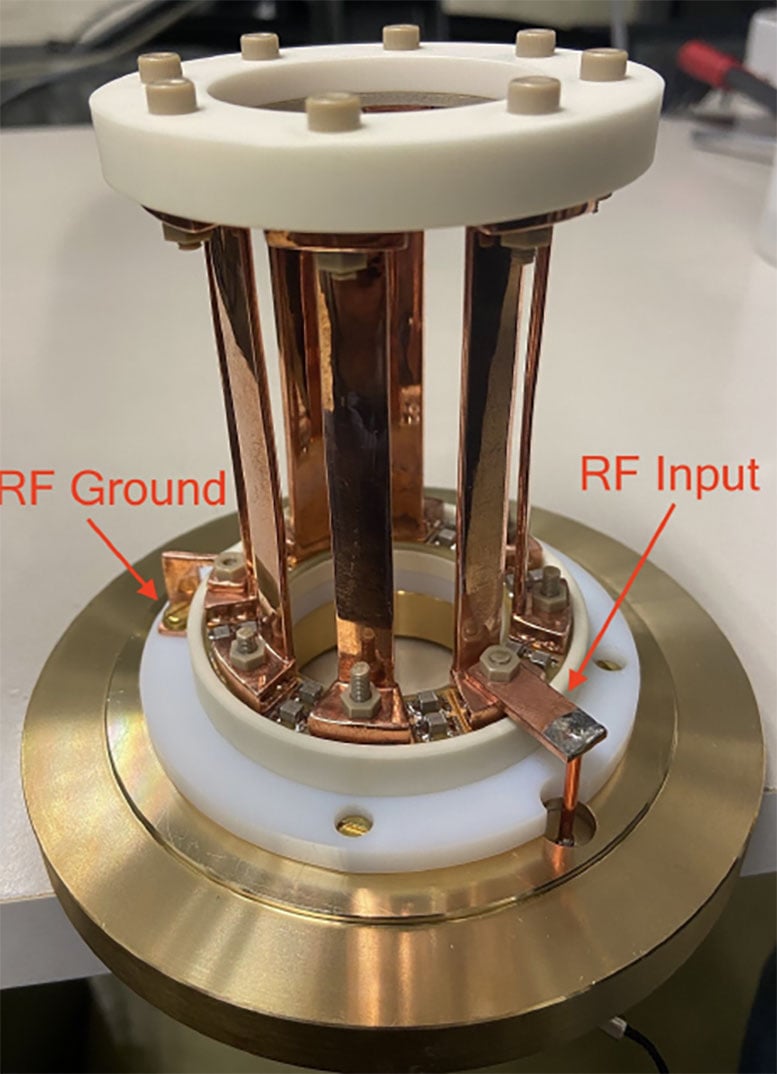
To design the thruster, Romano turned to a medical device for inspiration. Using a birdcage antenna, similar to those used in MRIs, he managed to design a thruster that ensured 99% of the delivered electrical power actually entered the thruster, an extremely high-efficiency threshold that improved upon standard wire coils that would burn through some of the power because of their own reactance. A solenoid wrapped around the engine creates a magnetic field that pushes the plasma out the back in a quasi-neutral jet – both positive and negative ions are pushed out of the thruster, ensuring no neutralizer is needed.
Testing the system proved its reliability. Romano used a vacuum chamber to intentionally simulate a VLEO atmospheric concentration of the three primary gases the thruster would encounter at that altitude. The engine generated steady streams of plasma with only 50-60W of RF power, well within the capabilities of traditional spacecraft solar panels.
Could atmospheric fuel keep satellites aloft?
After that experimental validation, he took an additional step and applied models of the propulsion system to actual real-world use cases. This included the GOCE satellite, which famously launched into VLEO with a Xenon ion thruster, and eventually ran out of fuel.
According to the thesis’ calculations, the new engine could operate indefinitely between 190 and 250 km using less than 1.6 kW of power, which is still well within the generation limits of standard spacecraft solar panels. But the use cases aren’t limited to Earth. Mars has an atmosphere dominated by CO2, and, according to the thesis, the engine could support a spacecraft indefinitely above the Red Planet at a height of 120-160 km, which is much closer than existing orbital satellites.
Ultimately, there is no guarantee this thruster will ever see use outside of a lab. But the idea is intriguing, and there are plenty of potential commercial applications for it if it can be de-risked and proven to work on an actual mission. It’s unclear whether Dr. Romano has any plans to pursue that track, but his work on it so far at least shows the design has potential – maybe someone out there is willing to pursue it.
Reference: “RF Helicon Plasma Thruster for an Atmosphere-Breathing Electric Propulsion System (ABEP)” by Francesco Romano, July 1, 2026, arXiv.
DOI: 2607.02635
Adapted from an article originally published in UniverseToday.
Never miss a breakthrough: Join the SciTechDaily newsletter.
Follow us on Google and Google News.