原文
The latest surge in fossil-fuel prices means it is now up to nine times cheaper in the UK to drive an electric vehicle (EV) than a petrol or diesel car, shows Carbon Brief analysis.
Since February, when the US first attacked Iran, the average price of diesel has increased by 38% to £1.96 a litre, according to Carbon Brief analysis of government figures.
Following the attack on the Kapotnya oil refinery in Russia on 20 September and with tensions in the Middle East growing, this is expected to pass a record £2 a litre.
(Russia was the second-largest exporter of diesel in the world, but its refineries have been hit every three days on average in the first six months of 2026.)
Similarly, petrol prices have surged by 31% since February to £1.72, based on government figures, with some locations reaching nearly £2 per litre, according to BBC News.
These increases have been driven by oil prices jumping to more than $100 per barrel as the conflict between Yemen’s Houthis and Saudi Arabia escalates – a roughly 50% increase from June.
As such, it now costs an estimated 21p per mile to drive a diesel car and 20.1p per mile for petrol, according to Carbon Brief analysis of the latest figures from the Department of Energy Security and Net Zero (DESNZ).
In contrast, it is currently nine times cheaper to drive an EV charged using an off-peak tariff, at 2.3p per mile, as shown in the chart below.
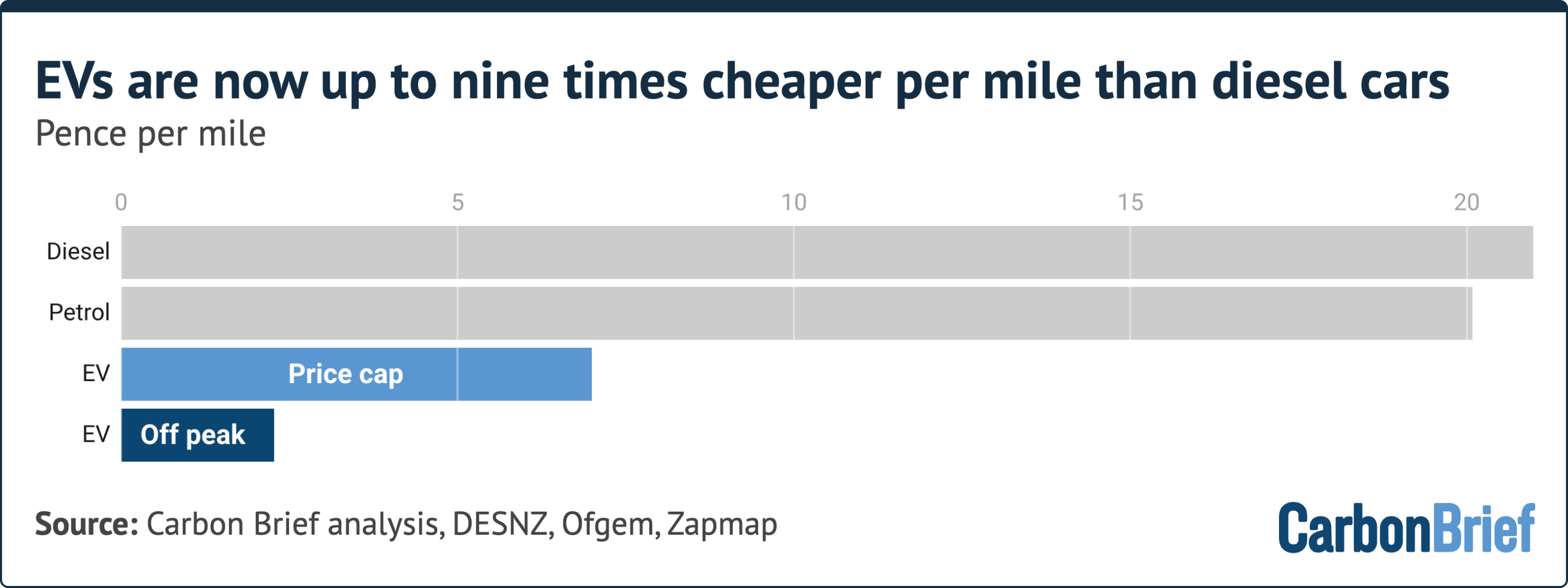
Even if charging with electricity bought at the domestic price cap – the maximum amount a supplier can charge for a unit of energy and standing charge, set by the regulator Ofgem every three months – it still only costs around 7p per mile to drive an EV, three times cheaper than the price for petrol or diesel cars.
The price cap is set to increase in October, but almost all of the increase is for gas, with the unit rate of electricity only expected to rise by less than 1% from 26.1p per unit to 26.3p.
A larger 20% increase in electricity unit rates under the price cap is expected in January 2027, as higher gas costs filter through to an increase in wholesale electricity prices. Nevertheless, EVs would still remain far cheaper to drive than petrol or diesel cars.
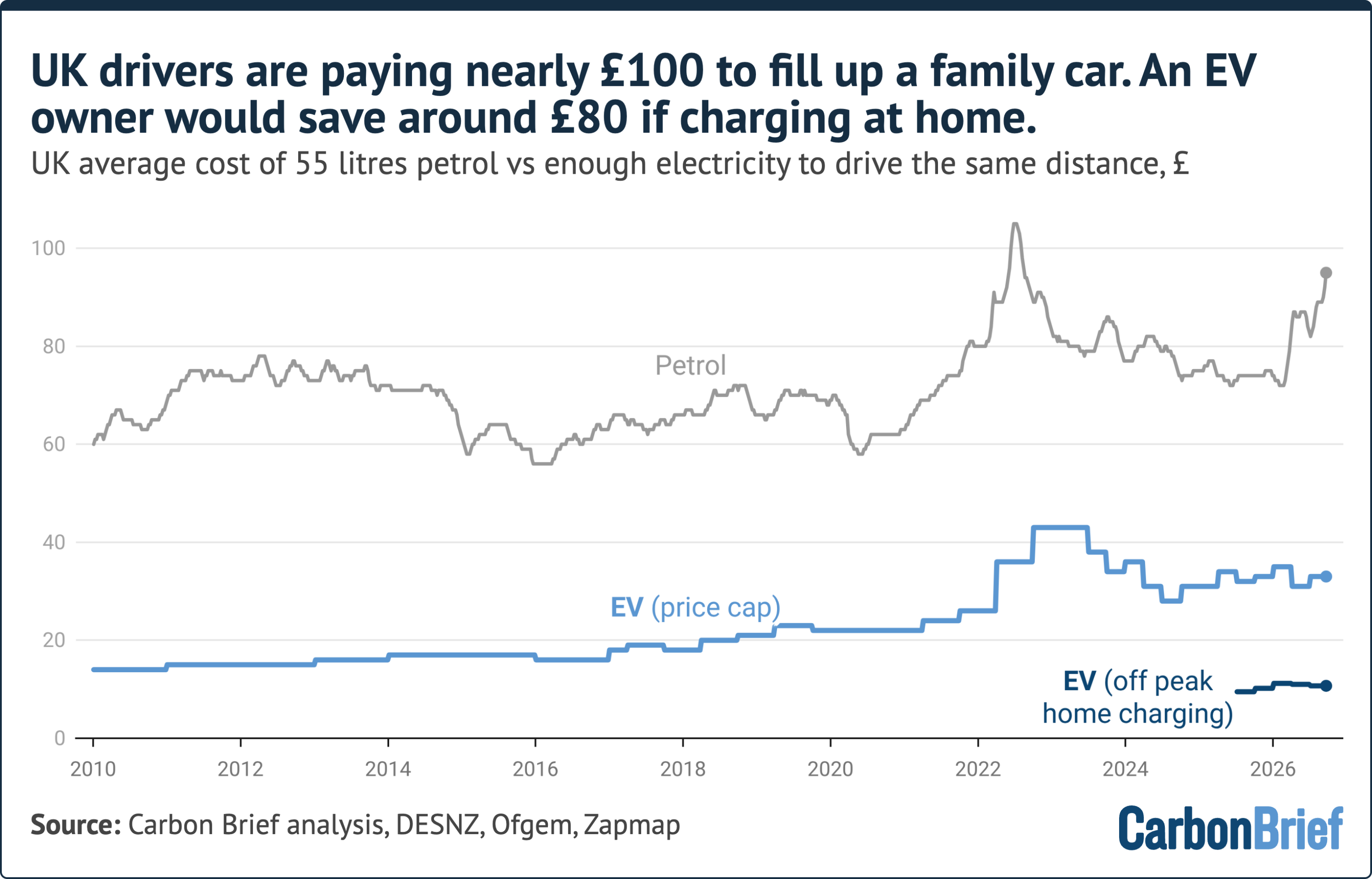
UK drivers could save around £80 by charging an EV at home, in comparison with filling up a petrol car at the pump, as shown in the figure below. This is based on comparing the cost of an average full tank of petrol with the cost of enough electricity to drive the same distance.
Despite their much higher running costs, petrol still dominates the UK’s roads, making up 55% of all cars on the road. Only 6% of the roughly 35m cars on the road are fully electric battery EVs, with a further 3% being plug-in hybrids that can run on fuel or electricity.
However, sales of EVs are continuing to increase, with around 30% of new cars sold in August being battery EVs, according to the Society of Motor Manufacturers & Traders (SMMT). This is up from 26.5% in August 2025.
Separate analysis from Carbon Brief in June suggested that the UK’s EV drivers were saving £1,100 a year in fuel costs, compared to petrol car drivers. Following the latest hike in fuel prices, these savings would now be even higher at £1,200 a year.
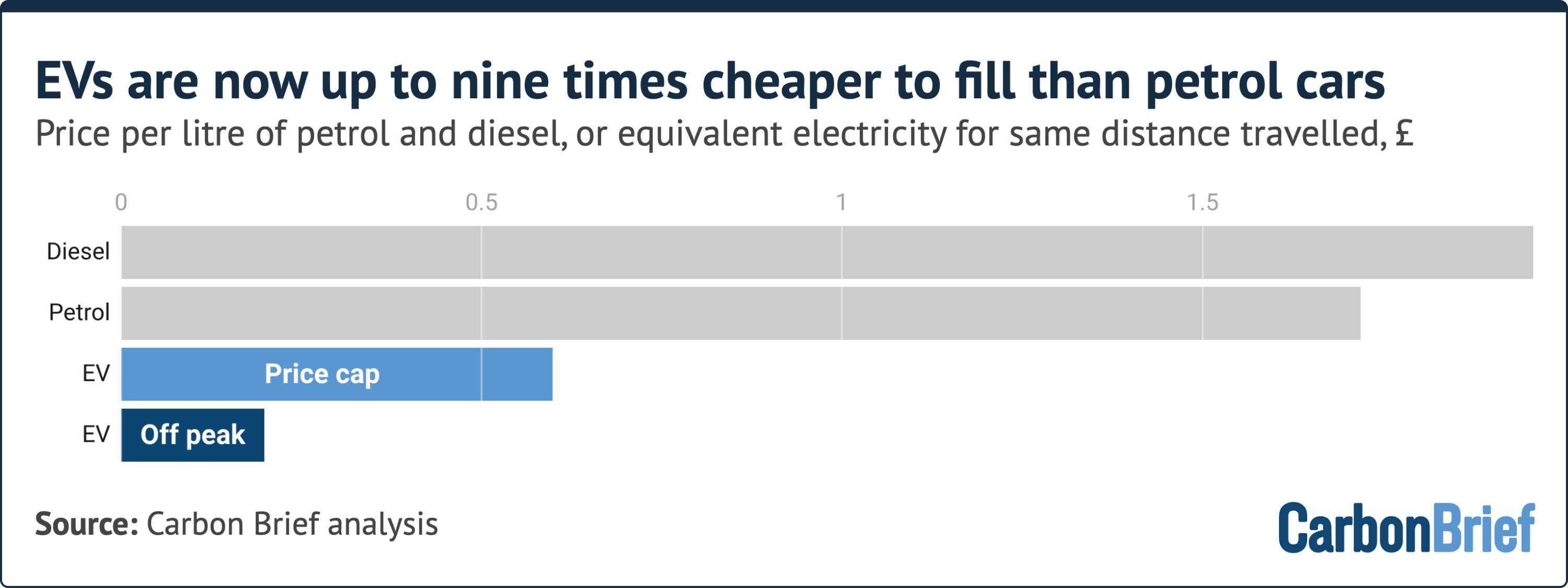
Compared with average pump prices of £1.72 per litre of petrol or £1.96 per litre of diesel, it would cost as little as 20p – around nine times cheaper than petrol – for an equivalent amount of electricity using off-peak charging.
As shown in the figure below, even charging at the household price cap would only cost the equivalent of 60p per litre, making EVs still significantly cheaper to drive.
Public charging points remain significantly more expensive than domestic rates. However, the UK government estimates that around 90% of electric car charging takes place at home.
In addition, the government plans to introduce a pay-per-mile tax on EVs from April 2028. This would add 3p per mile to the cost of driving an EV. Yet the considerably lower fuel costs mean they will remain far cheaper to drive than petrol or diesel cars.