
A top U.S. Army commander has revealed how a once-dismissed military technology is emerging as a potentially game-changing weapon of modern warfare, capable of spying on enemy territory, launching drones and supporting military operations from the edge of space.
Lt. Gen. John Rafferty, commander of the Army's Space and Missile Defense Command, admitted he initially thought the idea of deploying high-altitude balloons for military missions sounded absurd.
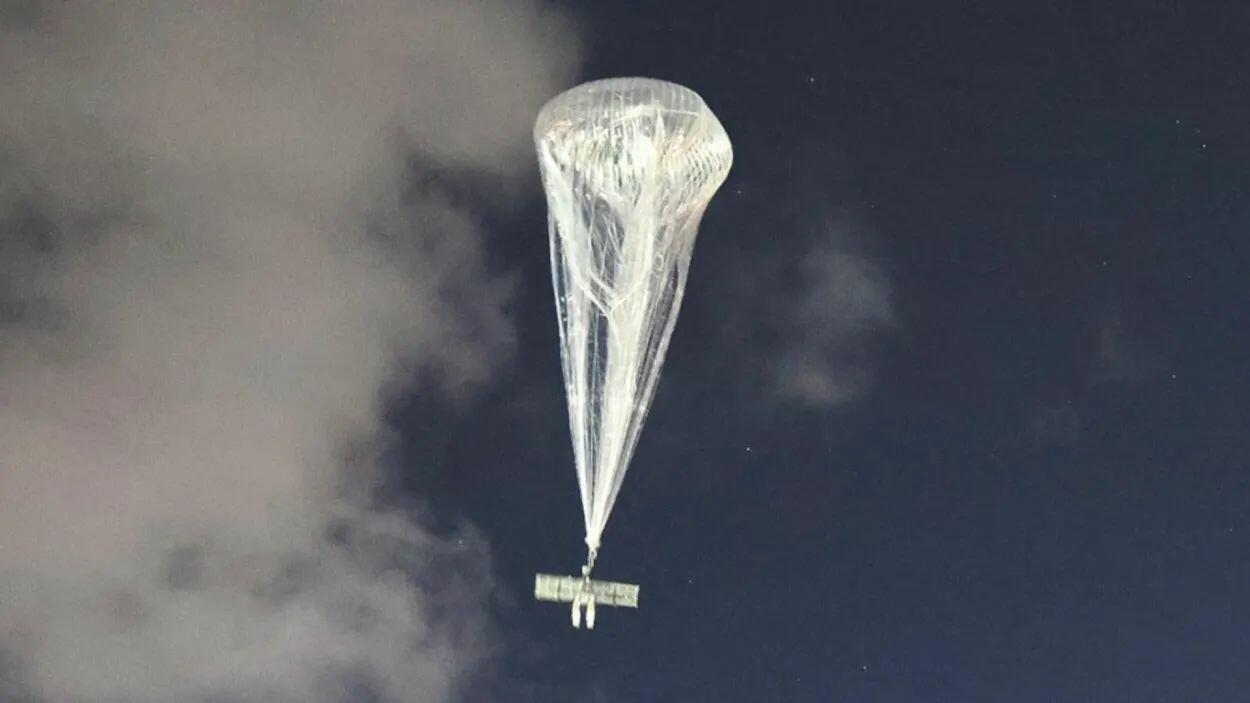
The technology has already been deployed to support U.S. military operations in the Middle East, according to The War Zone.
"It just sounded crazy to me that we were considering this," Rafferty acknowledged during a media roundtable at the Association of the U.S. Army's annual convention.
Lt. Gen. Rafferty's skepticism evaporated after witnessing the balloons during military exercises in Morocco.
"I saw the high-altitude balloons in action, and I was immediately convinced," he said said, describing their capabilities as "game-changing."
Unlike conventional aircraft, the balloons can remain airborne for days, weeks or potentially months, operating at altitudes exceeding 60,000 feet while carrying sophisticated surveillance equipment.
The systems could also serve as communications hubs and launch platforms for drone swarms, potentially extending the military's reach deep into contested territory.
Army Col. Joseph Mroszczyk said the service is exploring a family of balloon systems operating between 60,000 and 100,000 feet, effectively bridging the gap between traditional aircraft and satellites.
"In my former role as an MDTF commander, we experimented a lot in the Pacific with those [balloon-based] capabilities. We have leveraged different size platforms," Col. Mroszczyk told TWZ. "In this [TID-Space Superiority] role, as a proponent, what I'm pushing for is a family of stratospheric systems that really covers smaller size all the way up to larger size types of platforms in terms of balloons."
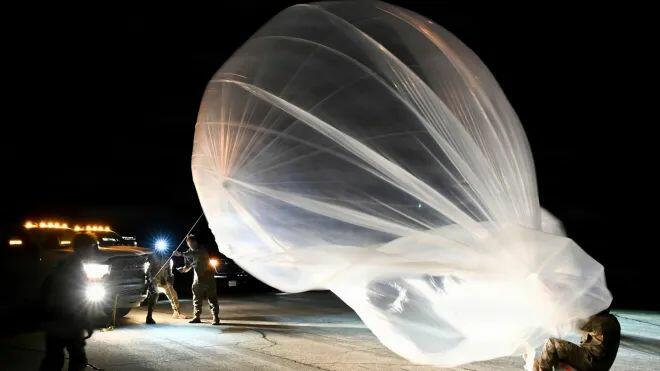
"What that enables us to provide is space-like capabilities, really exploiting a transition point between what is normally considered the aerial layer and the space domain," he added. "Really, where you go from about 60,000 feet to 100,000 feet is what we focus on in the stratosphere. That operational space allows some persistence and broad coverage in an area where you can deliver space-like capabilities in terms of payloads, but then also take advantage of the deep access that you get from a stratospheric balloon."