
Ahead of today's print, the Street had braced for Tesla (TSLA) to burn about $5 billion in the quarter. Instead it generated $1.5 billion.
Tesla reported Q3 results after the close and, at least at first glance, it was a clean beat: adjusted EPS of 48 cents topped the 44 cent Bloomberg consensus, revenue of $28.05 billion came in bang in line (and flat from a year ago), and free cash flow of $1.53 billion crushed the consensus estimate of negative $4.99 billion. That's a swing of roughly $6.5 billion vs expectations, which we flagged the moment it hit the tape:
But before anyone pops the champagne, there is a catch. Actually, several. Below we look at what drove the "beat", where the money is going, and why the market couldn't care less about any of it with a SpaceX merger hanging overhead.
The CapEx That Wasn't
Let's start with the headline number. Tesla's CapEx came in at $4.73 billion in Q3, more than double the $2.25 billion from a year ago, but well below the $5.79 billion spent in Q2 and, more importantly, $3 billion short of the $7.77 billion consensus compiled by Tesla itself (which had also penciled in FCF of negative $4.51 billion).
In other words, roughly half of the FCF "beat" was simply money that Tesla didn't spend this quarter. Don't get us wrong: generating cash is better than burning it. But a cash beat that comes from deferred spending tends to come back to bite, usually in the very next quarter.
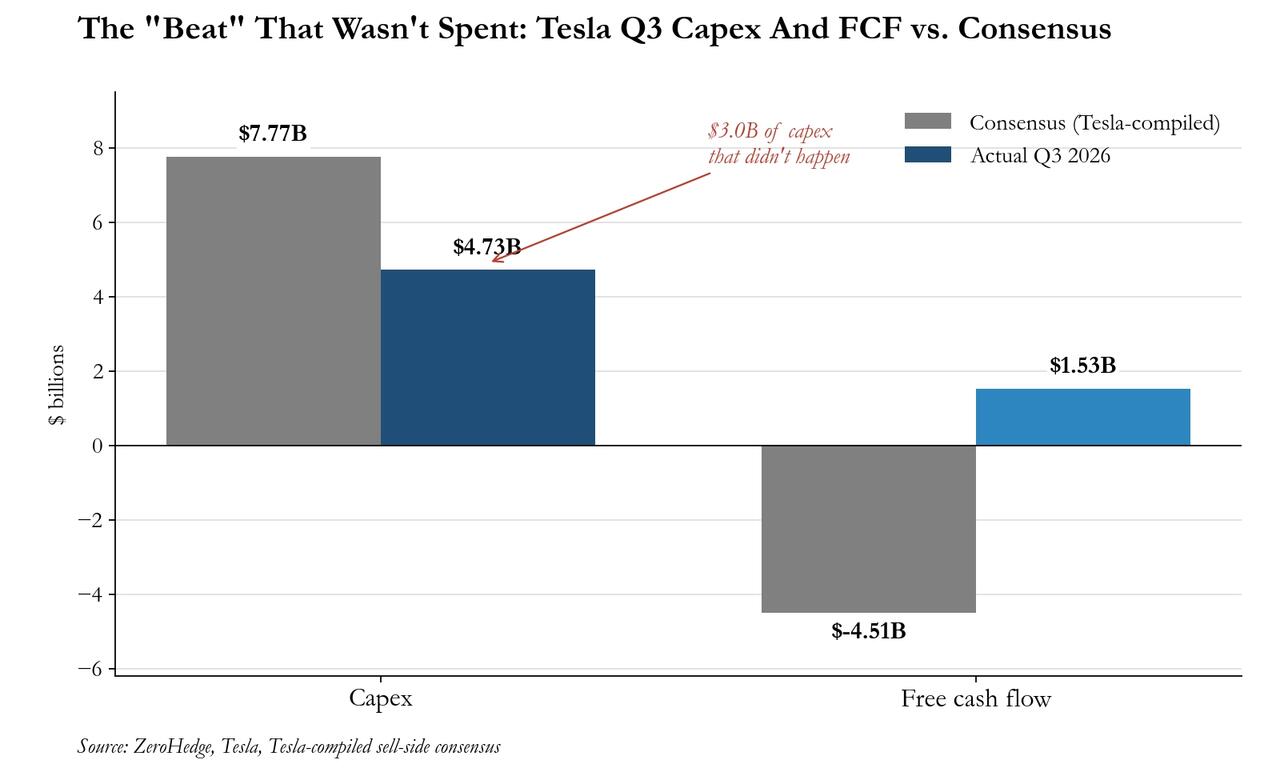
And bite it probably will. Recall that back in April Musk said Tesla would spend $25 billion on CapEx in 2026, a number which, as we pointed out after Q2 earnings, the company was nowhere near tracking. With $8.28 billion spent in H1 and another $4.73 billion in Q3, Tesla has spent about $13 billion through September. Napkin math says hitting the $25 billion target requires roughly $12 billion in Q4 alone (or about 2.5x what it spent this quarter). Either the guide gets cut on tonight's call, or Q4 free cash flow gets ugly. Pick one.
Paying For The Robot Future
Below the gross profit line, the story looked very much like Q2: Tesla is pouring money into what it now calls "Super Intelligence", Optimus and the Cybercab, and the spending is growing far faster than the profits that are supposed to fund it.
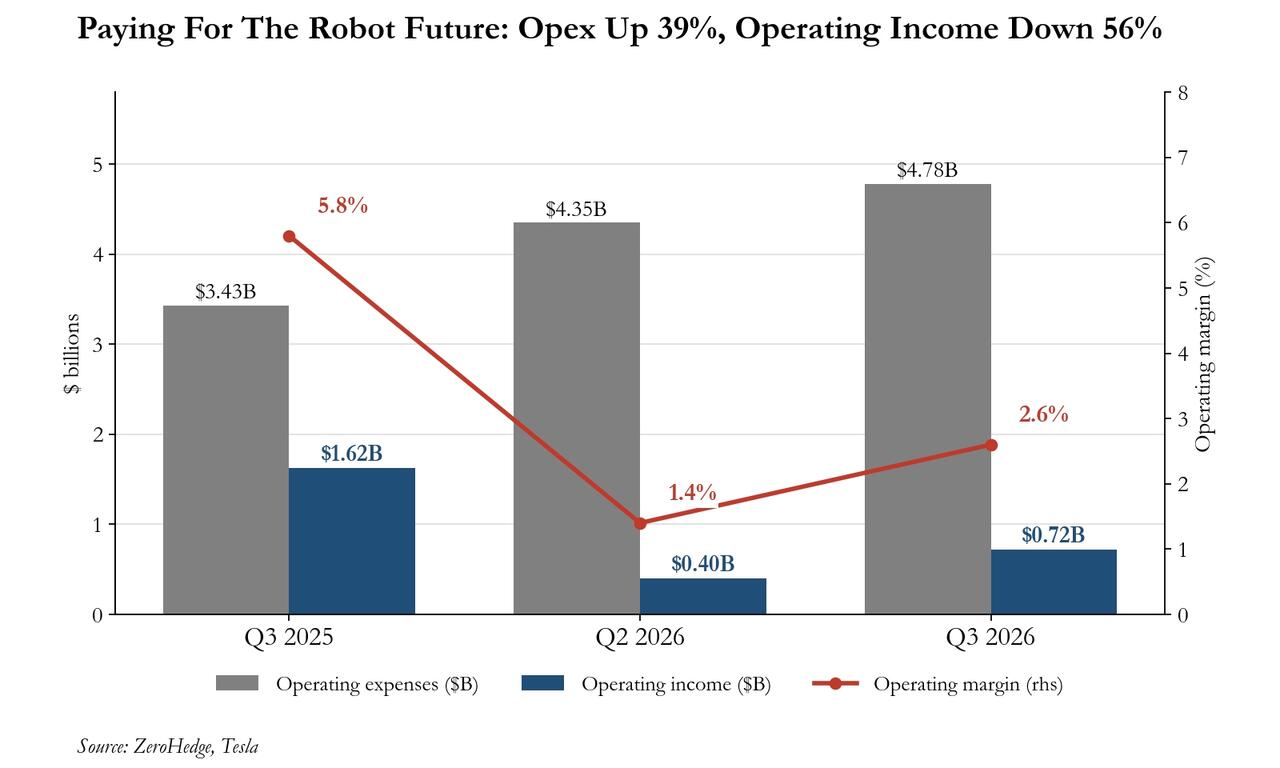
Operating expenses jumped 39% YoY to $4.78 billion, with R&D alone up 69% to $2.76 billion.
Stock-based comp, which now includes Elon's 2025 pay package, hit $1.17 billion, up from $663 million a year ago.
As a result, operating income fell 56% to $718 million, for an operating margin of just 2.6%, vs 5.8% a year ago.
Granted, that's an improvement from the dismal 1.4% margin in Q2, which sent the stock down about 15% the next day. But a 2.6% operating margin for a company with a $1.5 trillion market cap is... well, let's just say it's not why anyone owns the stock.
GAAP net income fell 43% to $787 million, or 22 cents a share, and even that got some help from a $288 million unrealized gain on Tesla's bitcoin, partly offset by a $142 million unrealized loss on its SpaceX stake. Diversification at its finest.
Margins Bounce... But "Batteries, Not Buyers"
The genuinely good news was on gross margin. Total gross margin rose to 19.6% from 18.0% a year ago (and 16.8% in Q2), while the number everyone watches - automotive gross margin excluding regulatory credits - rebounded to 18.1% from 16.3% in Q2 and 15.4% a year ago. Tesla credited better regional and product mix and more FSD subscription revenue, partly offset by (once again) lower average selling prices.
That last point is worth dwelling on, because Tesla has a new explanation for its flat sales. According to the shareholder deck, battery availability "continued to be the limiting factor" on auto volumes, and the company says it exited Q3 with its biggest passenger-vehicle backlog in four years.
Supply constrained? Perhaps. But deliveries were still down 2% YoY, Tesla delivered 22,141 more cars than it built (draining inventory to 11 days of supply from 15), "other models" (Cybertruck, Semi, S and X) collapsed 48%, and ASPs fell again. Translation: supply-constrained automakers don't usually cut prices.
Elsewhere:
Regulatory credits - once Tesla's favorite cash cow - shrank 73% YoY to just $113 million, and with automakers no longer paying federal fuel-economy penalties, that line isn't coming back.
Energy was the weak spot: revenue fell 16% to $2.88 billion (Tesla blamed tariff-related customer refunds) even as deployments rose 10% to 13.7 GWh, still short of the ~15.9 GWh analysts expected. Segment gross margin jumped to 33% from 20% in Q2.
Services and other was the bright spot, with revenue up 33% to $4.61 billion and record gross profit of $734 million.
Autonomy: active FSD subscriptions hit 1.74 million, up 67% (although that count includes upfront purchases, as defined in Musk's 2025 pay package... funny how that works), while Robotaxi crossed roughly 2 million cumulative unsupervised miles, a month after the Cybercab joined the Austin fleet.
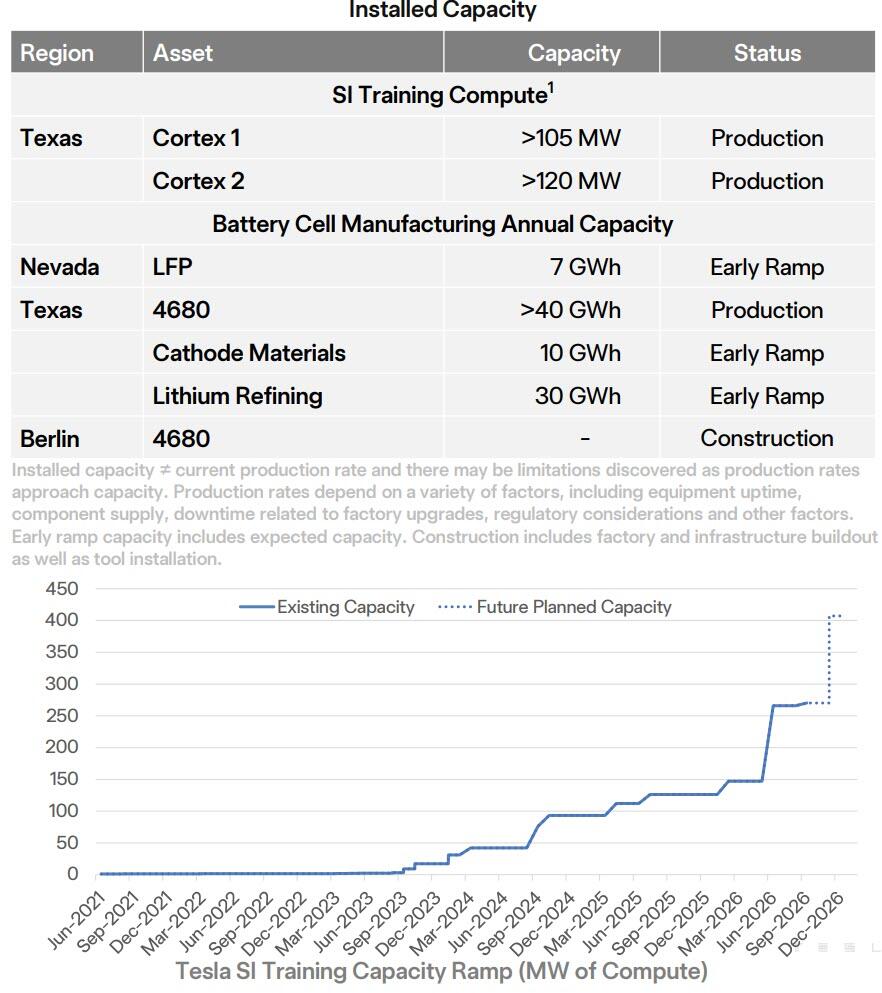
Tesla ended the quarter with $45.4 billion in cash and investments, which should come in handy if that $25 billion CapEx plan is still a thing.
Nobody Is Trading The Earnings Anyway
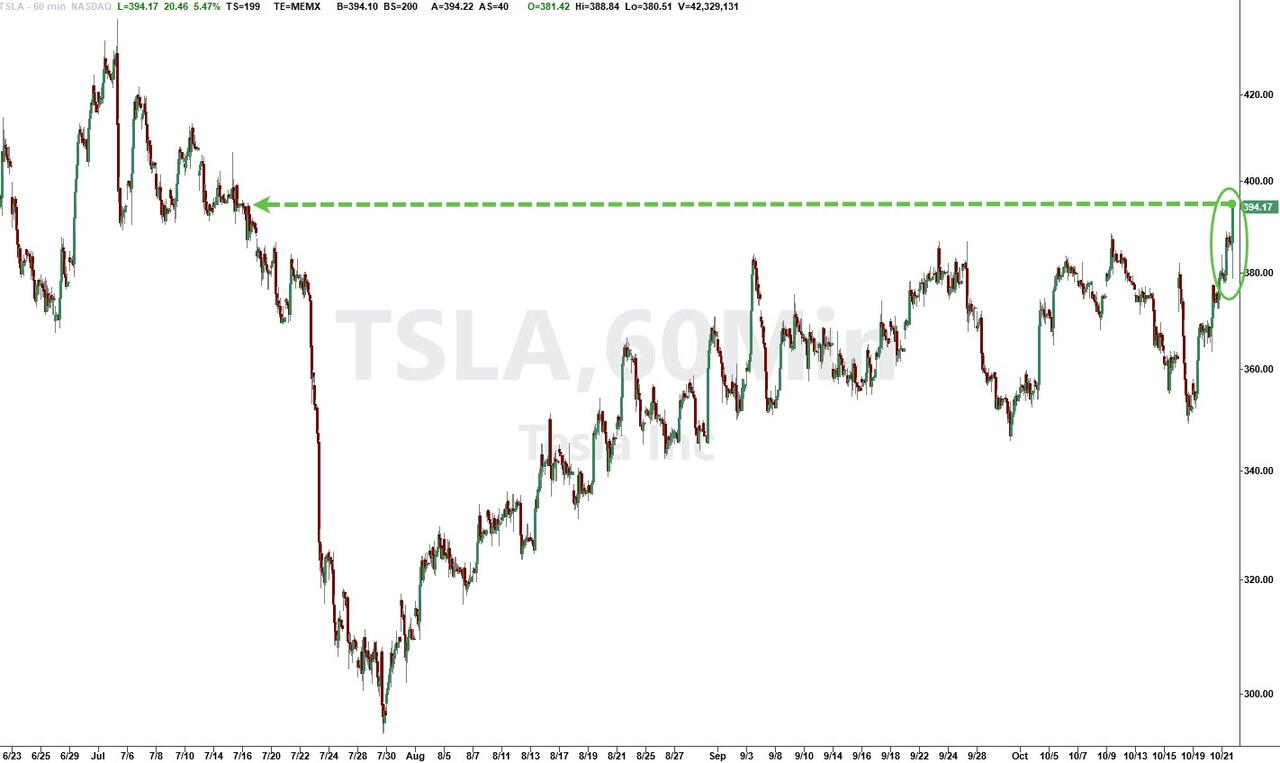
Which brings us to the real story. For all the line-item drama above, the stock didn't rip: after closing up 3.4% at $386.47, TSLA was up about another 1% after hours at last check (admittedly breaking to 3 month highs)...
And it's not hard to see why.
Just one day earlier, SpaceX reported a blowout quarter and Musk confirmed that both companies have formed special committees to discuss a merger. As Goldman's consumer desk put it in its morning note (available to pro subs):
Elon Musk endorsed a potential SpaceX–Tesla combination, which would be the largest corporate merger ever, as both boards formed independent special committees; no terms are settled, and Musk cautioned Tesla shareholder support may be difficult.
The desk also noted that the $1.5 trillion carmaker remains down 17% YTD, while its would-be partner trades at a $2 trillion valuation. Meanwhile, Goldman's prime book reports that Mag 7 net exposure "has risen to a new record high", even as hedge funds dumped tech at a record pace over the past two weeks. In short: everyone is already in the trade.
For those keeping score, here is what Musk said about a merger just three months ago, on the Q2 call:
Something tells us tonight's call will be a little more talkative.
The Roadster Was The Easy Part
Let's be fair: by Tesla's recent standards, this was a decent quarter. Gross margins are recovering, the company is cash-flow positive, and the core auto business has stopped shrinking (for now). But strip out the capex shortfall, and Tesla is a business whose operating income has halved in a year to fund a robot future that, much like last week's flying Roadster, keeps arriving "soon".
The bulls will say none of that matters if Tesla becomes the earthbound arm of a $3.5 trillion Musk conglomerate. And they may be right, at least until the merger math has to be done in a proxy statement. But a company that needs to spend $12 billion in one quarter to hit its own capex target, while its legacy cash cow (regulatory credits) dies, is going to need SpaceX a lot more than SpaceX needs it.
Of course, what really matters with this stock is what Musk says during the call at 1730ET.