She’s taught dozens of entrepreneurs around the world how to make bagels — and money.
In a back kitchen of a bagel shop on the outskirts of Toronto, Beth George is standing over a long wooden table assessing her materials with surgical precision. She’s as attuned to the movement of the staffers scurrying behind her as she is to the feeling of soft dough beneath her fingers.
“Did we take the temperature of this? It feels cold,” she says as she kneads a long log of dough within an inch of its life, bagel earrings swinging wildly from her ears. Her student for the day insists he did, but she’s not convinced.
George has flown from upstate New York to the back kitchen of Bagel Barn, a New-York-style bagel shop, to help proprietor Terry Perusini perfect the art of bagel-making.
Today, Perusini’s Bagel Barn is in trouble. His oven conked out yesterday, he tells me. He had to close one of his two shops. Finding someone to repair it has been a nightmare. When he hears it’ll cost him $1.5k, he holds his head in his hands.
“Do it,” she tells him. It’s a $40k machine — replacing it would cost far more, and take way longer.
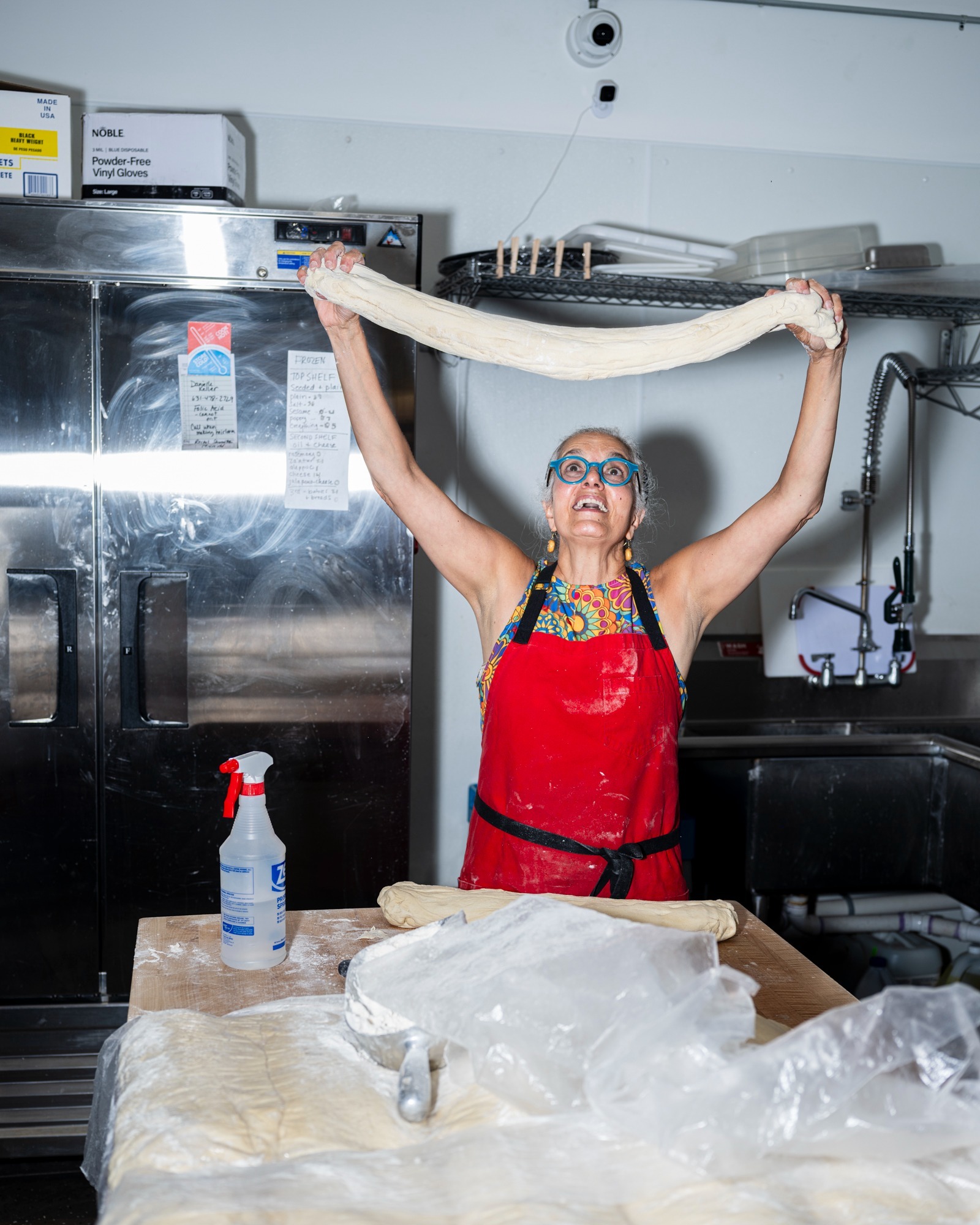
Beth George likens early mornings alone working with dough to a spiritual experience. (Photo by Jiatong Lu)
George has been called the bagel whisperer, the bagel therapist, the world’s most sought-after bagel consultant.
At 63 years old, George has trained her exacting touch and eye on nearly 100 shops in the last decade, she says, teaching sole proprietors across the globe how to bake the perfect bagel and, by extension, run a wildly successful business.
She has clients in India, Korea, Taiwan, and Vietnam. She has Palestinian clients and Swedish clients, a client who had been afraid to leave her husband until she found bagels and set up a shop, a client who moonlights as a kink scene DJ.
Later, she’ll show the bakers how to handle the bagels more gently to encourage more fluffiness from the dough. She’ll demonstrate her secret sponge mixture (a pre-ferment that gets mixed into the final dough to boost flavor), and suggest tweaking the kitchen design to improve the flow. In this world, perfecting the details is what counts.
How tough can it be to run a bagel shop? Pretty darn tough, it turns out, especially when everything is going wrong.
That’s when you call Beth George.
The world’s best bagel
For more than 20 years, George has been on a quest for bagel perfection.
“We can’t get perfection in this modern world. We cannot,” she says. But it doesn’t stop her trying.
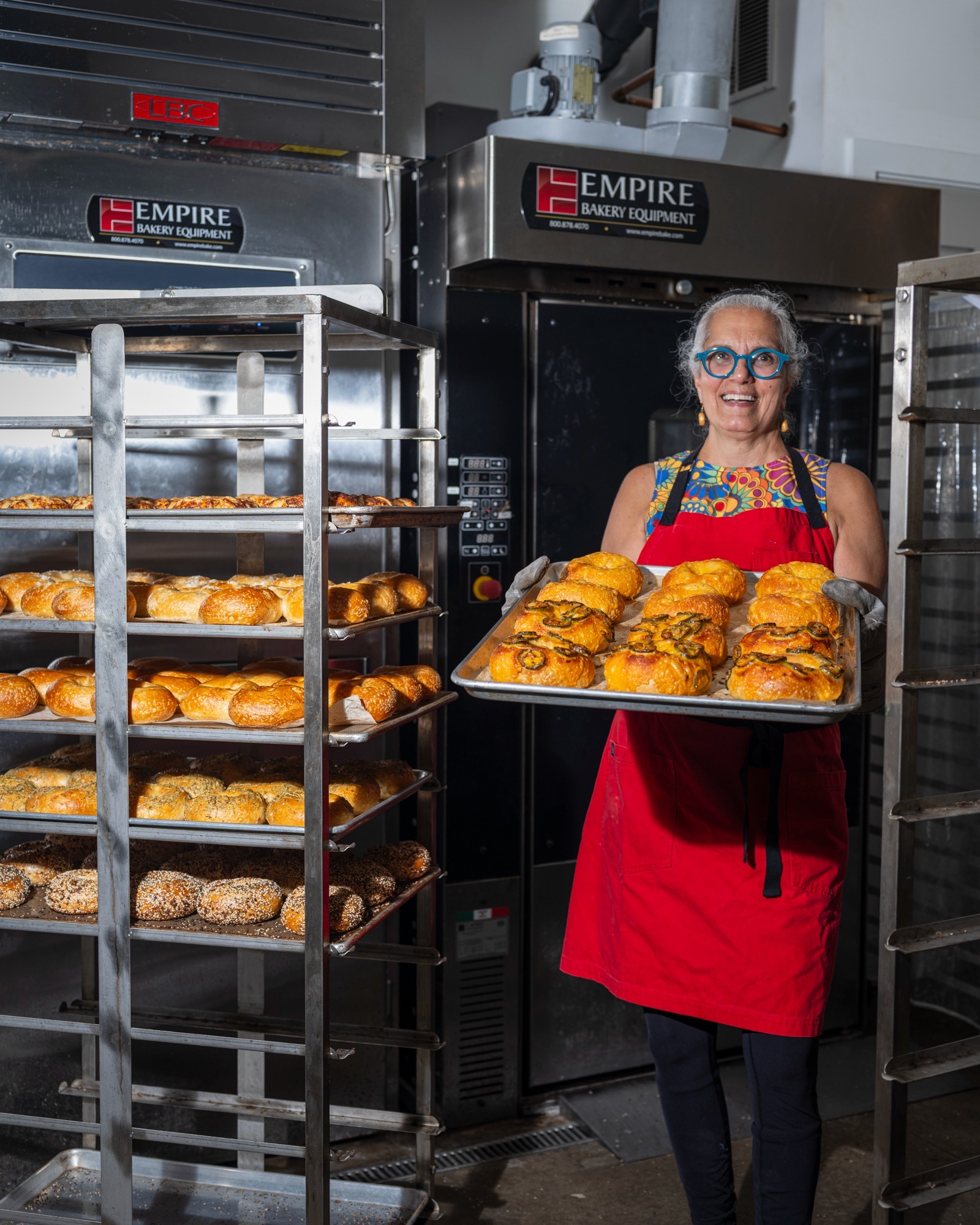
Her process, after 20 years of R&D, is as dialed in as it gets, she says. (Photo by Jiatong Lu)
In 2005, George was working as a child advocate attorney in Maine. Her young son was struggling with digestive problems, and she began to experiment with gluten-free ingredients.
She asked him what he missed most. “A bagel,” he told her. So she set out to make the world’s best gut-friendly bagel.
Two years in, she’d set up a company, Spelt Right, which was soon supplying product to nationwide chains including Hannaford and Whole Foods.
One day she called Frank Mauro, then head of sales at Excalibur Bagel & Bakery Equipment in New Jersey, one of the country’s leading suppliers, looking to buy a bagel-forming machine — the machine that shapes raw dough into rings. He wasn’t enthused. He’d seen dozens of attempts at creating healthier bagels end in misery. If her recipe worked, he told her, he’d help her with whatever she liked.
She drove home that day with the machine and a business partner.
For years, the duo drove around Jersey, Mauro offering tidbits of wisdom from his lifetime as the elder statesman of the New York bagel industry. George taught customers how to finetune their recipes and use the machines they sold.
In 2023, Mauro passed away. The following year, George opened something new: a bagel shop that would also act as an academy for her visiting entrepreneurs. To become one of her clients is to enter into a 15-month contract for:
- Three days of bootcamp training just after they sign on, so they can source, design and build their own kitchen.
- Two two-day refresher courses (ideally during their build, and just before they open).
- Access to her fiercely guarded recipes (NDAs need to be signed).
- Budget spreadsheets.
- Plans for kitchen designs.
- A guarantee that she will be their bagel cheerleader, guide, and therapist, available all hours for SOS texts and calls.
In return, George takes a five-figure consulting fee and 2% of the proceeds if proprietors sell their business within ten years. Unlike in a franchise model (“exploitative,” she says), she encourages bakers to build on her ideas. Perusini has added flavors like French Toast and Barn Spice to George’s original recipe.
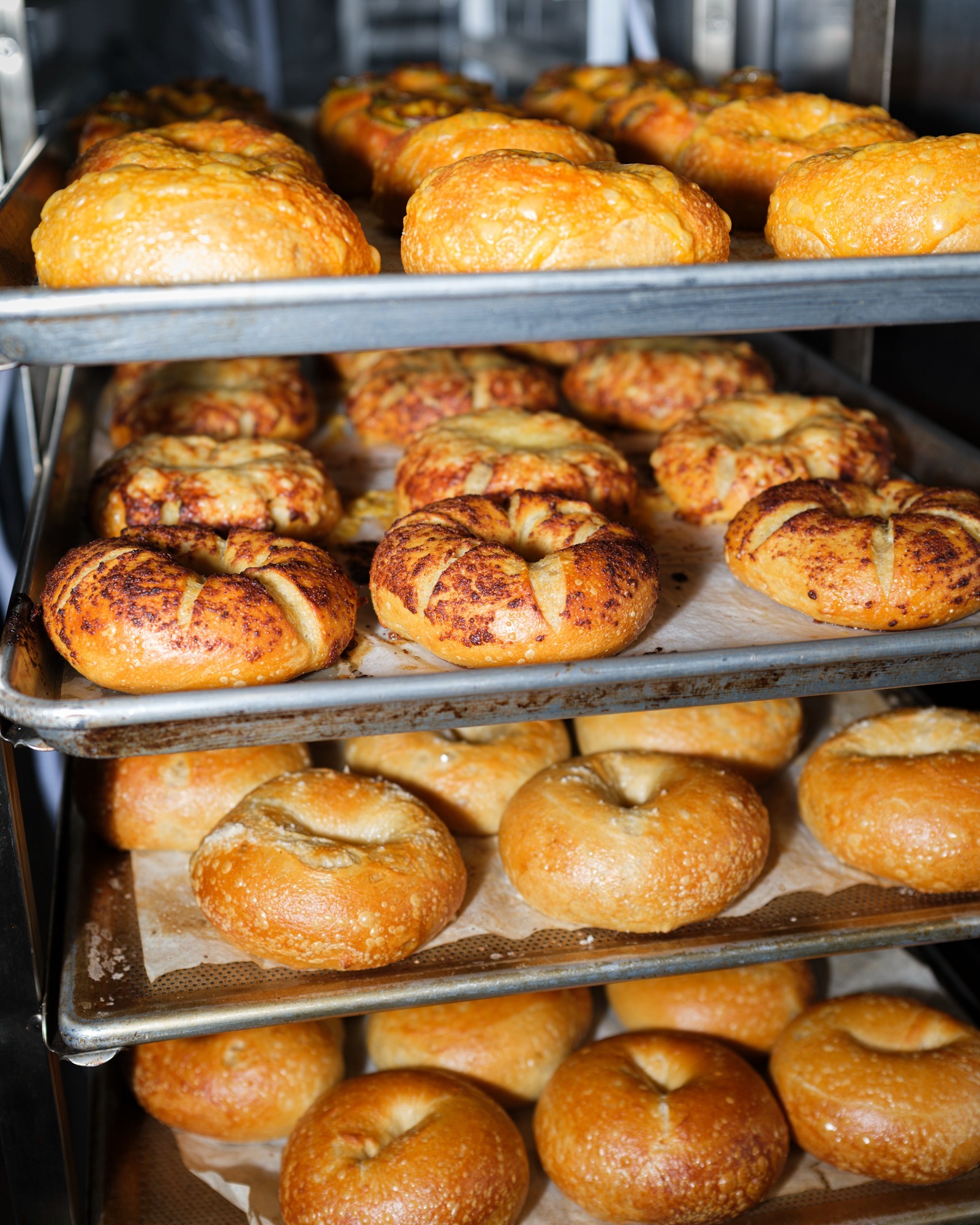
Smooth, carby, topping-laden works of art. (Photo by Jiatong Lu)
Most people are too impatient to make bagels that are truly great, she explains. She scrolls quickly through her phone with flour-caked fingers, trying to find me a photo of an “impatient” bagel.
Recently, one of the bakers at her Beacon, NY, shop, Bagel-ish, made a batch too quickly, rendering them unusable. When she found out, she was apoplectic. “Pull the bagels. We’re closing the store,” she said.
By way of contrast, she pulls up a photo of a pile of golden orbs, a plain dozen she baked herself. They’re round. They’re light. They’re wrinkle-free.
“These bagels are works of art,” she says. “They glow. My bagels glow.”
For some clients, Perusini among them, she remains on call for years after, flown to second or third store locations to help staff recreate her version of the perfect bagel.
Perusini started out in the music industry, earning a living licensing songs and making and selling mix CDs in the early aughts. As CDs faded into obscurity, he pivoted to another kind of disc with a hole in it: bagels.
He knew the bagel shop in his hometown of Burlington was always busy because he was one of the customers standing in line. In 2020, he’d never made a bagel in his life. But the pandemic seemed as good a time to start.
A quick Google search turned up a CBS morning show segment on a woman in Jersey teaching people how to make millions of both bagels and dollars. This was George.
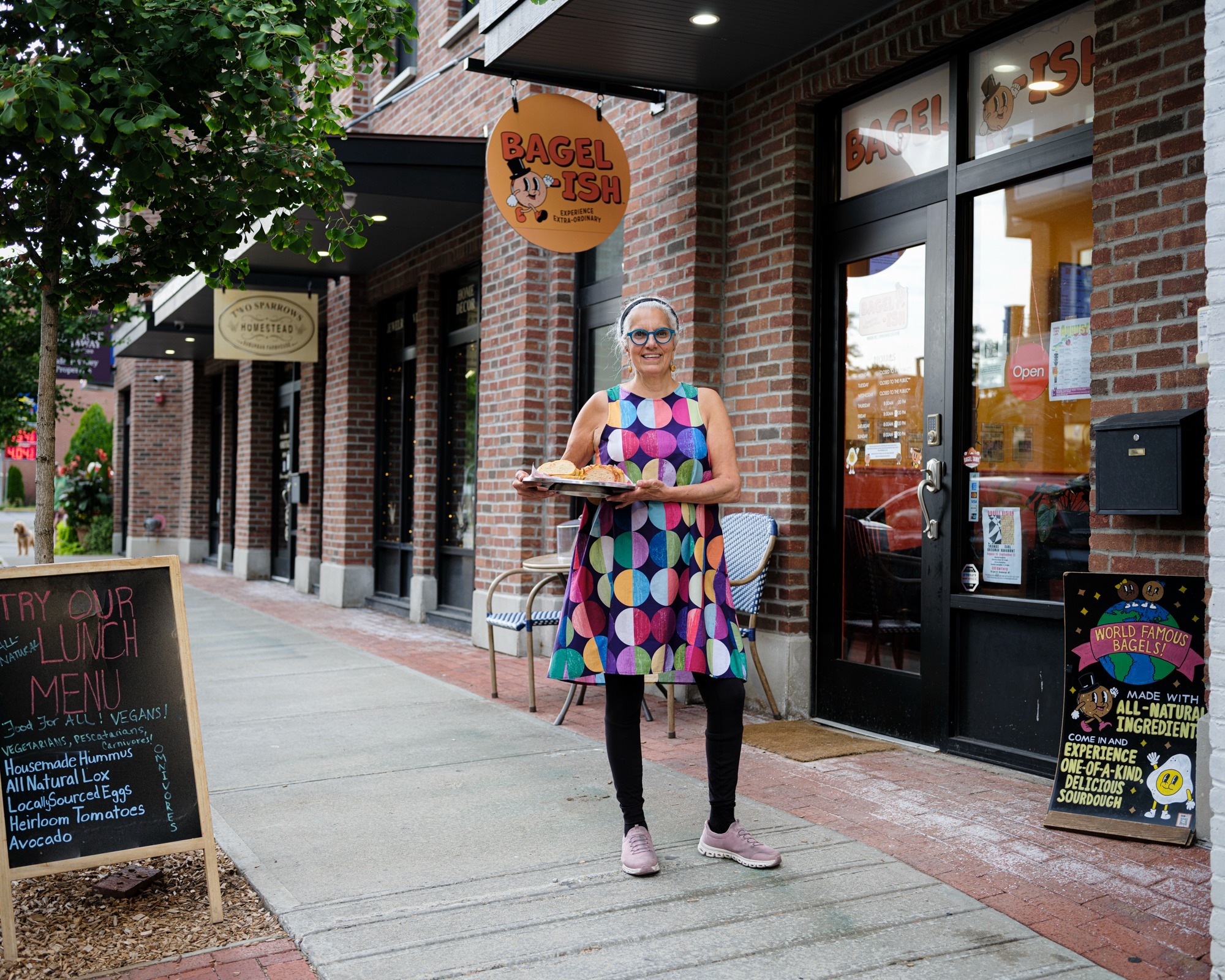
George in front of her own shop, Bagel-ish, in Beacon, New York. (Photo by Jiatong Lu)
At Bagel Barn, which he opened in 2022, George pauses her kneading only to point out her arms, biceps the envy of her yoga instructor and pocked with burn marks from long days spent before an industrial oven.
Right now, she’s guiding Chad Minicuci, a retiree who’s returned to the workforce as the baker at Perusini’s new location.
George pounds, folds, and squeezes the dough as Minicuci watches. “It gets massaged?” he exclaims in disbelief. She smiles and begins to carefully patch a ring of dough; the bagel had come in a little light.
“I have to make 330 bagels,” he objects. “You know how long it would take me if I did that?”
“You know how many bagels I do, dude? Eight hundred,” she says.
“In a week?”
“No,” George replies, rolling her eyes. “In a day.”
Bagel renaissance
People have been arguing about bagels since at least the 1610s, when the Jewish community in Poland would gift rings of boiled dough to women in labor.
By the late 1800s, bagels had traveled across Europe and crossed the Atlantic with Eastern European Jewish immigrants. Outposts in centers like Montreal, New York, and London began developing their own styles. (New York? Chewy on the inside, crusty on the outside. Montreal? Smaller, denser and sweeter. London’s claim to fame? Smaller, softer, and often piled with salt beef and ferociously hot mustard.)
Bagels went mainstream in the 1960s, when a Los Angeles baker, Daniel Thompson, invented the first bagel machine. His largest could make 5k bagels an hour, and within a few years the machines were in kitchens of almost every major US bagel baker.
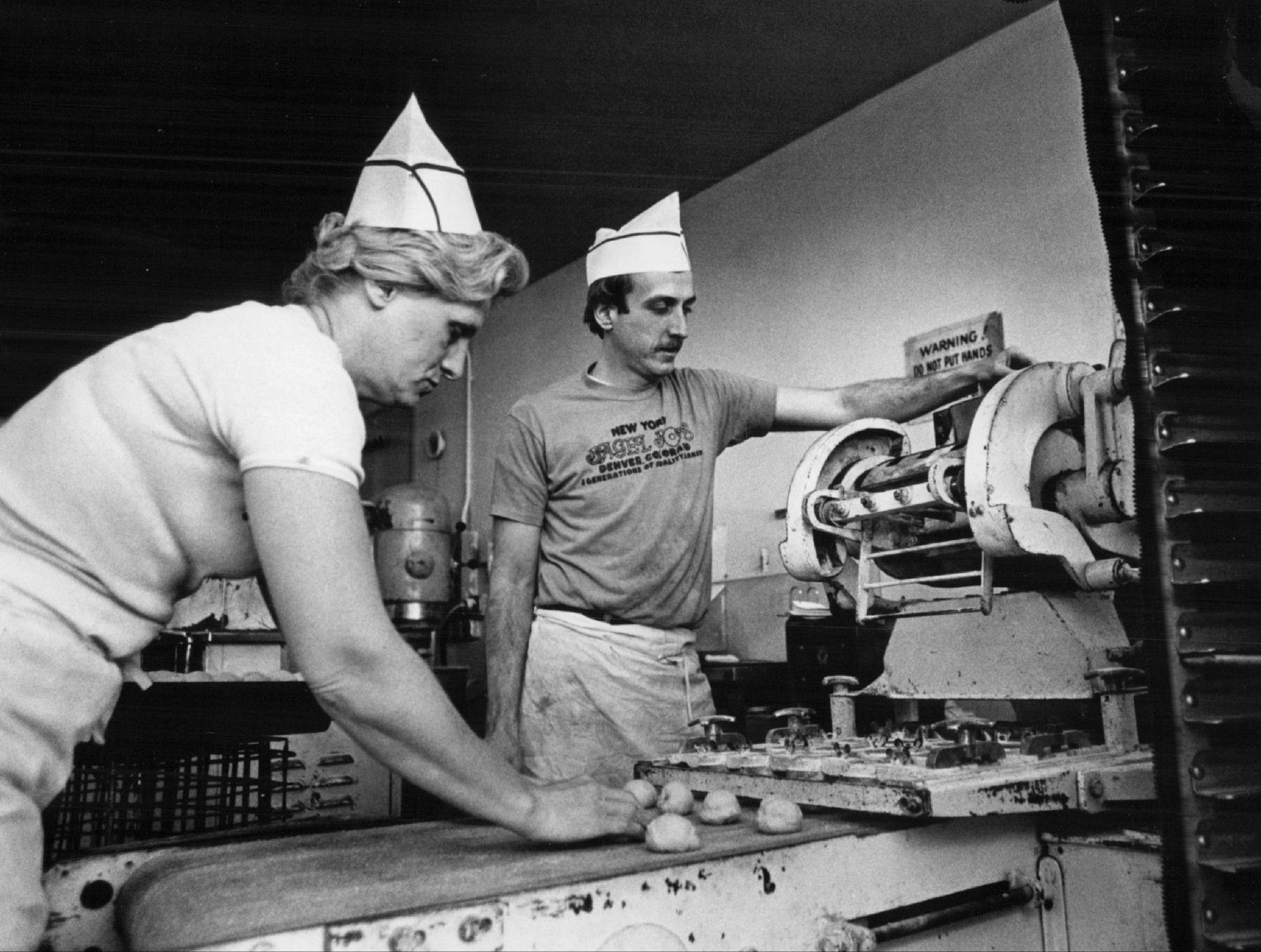
Two New York bakers puzzle over an early iteration of a bagel machine. (Denver Post via Getty Images)
The bagel renaissance hit a snag in the early 2000s when ~10% of Americans adopted diets like Atkins that cut out carbs. By the mid-2010s, though, carbs were back.
The pandemic’s at-home baking projects and mass exodus away from urban centers created the perfect opportunity for bagel enthusiasts, much like the craft beer revolution, to put their own twists on traditional recipes and open shops all over the country. It helps that bagels are quick, cheap, and Instagram-friendly.
By 2022, one estimate put grocery-aisle bagels at $1.3B of industry value, and in-store bakery bagels at $246.6m. Private equity has bought in. Earlier this year, the Wall Street Journal declared “the world has officially reached peak bagel.”
Despite the simplicity of the ingredients — water, flour, salt, sugar, and yeast — the process takes days and requires patience, precision, and exceptional ingredients.
To make New York-style bagels like George’s, the dough is churned in a mixer, kneaded by hand, and cold-fermented. “The bagels are much like children,” she says. “We’re making them, we’re shaping them, and then we’re putting them overnight to sleep.”
From there, they’re eased gently into a bagel machine that divides the dough into rings. As it spits out rounds, George places them on a scale, ensuring each is between 4.5 and 6 ounces.
Then they’re given a bath of boiling water with a proprietary mix of barley malt and sugar (“The kid analogy kind of breaks down as soon as we get into the nitty gritty”), then decorated with an array of toppings – cheese, jalapenos, rosemary, sesame seeds, and so on – and baked.
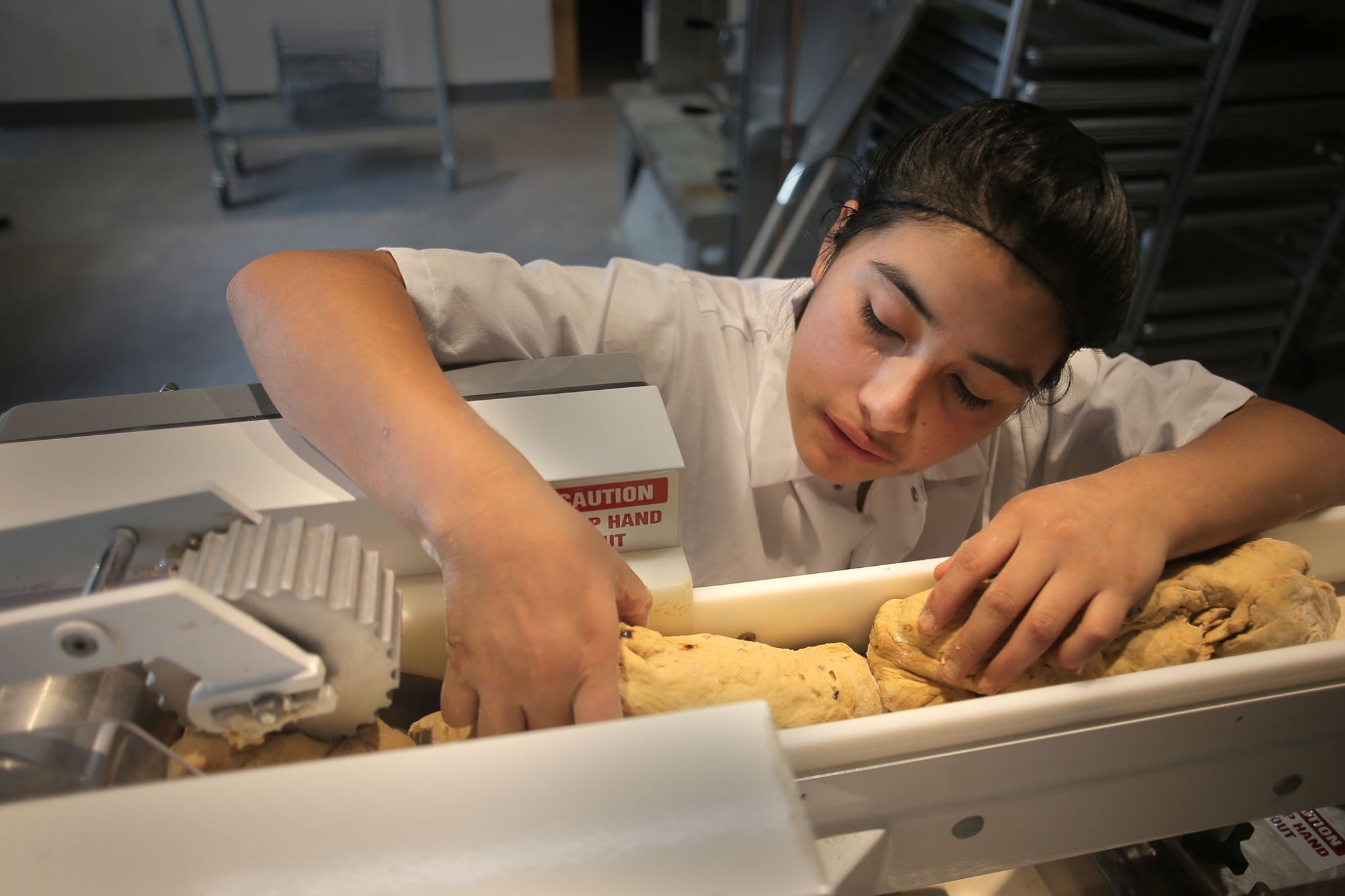
A baker gently feeds a log of dough through a bagel machine at a local shop in Massachusetts. (Photo by Lane Turner/The Boston Globe via Getty Images)
George can diagnose a bagel problem through the phone or by looking at a picture. Perusini’s last batch, for example, looked incredible, but she still thought he could do better with a longer proof.
“I had to troubleshoot him as he’s swearing at me,” she recalls. “I’m like, ‘stop swearing at me.’ I’m going to swear back at you!’”
A problem of math
OK, you can make a great bagel, but how do you make it pay? George sees a bagel shop as a math problem. If rent is higher than 10% of gross revenue? It’ll fail. If goods cost more than 35%? Not great. Labor, too, should come in below 35%, to leave room in the budget for the inevitable broken oven or impatient batch of bagels that needs to be ditched. To start a bagel shop today, she says, costs ~$500k.
How much do I need to make per week, her acolytes in bootcamp ask. She tells them they’re asking the wrong question.
First, she says, decide how many days you want to be open, and then how much money you want to take home.
“So, let’s say 300 days. Okay, and you want to bring in a million. Simple algebra. You have to bring in $3,333, average, on each day for 300 days. That’s all you have to do, and you bring in a million,” she says.
When I tell her she makes it sound easy, she responds smoothly. “It is,” she says, reminding me her own shop sells 1k bagels on the weekends. They brought in $7k the other day. Her own sales are up 50% YoY.
Her main advice? Focus on perfecting the bagels. “Don’t bring in ice cream. Don’t worry about cappuccinos. Don’t worry about anything else. Make the best bagels you can, and then make the best sandwiches you can, because the sandwiches are going to bring in that price,” she says.
“And then the cream cheeses are a little bit like drugs and they taste really good, and so then people just want more. And so we just push the cream cheeses.”
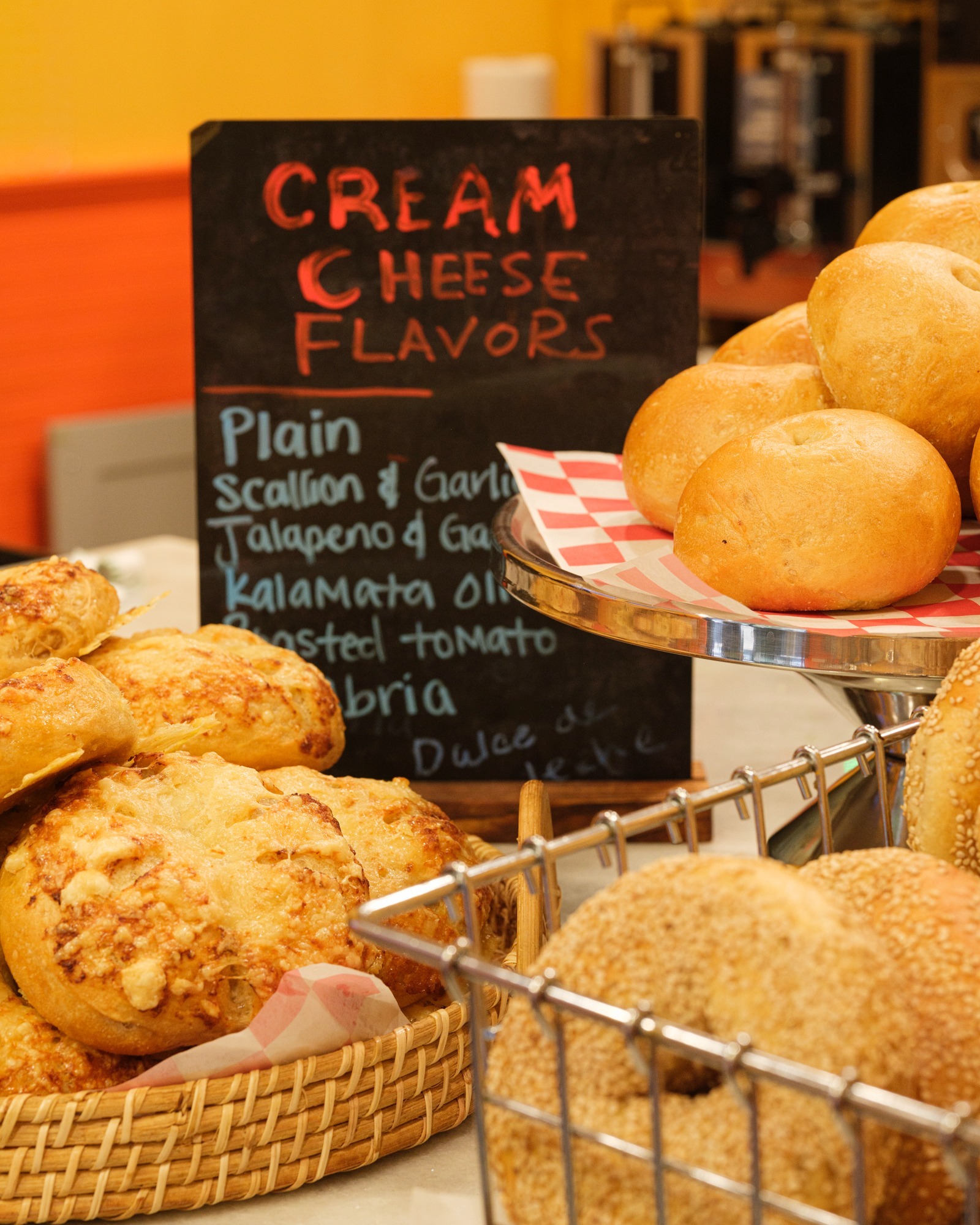
George’s cream cheeses on offer in Beacon. (Photo by Jiatong Lu)
By the time she leaves Bagel Barn on a bright autumn afternoon, the oven is up and running again, she and Perusini have stopped cursing each other, and she’s considering borrowing one of the flavors he developed for her own shop, a remarkable vote of confidence.
Over the decades, her work has given her much more than the perfect bagel: it has created a global network of bagel and business enthusiasts spanning cultures and palates, united by their desire to break bread with one another.
“Sometimes it blows me away,” she says. “Sometimes I get choked up that I did this.”
It’s not lost on her, as a Lebanese-American, that she’s working in a medium forged from Jewish heritage.
“This culture grabbed it, and they hung onto it, and it kept them afloat,” she says. “Like a life buoy.”