An open letter to the tech industry
If you ask any educator what the key to learning is, they won't say it's finding the right answer. They'll say it's what you gain from the struggle of getting there. Learning is found in the time and effort spent trying to understand an idea before it just "clicks."
That's what makes Google's latest announcement so galling to educators. Google announced this week that, starting in early 2027, AI tools will be turned off by default for K-12 Google Workspace for Education accounts.
On the surface it sounds like a win for schools until you read the fine print: Google Search will be switched off along with them. Google's explanation, from Chris Phillips, its vice president for education, speaking to The New York Times, is that "Search and AI are deeply integrated," so one cannot be switched off without the other.
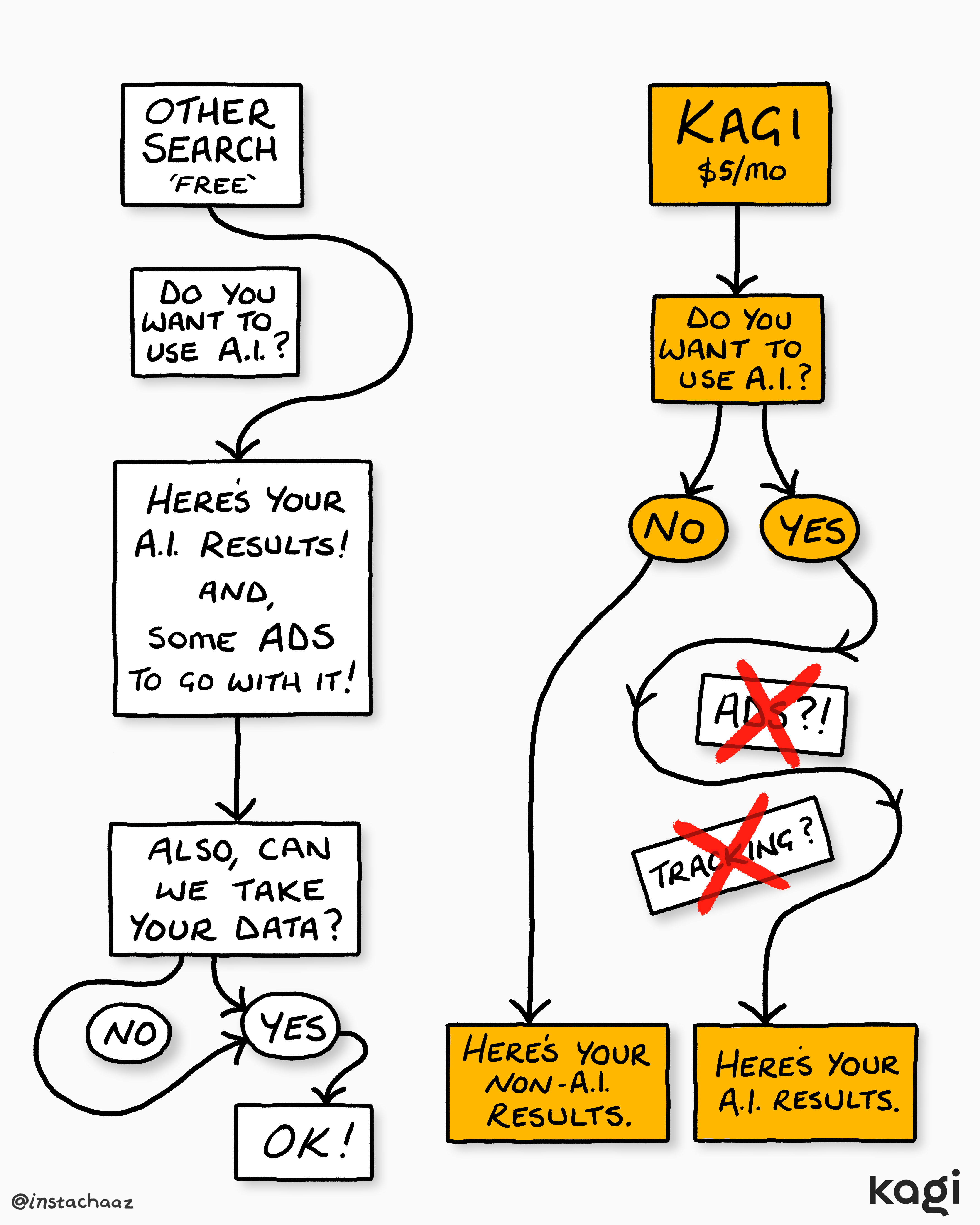
After the backlash, Google walked part of it back, saying schools could switch on Search by itself, without the rest of its Gemini products. But the core problem remains. Search still can't be used without AI features like AI Overviews.
The educators asking for choice aren't anti-technology. They have spent years in the classroom, and they know firsthand that handing kids AI-generated answers doesn't build critical thinking; it weakens it.
Search is how students reach the open web. A search engine that arrives only with AI attached isn't offering a choice. It's holding education for ransom.
Learning to search is learning to think
A search engine is really an engine of discovery. When we search, we reflect, weigh, question, and synthesize, all at once. We’re exposed to rival sources and clashing perspectives, and we need sharp critical-thinking skills to discern the quality and relevance of what we find.
Technology companies are optimizing for speed. They talk about "removing friction," which is fine for unimportant things. There’s no benefit to friction when ordering takeout or getting a ride to the airport. But the same doesn't hold for education, because effort is the education. Friction, struggle, and perseverance is the learning. You simply can't speed-run understanding.
It helps to compare classroom learning with other kinds of training.
Imagine runners on the track team riding golf carts around the oval during "training" because the carts are faster and easier than running. They wouldn’t be preparing themselves to succeed in competition. That’s not how athletic training works. Progress is built out of sweat and discomfort.
Imagine band practice consisting of nothing but listening to Spotify, with no one painstakingly struggling to master their instruments or sheet music.
Science, math, and history are no different from athletics and music.
The best teachers rarely answer questions directly. They answer a question with a question of their own. The point isn't to hand over the answer but to make students wrestle with the question until they work it out on their own.
Likewise, a librarian doesn't hand you answers. A librarian's goal is to help you sharpen your research question and steer you toward better sources. That's the kind of help students need right now, especially in a world where the internet is being flooded by low quality AI slop. What students need more than ever are tools that teach them how to think, not what to think.
Information literacy is a practice, not a lesson
The educators I talk to aren't asking for a “magic wand.” They're asking for common-sense safeguards and controls that protect students at every grade level. This is scaffolding to make learning appropriate for all learners.
There’s nothing inherently wrong with giving students an AI answer occasionally, depending on the situation. But over-reliance can quickly turn into outsourcing the very thinking they’re in school to learn. The result over time is the acceptance without challenge of any information presented by AI. This is especially problematic when AI "hallucinates" or fabricates information.
Educators should get to decide when and how AI shows up for their students. Not a vendor. And certainly not under threat of losing basic access to web search.
Follow the incentives
Google is a successful company because they do a great job serving their customers. Unfortunately for educators and students, Google’s customers are advertisers, not users.
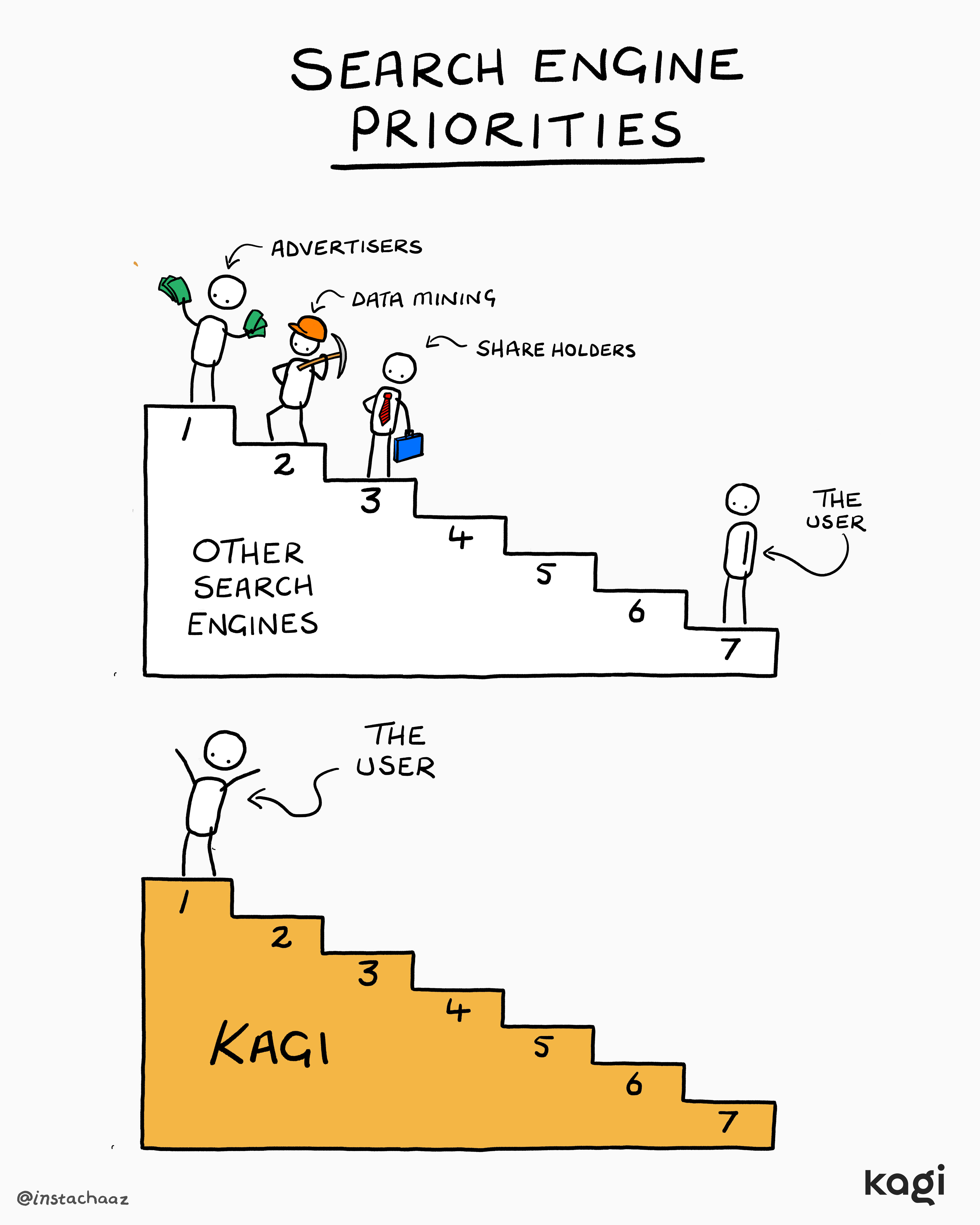
Google is the world's largest advertising company, so it's important to understand that when a search engine is funded by ads, it makes every user the product. Google's own founders saw this coming. In a 1998 Stanford paper they warned that advertising-funded search engines "will be inherently biased towards the advertisers and away from the needs of the consumers."
So when Google tells schools that Search and AI can't be separated, we need to ask who this serves. Is it because it isn’t technically feasible or simply because it isn’t in the best interest of Google advertisers and shareholders?
When educators ask for choice or a slowdown of AI in education, it isn’t because it benefits them directly. It’s because their incentives are aligned with student incentives and they believe in slower, evidence-based approaches over experimenting on kids with brand-new technologies.
At Kagi, we believe in choice
Like Google, Kagi also does a great job serving our customers. The difference is that Kagi’s customers are the users. We build tools that are in the best interest of the people using them. That's why we created Kagi Search with a different user-aligned model. Instead of building at the expense of users, we seek to empower our users with choice.
Our users pay us in order to NOT be the product. And in return we give them the best search with no ads, no tracking and no selling of data. Because when the user is the customer, the user's interests and the company's interests are aligned and in harmony.
For schools, this means:
- AI is optional, not required. Quick Answer only appears when a student asks for it, and schools can turn AI features on or off for the students who are ready.
- Schools stay in control. Block low-quality or distracting sites for everyone, raise trusted sources, and build custom Lenses with teacher-approved resources for class projects
- Fewer dead ends. Students can see when a result is paywalled before they click, instead of hitting a wall mid-research.
- Less noise. Kagi has no ads and no clickbait thumbnails. But it does have filters that hide AI-generated slop images, so students can focus on the information itself.
- Tools that guide, not answer. We're building features that empower students to refine their research questions and search better.
Our ask
To Google and the rest of the industry: Let’s stop putting corporate profits over the civilizational imperative to truly educate students. Let’s give schools choice over coercion and lock-in.
To schools facing this choice: You don't have to accept it. There are alternatives to mandatory AI, and Kagi is one of them.
Kagi for Education
Your students shouldn't have to accept AI to use search. Kagi gives schools clean, ad-free results with AI off by default, and the controls to decide when it comes on.
Contact us for a quote or a free trial for your school or district.
By Kevin Elgan
Kevin Elgan is Head of Marketing at Kagi and has spent over 15 years in education technology working alongside educators. In prior roles he trained thousands of teachers to use technology effectively in the classroom.