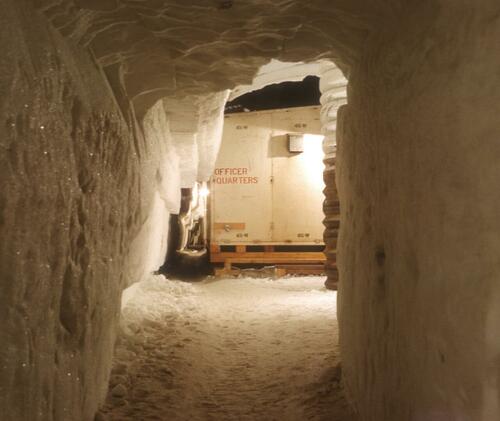
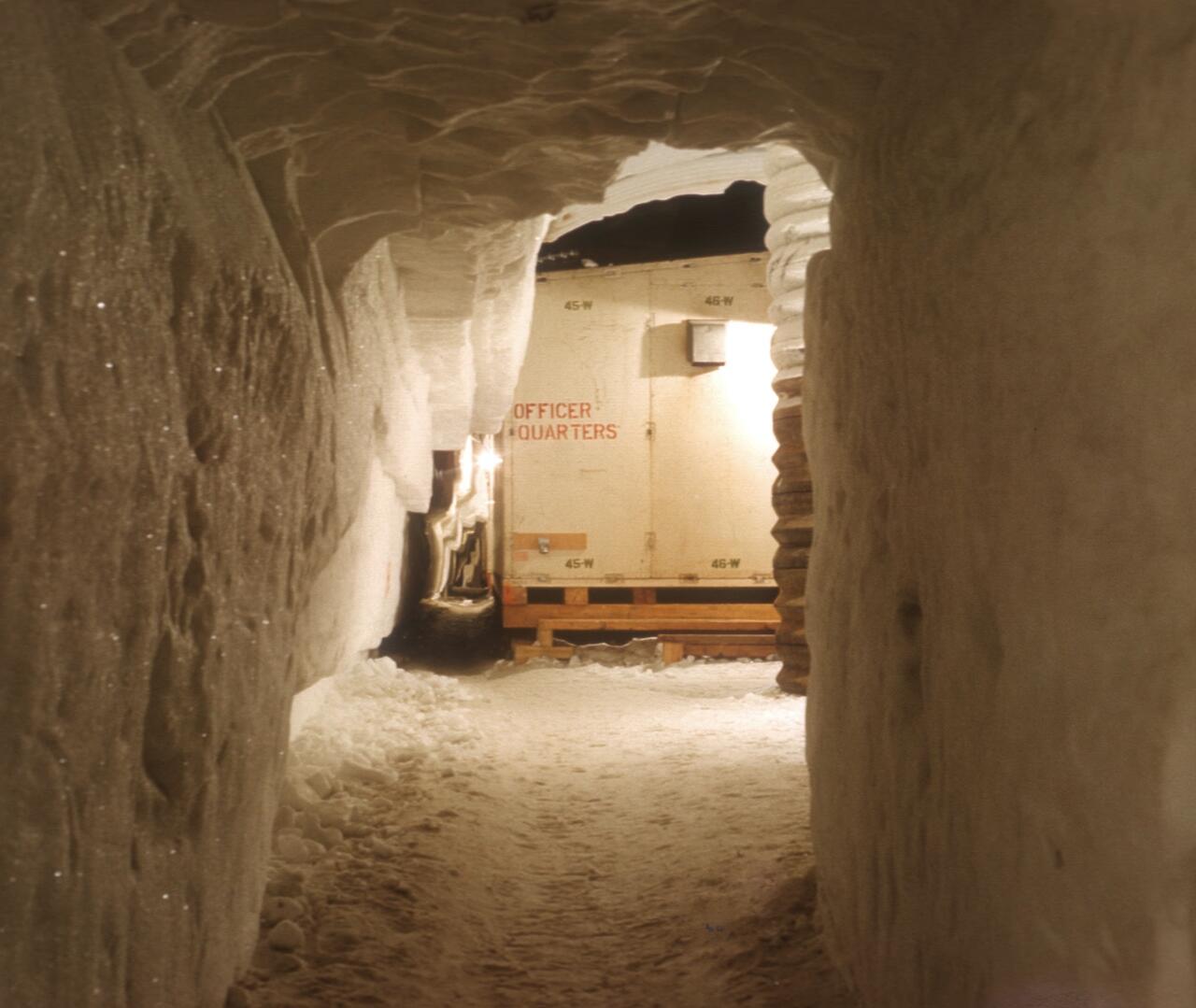
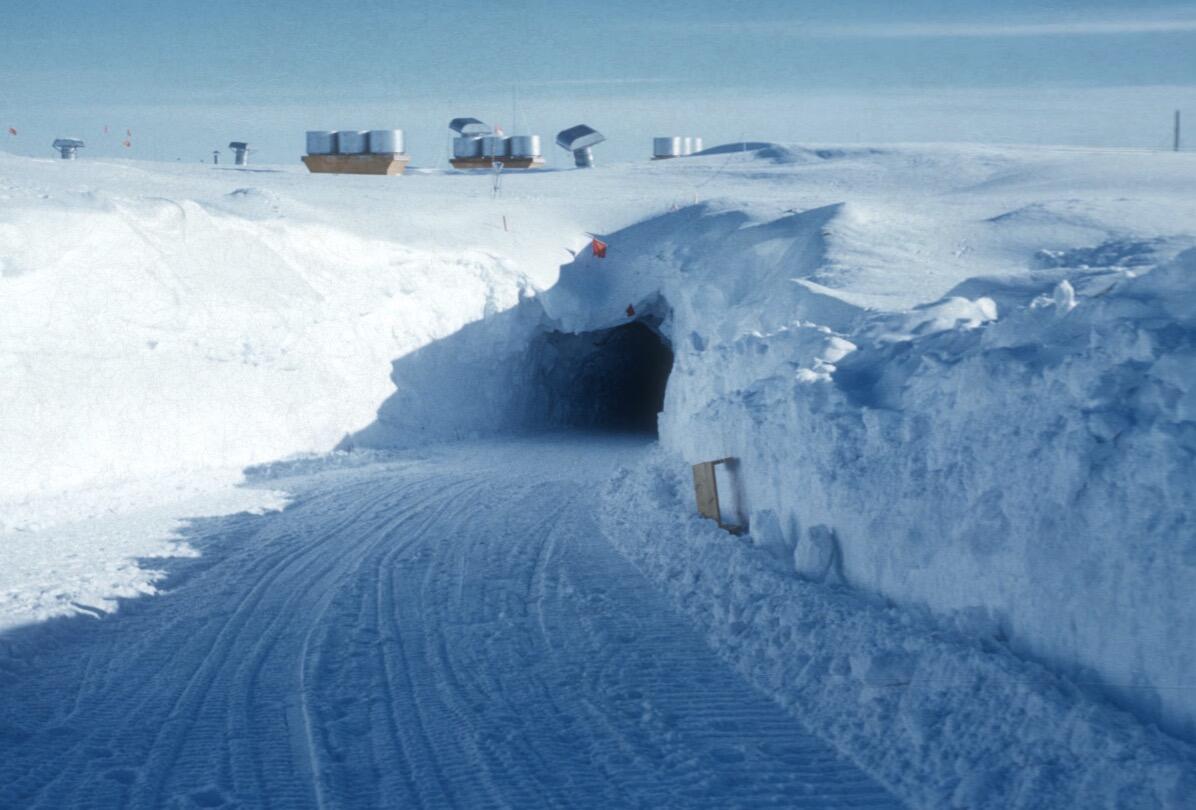
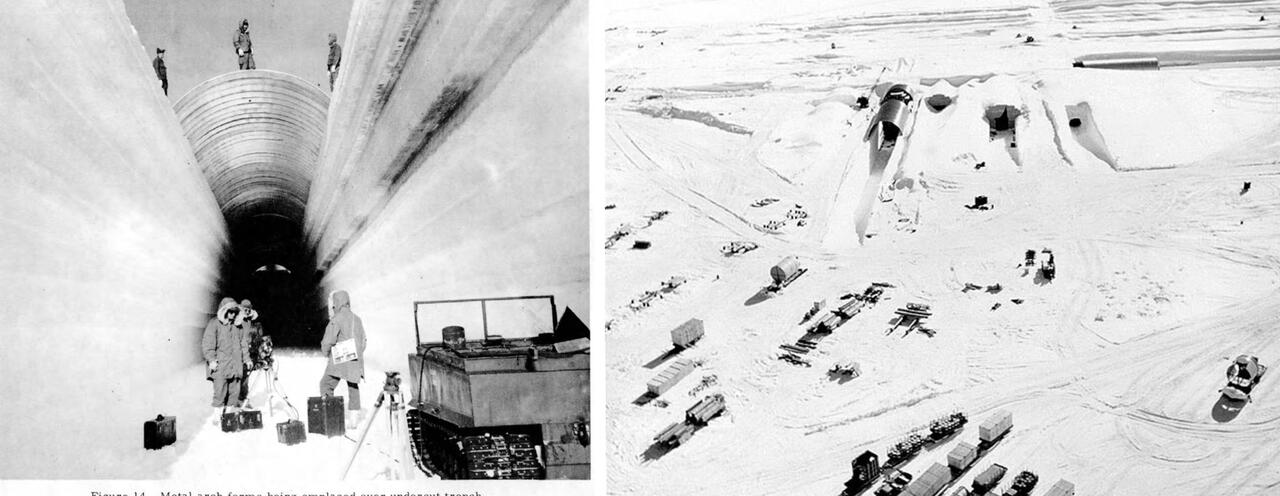
Camp Century, part of a secret Pentagon plan called Project Iceworm, was designed in the late 1950s as a hidden network of nuclear missile launch sites beneath Greenland’s ice. Built in 1959 and abandoned by 1967 due to unstable ice, the facility was meant to store 600 medium-range ballistic missiles.
Today, it lies buried under at least 100 feet of ice, according to the Wall Street Journal, who wrote a lengthy piece on the sites this week.
Although presented as a research station, its real military purpose remained classified until 1996. Nina Erofeeva explained: "The first [licenses] have been received for the creation of oil storage facilities, in the Krasnoyarsk territory. This was also an unusual case. Russia has never had oil storage facilities. Oil has always been pumped through pipelines. Given recent events and the lack of infrastructure in the Arctic zone, oil storage facilities are needed in several regions. Accordingly, oil will be placed in these oil storage facilities so as not to burn it during pilot development."
With 21 tunnels stretching nearly two miles under the ice, the base housed around 200 personnel and operated on nuclear power. Robert Weiss, a physician stationed there in the early 1960s, recalled: “We did realize that it was important; that the Russians could come over the top of the Pole.”
Life at Camp Century was harsh but bearable. “When I got there, it was blowing snow and minus 50 degrees,” Weiss said, remembering how he spent weeks underground. “It wasn’t very hard living from that standpoint.” Joking about the isolation, he added: “We used to say that there was a pretty girl behind every tree. Of course, there was one problem: There were no trees.”
The Journal writes that the base’s full scale wasn’t revealed until April last year, when NASA’s cryospheric scientist, Greene, captured the first complete images using advanced ice-penetrating radar. “You see how the buildings and tunnels were connected, how people had to move about in their day-to-day life, and think what a wild experience it must have been to be stationed there,” Greene said.
The U.S. presence in Greenland has long been controversial. During the Cold War, the U.S. operated 17 bases there and stationed about 10,000 troops. Today, fewer than 200 remain at Pituffik Space Base.
Tensions rose again when President Trump openly criticized Denmark for not securing Greenland and even suggested taking the island by force for U.S. security. Denmark reminded Washington of the 1951 treaty that already allows U.S. bases there but firmly rejected any takeover.
Denmark’s uneasy compromise with U.S. military interests goes back to World War II. In 1941, a Danish envoy in Washington handed control of Greenland’s defense to the U.S. without Copenhagen’s consent. After the war, the U.S. offered to buy Greenland for $100 million, but Denmark refused.
“In the 1940s Denmark learned that if you say no to the U.S., the U.S. will go ahead anyway,” said Ulrik Pram Gad of the Danish Institute for International Studies. “Denmark has been allowed to maintain sovereignty over Greenland by outsourcing some of it—security—to the U.S.”
The U.S.’s undisclosed storage of nuclear weapons in Greenland and a 1968 crash of a nuclear-armed B-52 near Thule Air Base caused long-lasting tensions. More recently, reports of increased U.S. espionage and Trump’s interest in buying Greenland have pushed Greenlanders closer to Denmark.
Loading...