Authored by Andrew Korybko via Substack,
The Central Asian Republics (CARs) fall within Russia’s “sphere of influence” for historical, economic, and security reasons.
The first stems from their shared history under the Russian Empire and USSR, the second from the Russian-led Eurasian Economic Union (EAEU) in which Kazakhstan and Kyrgyzstan participate, while the third relates to the Russian-led Collective Security Treaty Organization (CSTO) that includes them and Tajikistan. Russia’s influence, however, has waned in recent years.

Its understandable prioritization of the special operation created the opportunity for Turkiye to expand its influence through the “Organization of Turkic States” (OTS) in which Kazakhstan, Kyrgyzstan, and Uzbekistan participate with Turkmenistan as an observer. The OTS began as a socio-cultural integration group that now also promotes economic and even security cooperation, thus challenging the EAEU and CSTO. The US also made major trade inroads there earlier this month during the latest C5+1 Summit.
These developments were greatly facilitated by the US-mediated normalization of Armenian-Azerbaijani ties and the attendant “Trump Route for International Peace & Prosperity” (TRIPP) that was unveiled during their three leaders’ White House Summit in early August.
This will essentially lead to Turkiye injecting Western influence along Russia’s entire southern periphery, especially through the expected ramping up of military exports there, which threatens to pose serious latent challenges to Russia.
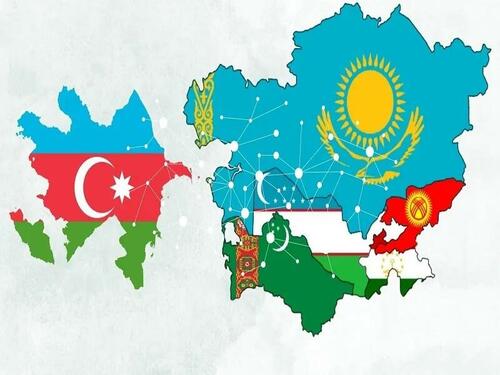
The latest move on this front was the CARs inviting Azerbaijan to join their annual Consultative Meeting of Heads of State and then rebranding as the “Community of Central Asia” (CCA), coincidentally right after their meeting with Trump. Regional integration is always positive, but in this case, it could also reduce Russia’s regional influence.
That’s because all six might deal with Russia as a group instead of individually. This could lead to tougher negotiating stances if they’re emboldened by Turkiye and the US.
Azerbaijan’s inclusion suggests that it’ll share its experiences managing this summer’s tensions with Russia and serve as its Turkish ally’s supervisor within the CCA to align it as closely as possible with the OTS (remembering that non-Turkic Tajikistan isn’t a member).
This likely role coupled with the timing of the CCA’s announcement right after the C5+1 and three months after TRIPP’s unveiling suggests that they want to rebalance ties with Russia and could rely on Azerbaijan’s guidance if this results in tensions.
Russia still plays an enormous economic role in the five CARs and ensures three of the CCA’s six members’ security through their membership in the CSTO. Putin also hosted the CARs leaders in early October during the Second Russia-Central Asia Summit where he committed to scaling up investments. Concrete limits therefore exist in terms of how far and fast the CCA could rebalance ties with Russia, so nothing dramatic is expected anytime soon, but some reduction of Russian influence might be inevitable.
That’s because the CCA could foster a stronger sense of regional identity, even ethnic in the pan-Turkic sense (Tajikistan being the exception), than the one that they share with Russia through their Imperial- and Soviet-era pasts with all that entails for future policymaking.
This aligns with Turkiye’s interests, which envisages becoming a Eurasian Great Power through its new influence in Central Asia via TRIPP and the OTS, and that in turn advances the US’ grand strategic goal of containing Russia.
Loading recommendations...