Authored by Matthew Vadum via The Epoch Times (emphasis ours),
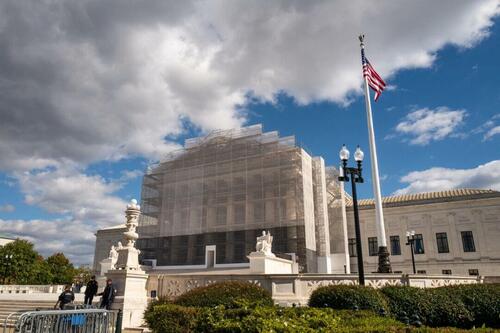
The U.S. Supreme Court decided on Dec. 5 to review whether President Donald Trump’s executive order ending birthright citizenship is constitutional.

The court’s decision took the form of an unsigned order without comment. No justices dissented. The case is known as Trump v. Barbara.
Trump’s Executive Order 14160, signed on Jan. 20, states that “the Fourteenth Amendment has never been interpreted to extend citizenship universally to everyone born within the United States.”
According to the order, an individual born in the United States is not “subject to the jurisdiction thereof” if that person’s mother was unlawfully present in the country and the individual’s father was not a U.S. citizen or lawful permanent resident at the time of the person’s birth.
It also states that the privilege of U.S. citizenship does not apply to an individual whose mother’s presence was lawful but temporary and whose father was neither a citizen nor a lawful permanent resident at the time of that individual’s birth.
The executive order has prompted debate over the meaning of the 14th Amendment’s citizenship clause, which states, “All persons born or naturalized in the United States, and subject to the jurisdiction thereof, are citizens of the United States and of the State wherein they reside.”
A three-judge panel of the U.S. Court of Appeals for the Ninth Circuit ruled on July 23 that the executive order was “invalid because it contradicts the plain language of the Fourteenth Amendment’s grant of citizenship to ‘all persons born in the United States and subject to the jurisdiction thereof.’”
Before that, the U.S. District Court for the Western District of Washington ruled against the executive order on Feb. 6. That court granted a preliminary injunction blocking the order because it “subjects” the states challenging the order to “immediate economic and administrative harms.”
That court said the executive order would compel the states to disqualify many people it considers citizens and, in the process, cause them to lose federal funds they would otherwise be eligible to receive. The states are likely to succeed on their claim that the executive order violates the 14th Amendment, the court added.
No oral argument in the case has yet been scheduled.
This developing story will be updated.
Loading recommendations...