
Portable mazda suitcase car for airports and travels
Back in the early 1990s, Mazda built a suitcase car, a portable three-wheeled vehicle for airports that fits inside hard-shell luggage. A project coming from an internal contest called Fantasyard between 1989 and 1991, the concept automobile was built by seven of the company’s engineers from their manual transmission testing and research unit. They wanted a vehicle to move around airports faster, so the team bought a pocket bike and the largest hard-shell Samsonite suitcase, size 57 cm by 75 cm. They used parts from the pocket bike, including its 33.6 cc two-stroke engine that produces 1.7 PS. The handlebars went inside the suitcase, the rear wheels attached to the outside of the case, and the front wheel came through a removable hatch in the front.
Assembling the portable Mazda suitcase car could take around a minute. Workers turned the front wheel to an upright position through the removable section, and they inserted the rear wheels. Then, they attached the seat above the rear axle. In the end, the vehicle weighed 32 kilos while the engine pushed it to a top speed of 30 km/h, or 19 mph. The concept automobile shared traits with earlier Mazda vehicles because it had three wheels, like the Mazda-Go from 1931, which was a motor rickshaw sold in Japan. Then, there’s the low center of gravity, which was found in the previous MX-5 roadster. So far, the portable Mazda suitcase car has never made it to production.
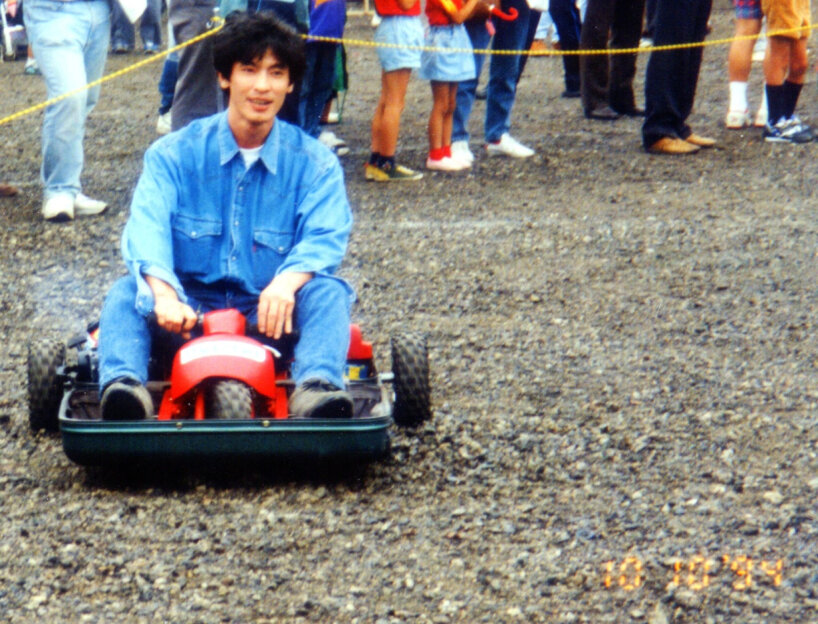
all images courtesy of Mazda UK
Two built versions, with the US one still existing
The early 1990s marked changes at Mazda, as the company faced high demand for its MX-5 roadster. In 1991, Mazda became the first Japanese brand to win the 24 Hours of Le Mans race with a rotary-engined car, the 787B. That same year, Mazda showed a hydrogen-powered rotary concept named HR-X. The company ran Fantasyard, where teams from different departments competed to create mobility ideas, and engineers had small budgets for their projects. It is from this event that the portable Mazda suitcase car came to fruition as a concept automobile.
During its time, it received so much media attention that the company even built two versions (US and Europe). The European model appeared at the 1991 Frankfurt International Motor Show next to the 787B racer, but the original prototype got destroyed by accident months after the Fantasyard event. The US model still exists (likely owned by a collector), while the European one is missing. While the company never produced it, the portable Mazda suitcase car showcased a design direction for the company, one that focuses on small, practical mobility.
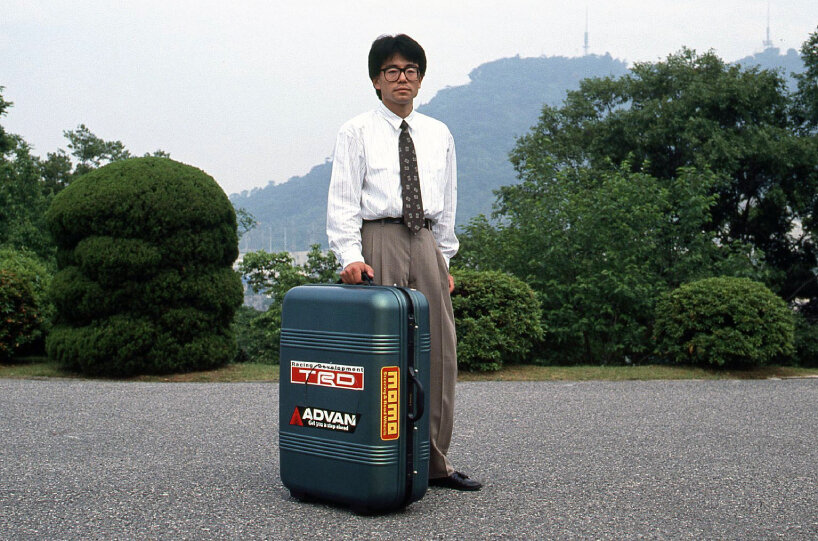
the concept automobile could fit inside a hard-shell Samsonite suitcase
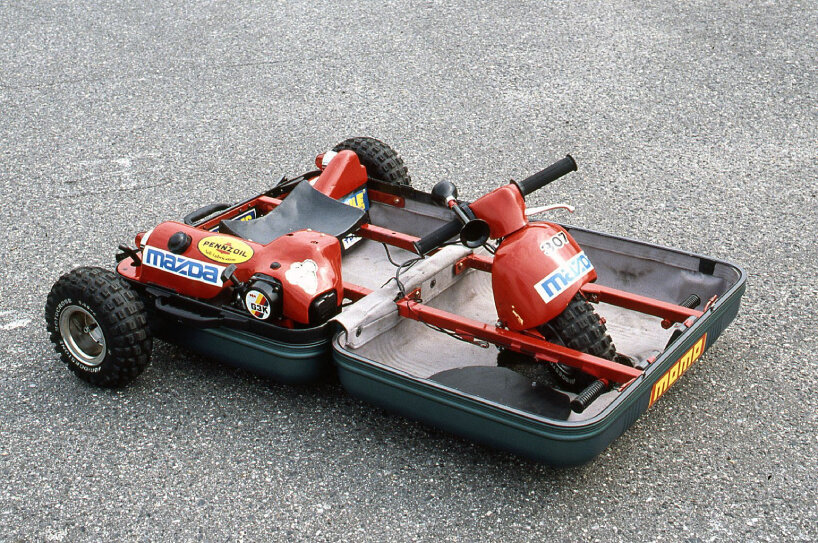
the handlebars went inside the suitcase, and the rear wheels were attached to the outside of the case
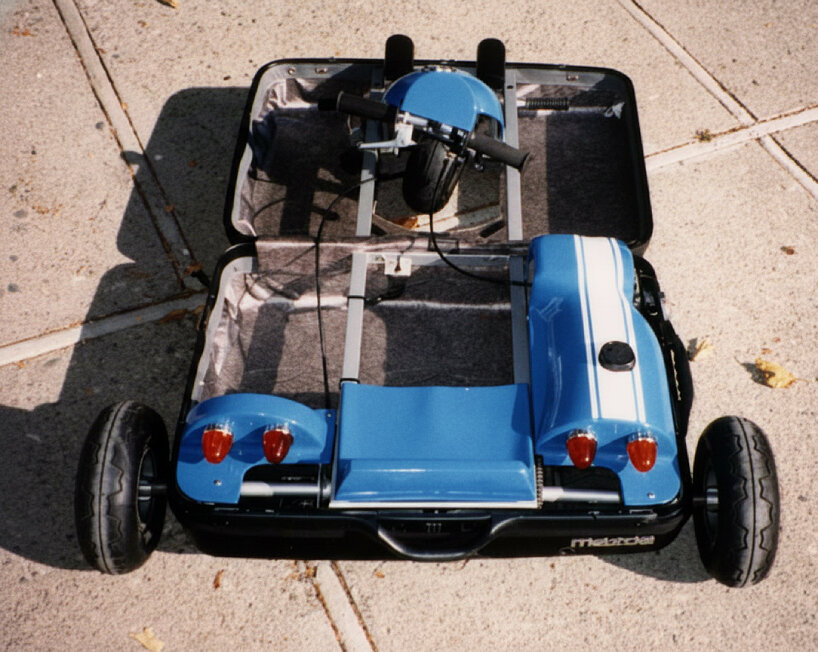
the front wheel came through a removable hatch in the front
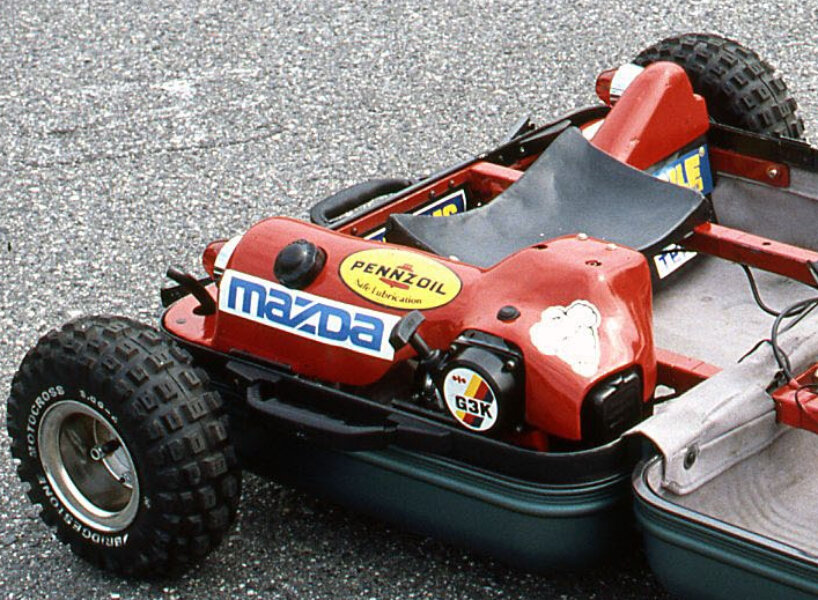
view of the concept vehicle’s rear
project info:
name: Suitcase car