Authored by Jerry Zhu via The Epoch Times (emphasis ours),
Australia’s utility industry warns the country’s current water supply is not enough to accommodate the explosive growth of data centres and artificial intelligence (AI).

The Water Services Association of Australia (WSAA), the nation’s peak water body, says data centre developers are seeking about 5 to 40 million litres of water per day to cool down their facilities.
That’s the equivalent of 70,000 to 80,000 households or 16 Olympic-sized swimming pools.
Data centres, which store information for governments to businesses, cycle water through their facilities to cool down servers and prevent overheating.
However, the development of AI, which has much higher computational power, storage, as well as electricity needs, is also driving up the base requirements of data centres.
In fact, the WSAA estimates that by 2030, data centres in Sydney alone are estimated to use 10.5 billion litres a year (1.9 percent of Sydney Water’s supply).
By 2035, this is expected to balloon to 90 billion litres a year, the equivalent of 15 to 20 percent of supply.
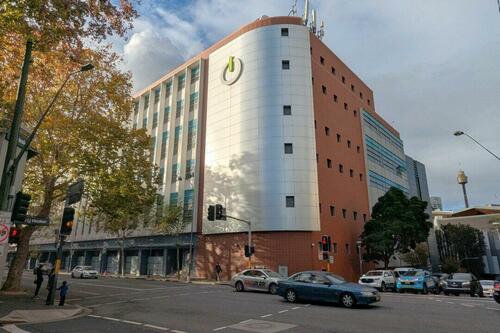
Sydney is arguably the tech capital of Australia with 90 data centres currently in the state of New South Wales (NSW), followed by 40 in Victoria. Future data centre developments could be much larger and energy-intensive, the report says.
Adam Lovell, executive director of WSAA, stressed the need for Australia to plan its water use carefully.
“Australia is well positioned to become a global data centre hub, and that needn’t be at the expense of our water resources,” Lovell said.
“The key is to help the sector become smart water users.
“We have a history in Australia of developing innovative solutions to make sure industrial users through to residential consumers have reliable access to water supplies.”
The report contained five recommendations, including implementing efficiency standards, recycling water, more transparency by publishing metric on water and energy use, early collaboration between data centres and water utilities, and creating new frameworks for developments.
Abigail Boyd, Greens MP of the NSW Legislative Council, raised concerns about data centre water use in late November.
“The latest Independent Pricing and Regulatory Tribunal [IPART] determination for Sydney water prices notes that Sydney Water estimates that the water needs of data centres may be up to 250 megalitres per day by 2035 to fuel the explosion of artificial intelligence products,” she said during Question Time in NSW Parliament.
“That would be almost 20 percent of Sydney Water’s total water usage being consumed by data centres ...” she said (pdf).
“What is the minister doing to advocate for a more responsible approach to artificial intelligence and data centre development so that new infrastructure, like water connections, is appropriately prioritised towards housing and is not fuelling the latest tech bubble?”
In response, Rose Jackson, Labor minister of water and housing, said Sydney Water had not prioritised capital investment for data centres and that housing targets were the priority.
“The government is having collaborative conversations with Sydney Water and energy providers because some of the pressures that the member has identified in relation to water also relate to energy and ensuring that New South Wales is open for business and supporting the future economic needs of the tech sector,” Jackson said.
“We want New South Wales to be a place where investment occurs so that we are at the cutting edge of emergent technology, and we can take advantage of it,” she added.
“Sydney Water is exploring a number of innovative opportunities to ensure that data centre development can be supported without putting pressure on the prioritised capital delivery for housing,” the minister said, noting that the water needs of data centres could also change as technology improves.
Federal and state ministers are expected to discuss the country’s growing water demands in Brisbane on Dec. 12 amid the government’s newly released artificial intelligence plan.
Loading recommendations...