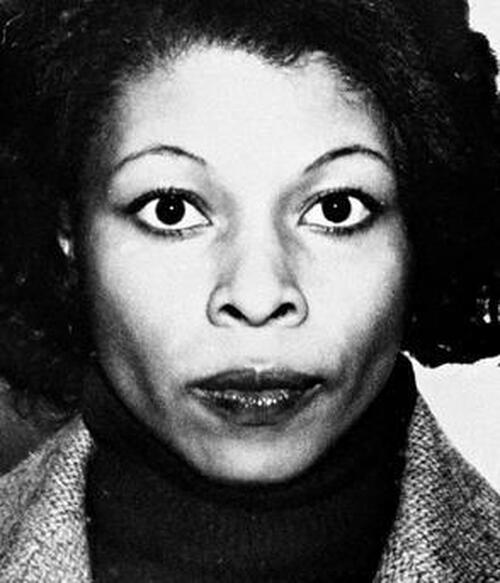
Former New York Times reporter and Howard University professor Nikole Hannah-Jones has long been controversial as a writer who expressly rejects objectivity and neutrality in journalism. That was most evident in her “1619 Project,” which was ridiculed by historians and law professors in claiming that slavery was the driving force behind American independence. Nevertheless, the project was awarded the Pulitzer Prize despite glaring historical errors. Yet, this month, Hannah-Jones is back on the pages of the New York Times again rewriting history. This time, she is praising cop-killer and 1960s revolutionary Assata Shakur.

Hannah-Jones has been a lightning rod in her writings, from declaring “all journalism is activism” to spreading conspiracy theories against the police.
Yet, mainstream media, including the Times, has run interference for Hannah-Jones, including the dean of the University of North Carolina trying to shut down criticism by reminding a reporter that they must all defend Hannah-Jones.
Hannah-Jones’s latest project of historical revision is a sorrowful memorial to Shakur, which shows the same disregard for facts in favor of a preferred narrative.
Born JoAnne Deborah Byron (and later adopting the names of Joanne Chesimard and Shakur), the violent revolutionary was a member of the Black Panther Party and the Black Liberation Army.
In 1977, she killed New Jersey police officer Werner Foerster, 34, a U.S. Army Vietnam veteran who left behind a widow and a young son.
She later escaped prison and fled to Cuba, where she died earlier this year. In 2005, she was declared a domestic terrorist. In 2013, the Obama Administration put her on the most wanted list.
You would know little of that from the New York Times column. After all, all journalism is activism, according to Hannah-Jones, and, if the facts do not fit the narrative, the facts have to go.
In her column, Hannah-Jones seems to dismiss the conviction as the result of an “all-white” jury. What is omitted is that Shakur had a long and violent criminal record. She was previously shot in the stomach during what was believed to be a drug-connected crime at the Statler Hilton in Manhattan.
She was sought in other crimes, including a 1971 bank robbery. When asked, Shakur later shrugged off such crimes as a type of racial reparations: “There were expropriations, there were bank robberies.”

Police car after grenade attack
She was also linked to a grenade attack that injured two police officers after being identified by witnesses. In 1972, she was identified by Monsignor John Powis as one of the suspects in the armed robbery at Our Lady of the Presentation Church in Brownsville, Brooklyn. During the robbery, the priest was told “We usually just blow the heads off White men.”
She was also tied to the murder and ambushing of police officers for years before she was stopped on May 2, 1973 on the New Jersey turnpike by State Trooper James Harper who was backed up by Trooper Werner Foerster in a second patrol vehicle. The resulting shootout left Harper wounded and Foerster dead.
Her trials spanned a variety of charges ranging from bank robbery to kidnapping to attempted murder, and other felonies. However, while there were acquittals and a mistrial (due to a pregnancy) on different charges, she was ultimately convicted of murder before her escape.
Yet, the Times and Hannah-Jones brush over that history to gush about Shakur and the effort to shield her, even describing the criminal network as akin to the famed system used to free slaves before the Civil War: “Shakur had been hidden in the United States for several years by a sort of Underground Railroad.”
The Times column bewails how “freedom came with shattering costs for her and her family.” Not a single line of sentiment for the widow and son that her victim left behind in New Jersey, let alone the other victims in murders and attacks that she was connected to as part of the Black Liberation Army.
Of course, such sentiment is not allowed for true victims.
For example, Hannah-Jones was again published by the New York Times, warning in a column that memorials to Charlie Kirk are “dangerous.”
Hannah-Jones has also chastised other writers for covering shoplifting stories because “this is how you legitimize the carceral state.”
Yet, the New York Times is still actively involved in projects to rewrite history with Hannah-Jones. This is the same newspaper that barred columns from Senator Tom Cotton for arguing for the deployment of National Guard troops to quell violent riots, but published columns by “Beijing’s enforcer” in Hong Kong and a University of Rhode Island professor who previously defended the murder of a conservative protester.
It is the same newspaper that forced out a variety of editors who published opposing viewpoints or challenged biased coverage and journalistic activism.
The Times column ends with a line that is breathtaking in its ahistorical and amoral message: “Shakur, who saw herself as an escaped slave, died free.”
A convicted murderer and wanted terrorist died in one of the most blood-soaked, repressive regimes in the world . . . but Hannah-Jones and the New York Times want everyone to know that she “died free.”
That is comforting. As for Werner Foerster, he just died and was not mentioned once by name in the Times column.
Loading recommendations...