Eddie Adams
Born just outside of Pittsburgh in New Kensington, Pa., Eddie Adams was one of the most well-known photographers of the Vietnam War era. He took one of the most iconic photos of the war, which depicts South Vietnamese National Police Chief, Lt. Colonel (later Brigadier General) Nguyen Ngoc Loan executing Viet Cong insurgent Nguyen Van Lem. It opened the eyes of many Americans and became a symbol of the immense brutality of the war.
A Marine combat photographer during the Korean War in 1962, Adams joined the Associated Press, then left after 10 years to freelance and work for Time Magazine. He rejoined the AP in 1976 as the company’s first and only photographer to hold the title of special correspondent. Altogether, Adams carried a camera in over 150 operations while on assignment in Vietnam. His series of photos on the Vietnamese boat people helped influence the U.S.’s decision to admit 200,000 Vietnamese refugees at the end of the war.
During his career, Adams photographed high-profile figures such as Ronald Reagan, Fidel Castro, and Malcolm X, and won over 500 photojournalism awards. See some of Adams’ images in the exhibit near the Huey helicopter.
William A. Korber
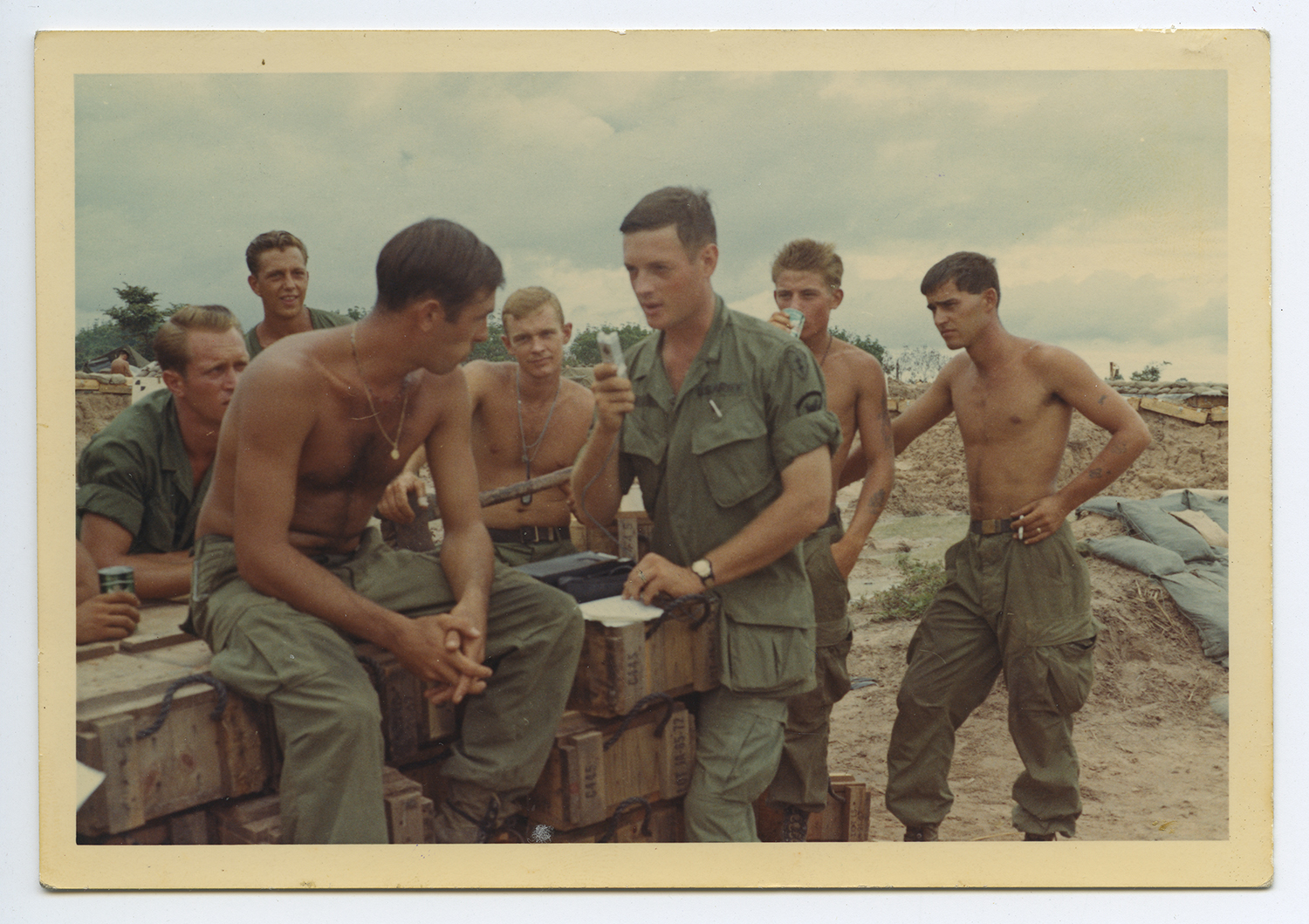
Broadcast specialist and Western Pa. native William A. Korber traveled to Vietnam in 1968. He covered the activities of the 25th Division and interviewed artillerymen in the field. At times, Korber would go right to the front lines to record interviews.
Korber’s interviews of U.S. soldiers were used for broadcast on armed forces radio. These recordings ranged from combat experiences to a simple hello to family back home. Korber captured the action sequence of combat with the Viet Cong and took numerous photos of missions by the Division. These photos are showcased within the exhibit’s Hootch tent and along the wall by the Jeep.
Nick Ut
Nick Ut is not a native of Western Pennsylvania, but his story is also told in the exhibit. On June 8, 1972, Ut captured what would become a Pulitzer Prize-winning photo that depicted children fleeing from a Napalm bombing during the war. Another iconic image of the war, now called “Napalm Girl,” is one of the most memorable photographs of the 20th century. It showed the entire world the devastation of the war as the South Vietnamese bombed one of their own villages with the Napalm.
Ut followed his older brother to Vietnam. On assignment there himself, Ut’s brother was killed by the Viet Cong in 1965. This tragedy prompted Ut to go as well. A staff photographer for the Associated Press, Ut covered many and varied assignments. He worked as a press photographer for 51 years before retiring in 2017.
Ron Haeberle
On assignment as a combat photographer with an Army unit in Vietnam, Ron Haeberle was drafted in 1966 while attending Ohio University, where he spent time as a photographer for the school paper. Haeberle ended up in Hawaii with the Army’s Public Information Office. At the end of his tour in 1967, he requested a transfer and traveled to Vietnam.
When Haeberle arrived in Vietnam, he was 26, older than most of his fellow members of the Charlie Company. Haeberle and his assigned company landed at the small village of My Lai on March 16, 1968. Having just met the men in his unit that morning, Haeberle had no idea what tragic events would unfold in the next few hours.
As one of the most troublesome and graphic events of the Vietnam conflict, the My Lai massacre remained unknown to the world until the public saw Haeberle’s photos. Like many other correspondents, Haeberle used his own camera to take photos. Because he didn’t use an Army issued camera, his photos stayed out of the sight of military officials.
The Cleveland Plain Dealer published Haeberle’s photos of the My Lai massacre on Nov. 20, 1969. Though multiple events like My Lai occurred during the conflict in Vietnam, Haeberle’s monochrome photos remain a symbol of the war’s massacres.
Dickey Chapelle
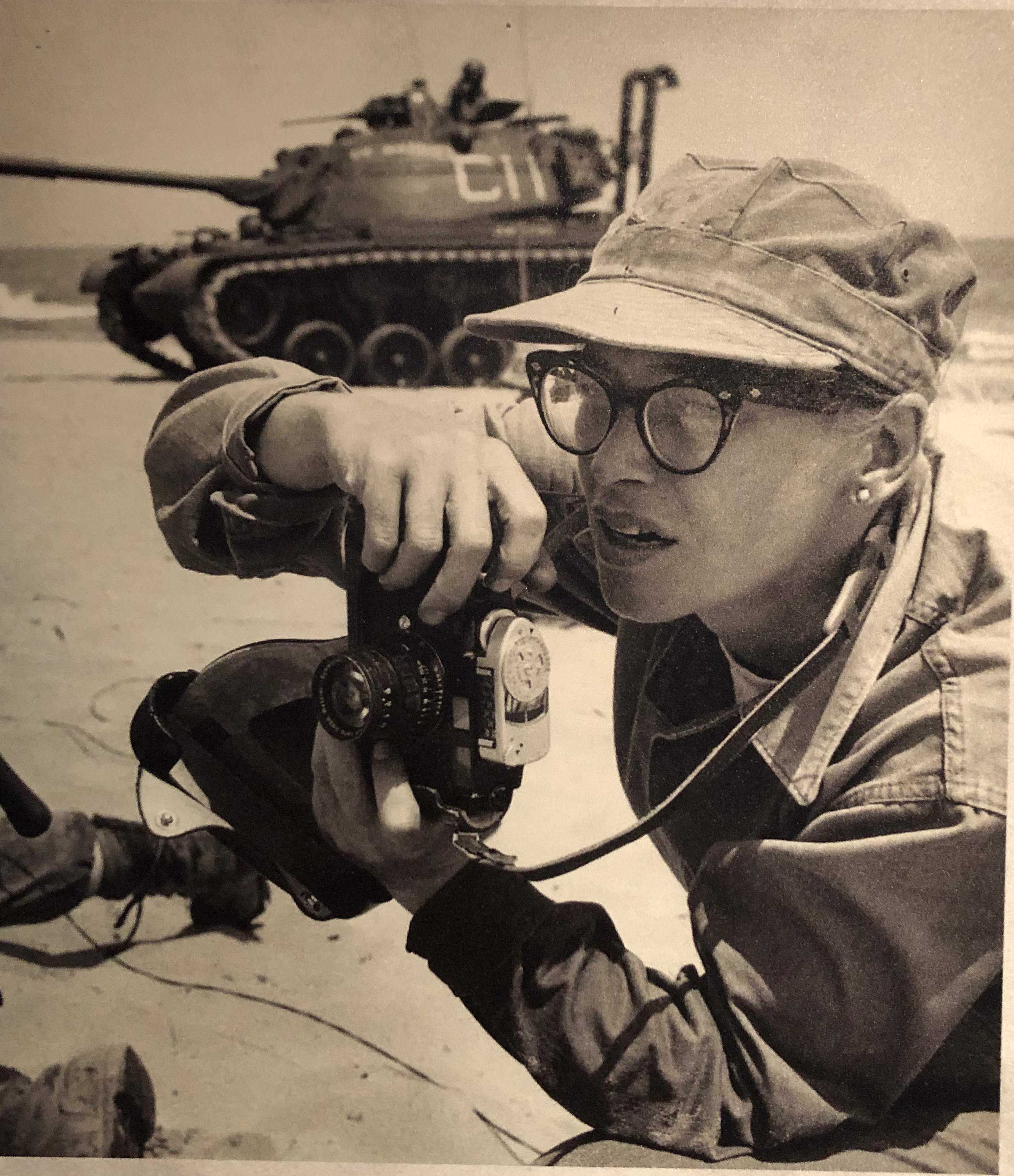
One of history’s most fearless conflict journalists was; Georgette Meyer, better known as Dickey Chapelle. One of the most experienced correspondents covering Vietnam, she became the first American woman to die on the job. Chapelle began as a war correspondent in 1942 and covered dozens of conflicts. The first woman correspondent accredited by the military in World War I, she ventured where other reporters dared not go.
Chapelle headed to Vietnam in 1959, when she joined the U.S Army’s 101st Airborne Division at Fort Campbell. As part of the team, Chapelle became the first, and at the time only, woman authorized to jump into combat with the Screaming Eagles paratroopers in Vietnam.
She began to cover stories for National Geographic in the 1950s. While on assignment for the National Observer and National Geographic in 1965, Chapelle and her unit walked into a trap of grenades wired to mortar. She died on the floor of the helicopter during a transfer to a hospital. The U.S. Marines gave Chapelle full military honors.
An attempt to ban women from photographing went into effect after Chapelle’s death, however, it didn’t go through. A year later, French photographer Catherine Leroy arrived in Vietnam and followed Chapelle’s aerial path by parachuting into combat.