By Michael Kern of OilPrice.com

The United States will officially begin negotiations to dismantle the Western world's operating system in just about 30 minutes or so...and oil prices are up just over 1% in anticipation.
The meeting, which will take place at the Eisenhower Executive Office Building, will include Vice President JD Vance, Secretary of State Marco Rubio, and the foreign ministers of Denmark and Greenland.
The official agenda serves up standard diplomatic fare: "Arctic security," "strategic partnership," and "resource development."
But the reality in the room is far more brittle...
President Trump has made his position clear, stating on Air Force One that anything shy of U.S. control of Greenland is "unacceptable."
He has suggested that NATO "should be leading the way for us to get it," framing the acquisition not as a request, but as an obligation of the alliance.
Whatever the diplomats call it, the pricing model of the partnership has fundamentally changed.
For decades, the Atlantic alliance operated on a fixed-cost basis. Member states provided political alignment and base access in exchange for a predictable security guarantee. That fixed rate has now effectively floated. The new cost of doing business with Washington includes a premium to hedge against the unpredictability of the executive branch.
It's a volatility tax, effectively.
A Variable Rate on Article 5
To understand the urgency in Brussels, you have to look at the mechanics of the security guarantee.
NATO was designed as a binary instrument: you are either protected, or you are not. Article 5 is the bedrock. But recent signals from Washington, specifically the refusal to rule out unilateral action regarding Greenland, have introduced a variable into that equation.
The "strategic patience" that characterized European responses for the last few years has evaporated. Following the capture of Venezuela’s Nicolás Maduro by the U.S. military on Jan. 3, the theoretical risk of American kinetic action has been repriced as a tangible one.
Danish Prime Minister Mette Frederiksen has been unequivocal, warning that a military move on Greenland would mean "everything stops," signaling the effective end of the alliance.
Her concerns were echoed by EU Defense Commissioner Andrius Kubilius, who warned that such an event is "unprecedented in the history of NATO."
"The normal rulebook doesn’t work anymore," a former Danish MP noted regarding the discussions.
This has forced European capitals into a defensive crouch. When a German Defense Minister is compelled to discuss "options at Europe’s disposal" regarding a close ally, the alliance is no longer operating on a foundation of implicit trust. It is operating on a transactional basis.
Mining the Ice: The Myth of "Turnkey" Riches
The deal likely to emerge today relies on two pillars: security spending and resources.
The resource component, specifically the promise of critical minerals, is being framed as the "win" that could de-escalate tensions. The narrative suggests that by cutting the U.S. in on Greenland’s mineral wealth, the strategic hunger for rare earth elements can be sated.
However, from an industrial standpoint, this narrative hits a literal wall of ice.
Greenland possesses vast potential reserves. The U.S. Geological Survey estimates the island holds the world's second-largest deposit of rare-earth oxides, including significant amounts of neodymium and dysprosium, which are critical for EV motors and F-35 fighter jets.
But potential is not production. To date, there are zero active rare earth mines in Greenland.
The barrier isn't just bureaucratic; it is thermodynamic. Greenland spans 2.17 million square kilometers, 80% of which is covered by ice. The "unit economics" of mining here are atrocious compared to competitors in Australia or Brazil.
- The Infrastructure Gap: There are no roads connecting Greenland’s towns. Every piece of heavy machinery must be shipped in by sea or flown in by helicopter. Industry analysis suggests that developing a mine in the Arctic incurs capital costs (CapEx) 150% to 300% higher than in temperate regions.
- The Power Problem: There is no grid to plug into. A mine requires a dedicated power plant, likely importing diesel in a zone where fuel freezes, or building renewables in a place with three months of darkness.
Ian Lange, an economist at the Colorado School of Mines, put it bluntly: "Everybody's just been running to get to this endpoint [of production]. And if you go to Greenland, it's like you're going back to the beginning."
If the EU plans to double its investment in these projects to satisfy U.S. demands, it represents a massive subsidy. It is a transfer of public funds to make a project commercially viable, not because the market demands it, but because the politics require it. We are essentially watching Europe offer to build a money-losing mine to buy geopolitical stability.
Access vs. Ownership: The Strategic Paradox
The second pillar of the proposed deal is a ramp-up in Arctic security infrastructure.
Secretary General Mark Rutte has laid the groundwork, stating that the alliance is discussing ways to "bolster Arctic security." This aligns with the long-standing U.S. demand for Europe to shoulder a greater share of the defense burden.
But a closer look reveals a paradox in the U.S. position.
If the goal is purely strategic access, denying space to Russia and China, the United States already has it.
The U.S. military operates the Pituffik Space Base (formerly Thule), a cornerstone of North American missile defense. The 1951 Defense of Greenland Agreement grants the U.S. substantial rights to operate on the island. The U.S. can already project power, monitor the GIUK gap (Greenland-Iceland-UK), and deter adversaries.
The demand for "title" or "ownership," rather than "access," suggests that the driver here is not purely strategic utility. It is about formalizing a sphere of influence on a map.
Inheriting a Frozen Liability
Beyond the bad math of the mines, there is a practical question of stewardship largely absent from American political discourse.
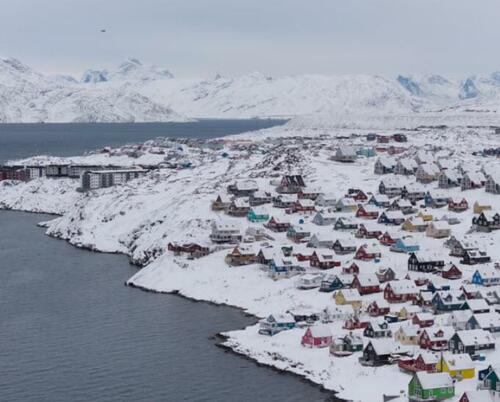
Greenland is a semi-autonomous territory with a distinct culture and a complex social safety net underpinned by Danish subsidies. If the island's status were to change, the financial burden of that stewardship would shift to Washington.
EU Commission President Ursula von der Leyen backed this view, stating firmly that "Greenland belongs to its people," and insisting that any decision rests with them, not foreign capitals.
Historically, the U.S. has a poor track record of managing its territories.
Places like Puerto Rico or Guam have struggled with chronic underinvestment in infrastructure and poverty rates far higher than the mainland average.
For the U.S. taxpayer, the acquisition would mean inheriting a massive, frozen liability. We would acquire a territory that requires significant annual subsidies to maintain basic services, with a return on investment that might be decades away.
Ripping Up the 1945 Contract
But the most dangerous line item on this ledger isn't financial. It is structural.
If the United States were to coerce a NATO ally into ceding territory, whether through economic arm-twisting or the implicit threat of force, it would trigger a default on the post-war security order.
We often talk about the "Rules-Based International Order" as an abstract concept. In practice, it is a contract. The United States drafted the contract in 1945, and the core clause was simple: borders are not to be changed by force, and the sovereignty of allies is inviolable.
By threatening to seize Greenland, Washington is effectively ripping up that contract.
French President Emmanuel Macron has been one of the few leaders to speak plainly on the stakes, warning that "the law of the strongest cannot rule the world" and noting the "unprecedented consequences" if an ally's sovereignty is violated.
Even the UK, often the bridge between Europe and Washington, has drawn a line. Prime Minister Keir Starmer reportedly told Trump to keep his "hands off Greenland," aligning London firmly with Copenhagen.
The immediate casualty would be moral leverage.
For years, the United States has rallied the world to condemn Russian expansionism in Ukraine and Chinese assertiveness in the South China Sea. If the U.S. annexes Greenland, that moral argument evaporates.
The Solvency of the West
As the foreign ministers sit down in the Eisenhower Executive Office Building today, they are attempting to price a transaction that was never meant to be sold.
The U.S. will likely push for guaranteed mineral rights and a "security premium" funded by Europe. Denmark and the EU will offer these concessions in a desperate bid to buy another year of sovereignty.
But as the ink dries on whatever joint statement emerges, the real story is what happens next. The fixed-rate mortgage of the Atlantic Alliance is gone. We are now in a variable-rate world, and the market is volatile.
Loading recommendations...