
Prior to the establishment of the Environmental Protection Agency in 1970, Americans lived in communities awash with lead from industrial sources, paint, water supply pipes and, most significantly, tailpipe emissions. A dangerous neurotoxin that accumulates in human tissues and is linked to developmental deficits in children, environmental lead levels have come way down in the years since, and so have human exposures.
The proof is in your hair.
An analysis of hair samples conducted by University of Utah scientists shows precipitous reductions in lead levels since 1916.
“We were able to show through our hair samples what the lead concentrations are before and after the establishment of regulations by the EPA,” said demographer Ken Smith, a distinguished professor emeritus of family and consumer studies. “We have hair samples spanning about 100 years. And back when the regulations were absent, the lead levels were about 100 times higher than they are after the regulations.”
A useful element with a dark side
The findings, which appear in PNAS, underscore the vital role of environmental regulations in protecting public health. The study notes lead rules are now being weakened by the Trump administration in a wide-ranging move to ease environmental protections.
“We should not forget the lessons of history. And the lesson is those regulations have been very important,” said co-author Thure Cerling, a distinguished professor of both geology and biology. “Sometimes they seem onerous and mean that industry can’t do exactly what they’d like to do when they want to do it or as quickly as they want to do it. But it’s had really, really positive effects.”
Lead is the heaviest of heavy metals that, like mercury and arsenic, accumulate in living tissue and are toxic at even low levels. Yet lead holds very useful properties, great for fashioning into pipes and as a chemical additive. Lead was added to paint to improve durability, speed up drying, and produce vibrant colors with greater coverage. Lead also improved the performance of automobile engines by preventing pistons from “knocking.”
By the 1970s, its toxicity became well established, and EPA regulations began phasing it out of paint, pipes, gasoline and other consumer products.
How Utahns’ affection for family history advances science
To document whether these steps were helping reduce lead exposure in people, Smith joined with geologist Diego Fernandez and Cerling, who had developed techniques to discern where animals have lived and what they eat based on chemical analysis of hair and teeth.
The lead research is built on a previous study funded by the university’s Center on Aging and the National Institutes of Health that had recruited Utahns who consented to provide blood samples and family health histories.
For the new study, the researchers asked members of that cohort to provide hair samples, both contemporary and from when they were young. These people obliged, and some were able to find ancestors’ hair preserved in family scrapbooks dating as far back as a century. In all, the team acquired hair samples from 48 individuals in this manner, offering a robust window into lead levels along Utah’s populous Wasatch Front, which historically experienced heavy lead emissions from industrial sources.
“The Utah part of this is so interesting because of the way people keep track of their family history. I don’t know that you could do this in New York or Florida,” said Smith, who directed the U’s Pedigree and Population Program at the Huntsman Cancer Center while these studies were conducted.
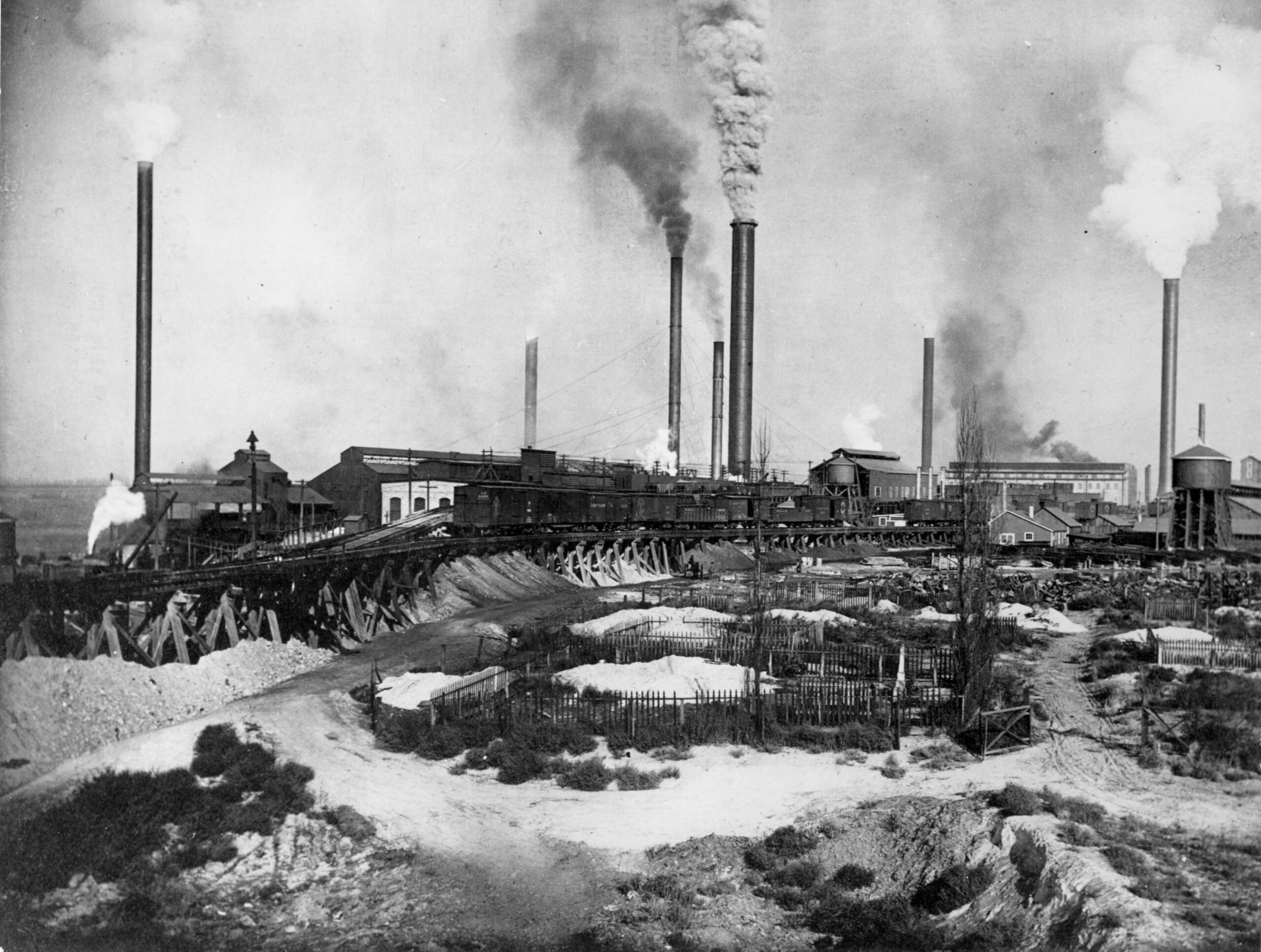
This region supported a vibrant smelting industry through most of the 20th century, centered in the cities of Midvale and Murray. Most of Utah’s smelters were shuttered by the 1970s, around the same time the EPA clamped down on the use of lead in consumer products.
The research team ran the hair samples through mass spectrometry equipment at the facility directed by Fernandez.
“The surface of the hair is special. We can tell that some elements get concentrated and accumulated on the surface. Lead is one of those. That makes it easier because lead is not lost over time,” said Fernandez, a research professor in the Department of Geology & Geophysics. “Because mass spectrometry is very sensitive, we can do it with one hair strand, though we cannot tell where the lead is in the hair. It’s probably on the surface mostly, but it could also be coming from the blood if that hair was synthesized when there was high lead in the blood.”
Blood would provide a better exposure assessment, but hair is far easier to collect and preserve, and more importantly, it offers clues to long-ago exposures for a person who has grown up or even deceased.
“It doesn’t really record that internal blood concentration that your brain is seeing, but it tells you about that overall environmental exposure,” Cerling said. “One of the things that we found is that hair records that original value, but then the longer the hair has been exposed to the environment, the higher the lead concentrations are.”
The team’s findings regarding lead in hair run parallel to the reductions of lead in gasoline following the EPA’s establishment by President Richard Nixon.
Prior to 1970, for example, gasolines contained about 2 grams of lead per gallon. That might not sound like much, but considering the billions of gallons of fuel American automobiles burn each year, it adds up to nearly 2 pounds of lead released into the environment per person a year.
‘It’s an enormous amount of lead that’s being put into the environment and quite locally,” Cerling said. “It’s just coming out of the tailpipe, goes up in the air and then it comes down. It’s in the air for a number of days, especially during the inversions that we have and it absorbs into your hair, you breathe it and it goes into your lungs.”
But after the 1970s, even as gasoline consumption escalated in the United States, the concentrations of lead in the hair samples plummeted, from as high as 100 parts per million (ppm) to 10 ppm by 1990. In 2024, the level was less than 1 ppm.
The study, titled “Lead in archived hair documents decline in human lead (Pb) exposure since establishment of the US Environmental Protection Agency,” was published Feb. 2 in PNAS, or Proceedings of the National Academy of Sciences. Support came from the Huntsman Cancer Foundation and the National Cancer Institute through a grant to the Utah Population Database and the University of Utah.